Toddler Room Ideas: How Can You Create a Safe, Cozy, and Fun Space?
What Makes a Good Toddler Room?
The best toddler room ideas combine safety, comfort, independence, storage, and play.
A toddler bedroom should feel calm enough for sleep but interesting enough to encourage curiosity. It should also make everyday tasks easier for parents.
Think about what happens during a normal day.
Your toddler wakes up, gets dressed, plays with toys, looks at books, takes a nap, and eventually goes back to bed. A good room supports those routines without making you constantly move things around.
Instead of trying to create a picture-perfect nursery, design the room around real family life.
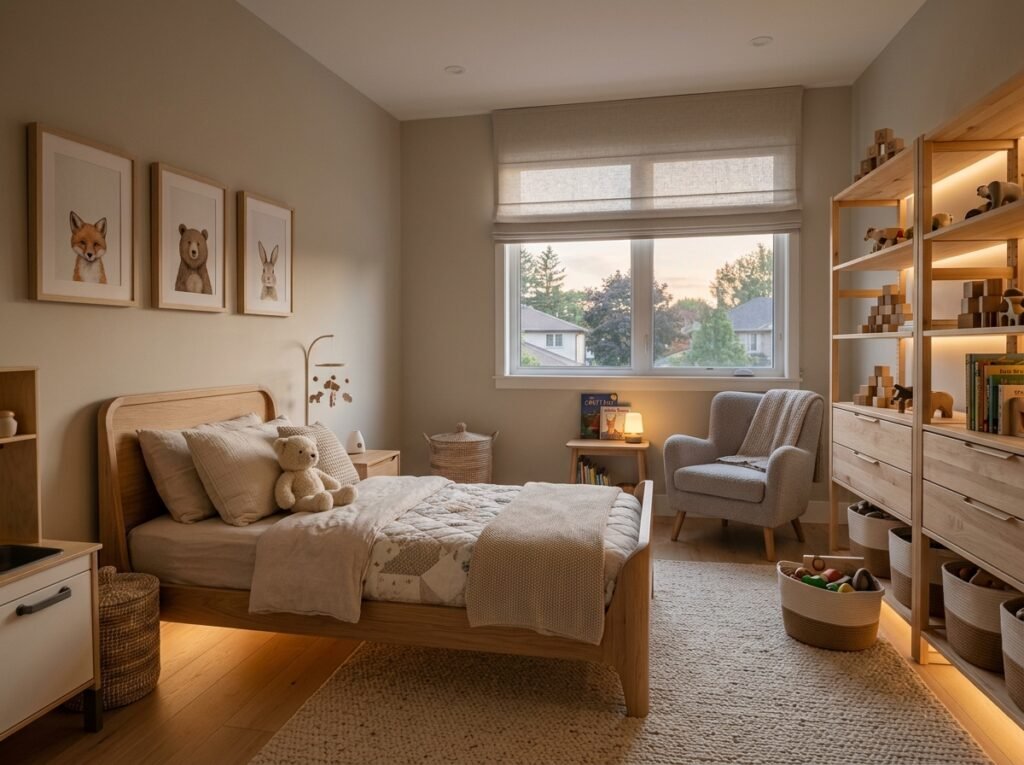
A practical toddler bedroom might include:
- A safe toddler bed
- Low toy storage
- A small bookshelf
- A soft washable rug
- Simple wall art
- A cozy reading corner
- A dresser or wardrobe
- Soft, adjustable lighting
- A clear floor area for play
- Child-accessible hooks or storage
The room does not need dozens of decorations.
In fact, toddlers can become overwhelmed when a room contains too many colors, toys, patterns, and objects.
A simple layout often works better.
What Should You Decide First?
Before buying furniture, think about five things:
Who uses the room?
One toddler, siblings, or a toddler who occasionally shares the room with a parent?
What is the room size?
A compact bedroom needs a very different layout from a large nursery.
What does your toddler enjoy?
Books, animals, cars, music, art, nature, or pretend play?
What storage do you need?
Think about clothing, diapers if still needed, toys, books, blankets, and seasonal items.
How long should the design last?
A flexible room can save money as your child grows.
How Should You Design a Toddler Room for Safety?
Safety should come before style.
A beautiful room is not useful if a curious toddler can easily pull furniture over, reach dangerous cords, or access objects that should be kept out of reach.
Toddlers explore by touching, climbing, opening, pulling, and sometimes throwing.
That means you should design the room from a toddler’s point of view.
Secure Tall Furniture
Dressers, bookshelves, wardrobes, and other tall furniture should be properly anchored according to the manufacturer’s instructions.
Do not assume a heavy piece of furniture cannot tip.
A toddler climbing onto a drawer can change the center of gravity quickly.
Keep Cords Under Control
Manage electrical cords, lamp cables, and window-covering cords carefully.
Avoid loose cords near the bed or play area.
Use Age-Appropriate Furniture
Choose a toddler bed or sleep setup that follows the manufacturer’s recommended age, size, and safety requirements.
Do not rely on appearance alone when choosing a crib transition or toddler bed.
Keep Small Objects Out of Reach
Toddlers explore objects with their mouths.
Small toys, batteries, coins, decorative pieces, and other small items should not be left where a young child can access them.
Avoid Overloading the Bedroom
A crowded floor creates another problem: trips and falls.
Leave enough open space for walking and playing.
Choose Washable Materials
Toddlers spill things.
Often.
Choose washable bedding, easy-clean rugs, and durable surfaces wherever practical.
What Are the Best Toddler Room Ideas for Small Spaces?
You do not need a large bedroom to create a great toddler space.
The secret is to reduce furniture and make each item useful.
Use Low Storage
Low shelves and baskets allow toddlers to see their toys without climbing.
You can keep a few toys available and rotate the rest.
Choose a Small Bed
A toddler bed does not need to dominate the room.
Place it against a wall while keeping the surrounding area clear and comfortable.
Use Wall Space
Install appropriate wall storage for books, artwork, or lightweight decorative items.
Keep anything that could pose a safety risk securely mounted and outside areas where your toddler might climb to reach it.
Create One Flexible Play Area
Instead of filling the room with several play stations, leave a section of open floor.
A soft rug can visually define the space.
Use Furniture With Multiple Purposes
A low storage bench can become seating and toy storage.
A bookshelf can also separate a reading corner from the sleeping area.
A compact dresser can provide clothing storage while also keeping the room organized.
Keep the Center Open
This simple trick can make a small room feel much larger.
The goal is not to fill every empty corner.
Empty floor space is useful.
How Can You Create a Toddler Sleep Area?
Sleep is the main purpose of the bedroom, so make the sleep zone calm and predictable.
Choose a Calm Color Palette
Soft cream, warm white, muted green, dusty blue, beige, and gentle peach can create a peaceful background.
You can add brighter colors through toys and artwork.
Keep the Bed Area Simple
Avoid covering the sleeping area with excessive decorations.
A simple wall print or subtle accent wall may be enough.
Add a Familiar Comfort Item
A favorite stuffed animal or blanket can make bedtime feel more familiar, provided the item is appropriate for your child’s age and sleep environment.
Create a Bedtime Routine
The room itself can help establish a predictable routine.
For example:
- Put toys away.
- Change into pajamas.
- Read a short book.
- Dim the lights.
- Give your toddler a hug.
- Say goodnight.
Repeating the same sequence can make bedtime easier because your child learns what comes next.
What Storage Ideas Work Best for Toddlers?
Toddler storage needs to be simple.
If a storage system requires three steps to put away a toy, it probably will not work well.
Use Open Toy Bins
Open baskets make cleanup easier.
You can organize them by category:
- Cars
- Blocks
- Dolls
- Stuffed animals
- Art supplies
- Puzzles
For older toddlers, simple picture labels can help.
Create a Book Display
A low forward-facing bookshelf lets toddlers choose books independently.
You can rotate books every few weeks to keep the selection interesting.
Add Clothing Storage
Place everyday clothing in drawers or low sections of the wardrobe.
You can keep less-used clothing higher up.
Use Closet Organizers
A closet can hold much more when you use its vertical space efficiently.
Add suitable shelves, baskets, or hanging organizers.
Rotate Toys
This is one of the easiest ways to reduce clutter.
Keep some toys stored away.
Every week or two, swap a few.
Old toys often feel exciting again when they disappear for a while.
How Do You Create a Toddler Playroom Inside the Bedroom?
A toddler bedroom can double as a small play space.
The trick is to create a defined play zone.
Start With a Rug
A soft washable rug creates a visual boundary.
It also makes floor play more comfortable.
Add a Low Shelf
Keep a small selection of toys on the shelf.
Place the most frequently used toys on the lowest level.
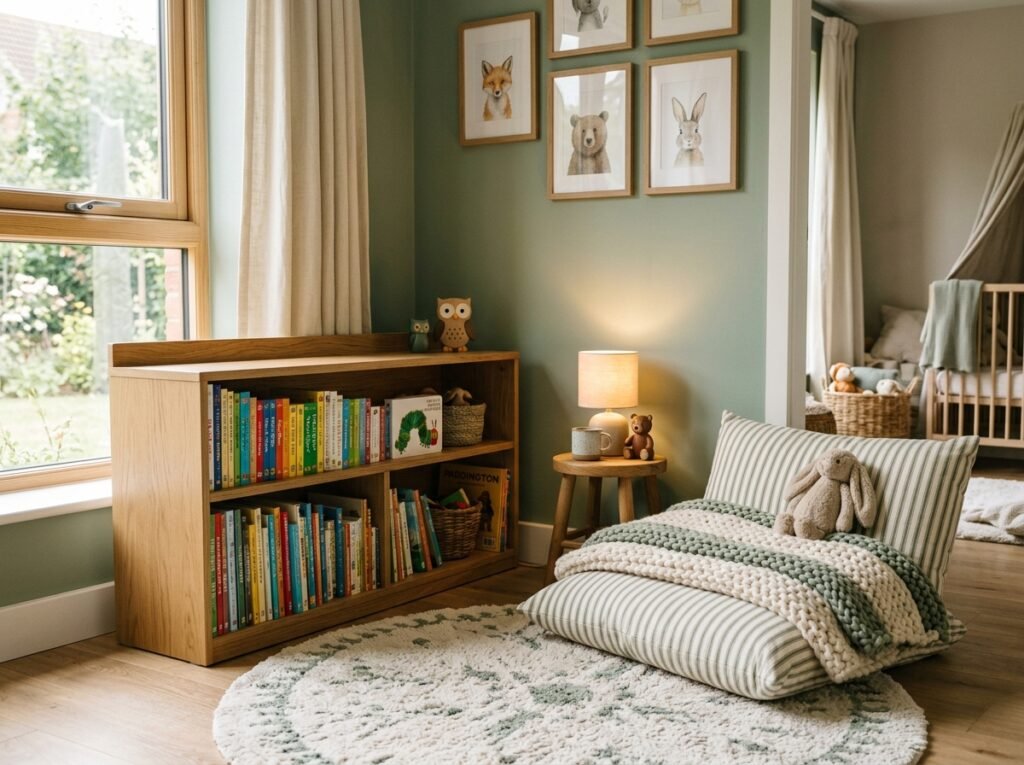
Create a Reading Corner
You only need:
- A small cushion
- Two or three favorite books
- A soft lamp
- A small basket
It does not have to be elaborate.
Add a Pretend-Play Area
A miniature kitchen, dollhouse, workbench, or play tent can become the focus of the room.
But choose one main activity rather than trying to create a complete indoor playground.
Leave Room for Movement
Toddlers need space to move.
Don’t sacrifice all of the open floor just to fit another toy.
Are Montessori Toddler Room Ideas Worth Trying?
Montessori-inspired toddler room ideas focus on independence and accessible surroundings.
The general concept is simple: arrange suitable parts of the environment so the child can participate more independently.
That might mean:
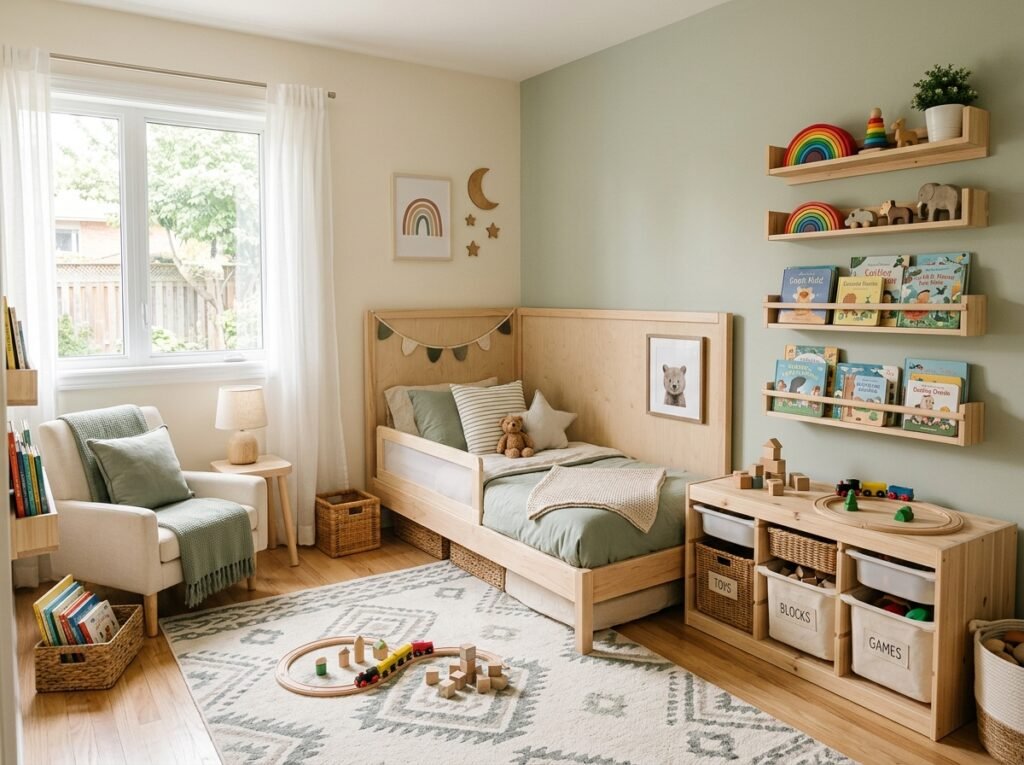
- Low bookshelf
- Accessible toy storage
- Child-height hooks
- Simple clothing choices
- Clear floor space
- A defined reading area
The exact approach should always match the child’s age and development.
What Does a Montessori-Inspired Bedroom Look Like?
It often looks calmer than a typical toddler room.
You might see:
- Natural wood
- Neutral colors
- Minimal decoration
- Low furniture
- Open storage
- Natural textures
- A small selection of toys
The goal isn’t to create a trendy Instagram room.
The goal is to make appropriate parts of the environment easier for the child to use.
Does Montessori Mean No Decorations?
No.
A toddler room can still be colorful and fun.
The difference is that decoration serves a purpose instead of simply filling empty walls.
A few framed pictures can be more effective than covering every surface.
What Colors and Themes Work Well in a Toddler Room?
Toddlers often love bold colors, but you do not have to put bright red, blue, yellow, and green on every wall.
Use a calm foundation and add playful accents.
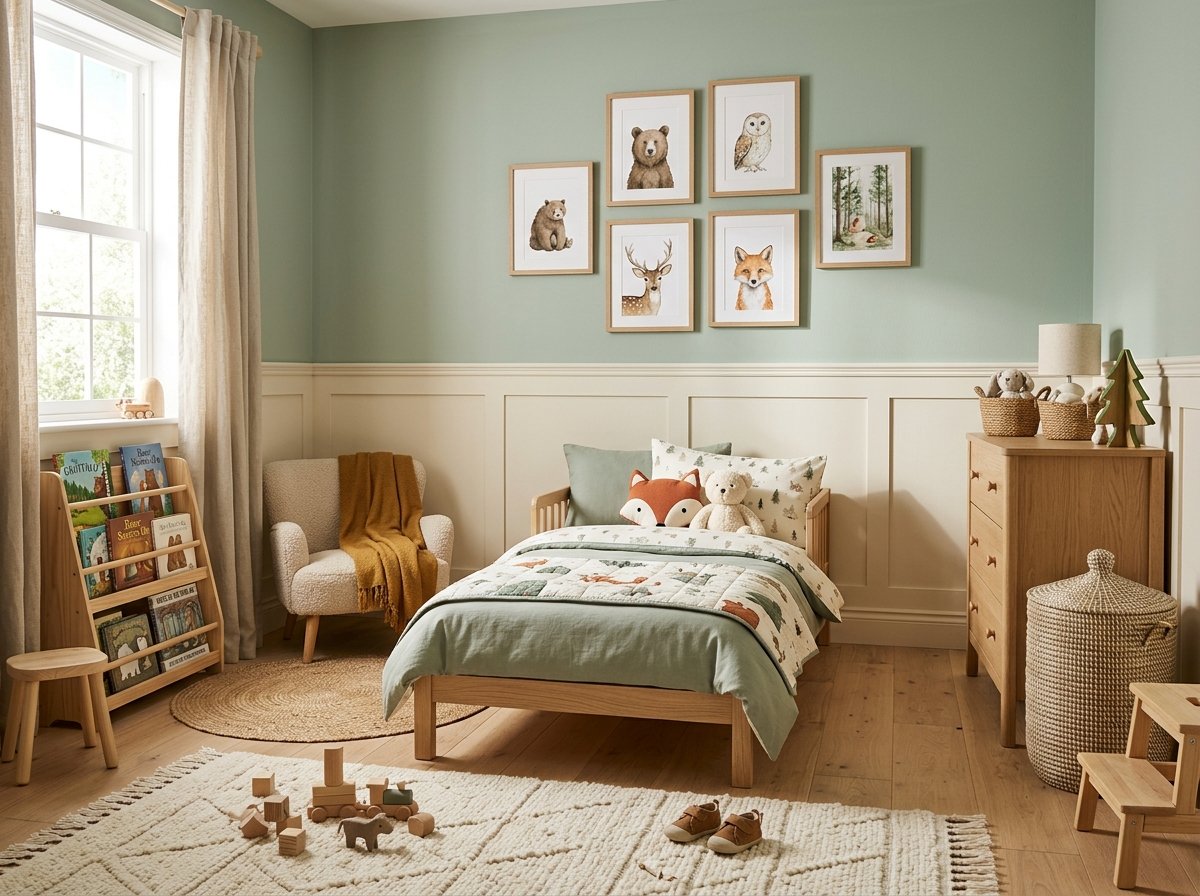
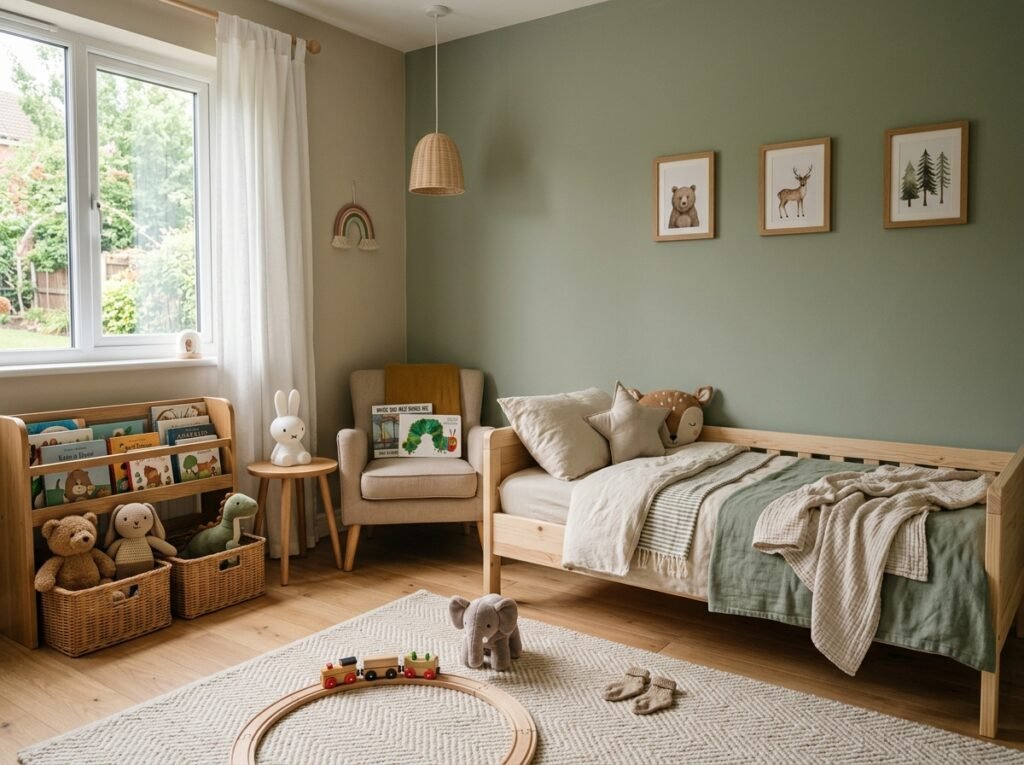
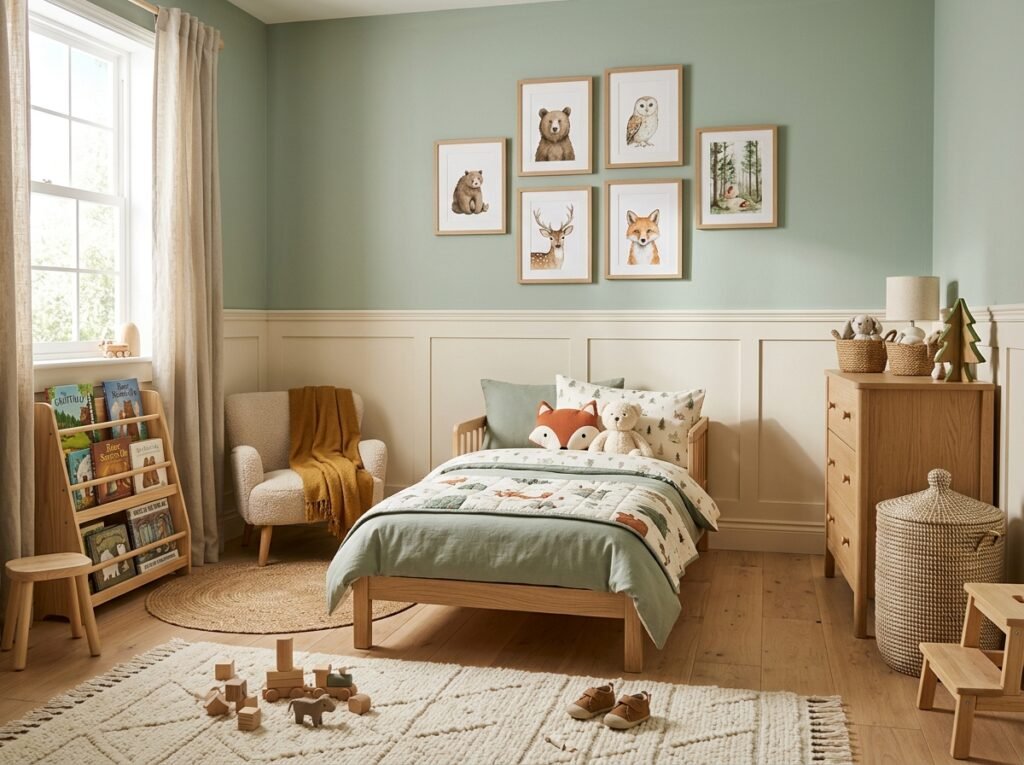
Woodland Toddler Room
Try:
- Sage green
- Warm beige
- Wooden furniture
- Animal prints
- Mushroom or tree artwork
- Woven baskets
Ocean Toddler Room
Use:
- Soft blue
- Sandy beige
- Sea creature artwork
- Natural wood
- Ocean-themed bedding
Rainbow Toddler Room
A neutral wall with a colorful rainbow mural or removable decal can create a cheerful focal point.
Farmhouse Toddler Room
Use natural wood, cream walls, gingham accents, animal artwork, and woven storage.
Space Toddler Room
A dark blue accent wall with subtle stars, planets, and moon artwork can create a fun theme.
The important part is restraint.
Choose one dominant idea and let the rest of the room support it.
How Can Lighting Improve a Toddler Bedroom?
Lighting can completely change the mood of a room.
Use several light sources instead of relying on one bright ceiling fixture.
Main Room Lighting
Use comfortable general lighting for dressing, cleaning, and play.
Task Lighting
A small lamp can provide focused light for reading.
Keep electrical products and cords safely positioned according to their instructions.
Night Lighting
A soft night-light can help a toddler who feels nervous in the dark.
Avoid placing a hot or unsuitable lamp close to bedding or curtains.
Smart Lighting
Smart bulbs can offer scheduled dimming and adjustable brightness.
For example, you might set:
Morning: brighter light
Afternoon: normal light
Bedtime: warm, dim light
Night: very low light
The goal is convenience, not creating a room full of gadgets.
Can Smart Home Technology Work in a Toddler Room?
Yes, but use it carefully.
A toddler bedroom is one place where simple technology often makes more sense than complex technology.
Smart Night-Light
A connected night-light can follow a schedule.
For example, it can remain dim during normal sleep hours and become slightly brighter during the morning wake-up period.
Smart Thermostat Integration
If your home uses a compatible smart thermostat, you may be able to schedule household temperature changes.
Avoid making the child’s room excessively warm or cold just to follow a technology routine.
Comfort comes first.
Smart Shades
Motorized shades can open in the morning and close in the evening.
This can also help manage sunlight and privacy.
Smart Speaker
A smart speaker can play lullabies, audiobooks, white noise, or a bedtime timer.
But parents should review privacy settings before placing a connected microphone in a child’s bedroom.
What About a Smart Camera?
Some families use connected baby monitors or cameras.
If you do, understand:
- Who can access the account
- Whether two-factor authentication is available
- Where recordings are stored
- How long recordings remain available
- Whether microphone functions can be disabled
- What privacy controls the manufacturer provides
Keep software updated and use a strong, unique account password.
What Smart Home Platform Should You Choose?
Compatibility matters.
If you already use Apple Home, Google Home, Amazon Alexa, or Matter-compatible products, check whether new devices fit your existing setup.
A cheap smart bulb that requires another app, another account, and another hub may create more frustration than value.
Before purchasing, ask:
Does it work with my current system?
That one question can prevent a lot of unnecessary setup work.
How Do You Make a Shared Toddler Bedroom?
A shared toddler bedroom needs clear zones.
If two children sleep in the same room, give each child a sense of personal space.
Use Matching Furniture
Matching beds or storage pieces can make the room feel cohesive.
Give Each Child Personal Details
Let each child choose:
- A pillow
- A small artwork
- A favorite color
- A few books
- A stuffed animal
This keeps the room shared without making it feel identical.
Use Vertical Storage
Shared rooms accumulate twice as many things.
Wall shelves and tall storage can help, provided they are installed securely and safely.
Create a Shared Play Area
Keep the middle of the room open.
Both children can use the same rug, toy shelf, or reading corner.
Separate Sleeping Areas
Even a simple visual difference can help.
For example, each bed can have its own small wall art arrangement or different bedding.
How Can You Create a Toddler Room on a Budget?
You do not need a full renovation.
Start with the things that affect everyday life.
Rearrange First
Before buying anything, remove unnecessary furniture.
Then try a new layout.
Paint One Wall
An accent wall can completely change a room.
Change the Bedding
New bedding often creates the biggest visual impact for the lowest cost.
Frame Your Toddler’s Artwork
Instead of buying expensive wall decorations, display your child’s own drawings.
Repurpose Furniture
A small bookshelf from another room might become a toddler book display.
A basket might become toy storage.
A low stool might become a reading-corner seat.
Buy Less
This sounds obvious, but it is worth saying.
You do not need every cute toddler-room product you see online.
A few useful pieces usually beat a room full of decorative clutter.
How Do You Make a Toddler Room Grow With Your Child?
Toddlers grow quickly.
That means flexibility can save you money.
Invest in Long-Term Pieces
Spend more attention on:
- Quality furniture
- Mattress and bed setup
- Storage
- Lighting
- Durable flooring
- Window treatments
Keep Themes Flexible
Instead of permanent cartoon characters, use removable details.
Change:
- Bedding
- Posters
- Pillows
- Rugs
- Wall decals
This makes the room easy to update.
Choose Neutral Furniture
Natural wood, white, cream, and other simple finishes can work for toddlers, preschoolers, and older children.
Create a Flexible Desk Area
You might not need a full homework desk yet.
But leaving space for one can save you from rearranging the entire room later.
What Common Toddler Room Mistakes Should You Avoid?
Even well-designed rooms can become frustrating if you overlook everyday behavior.
Mistake 1: Too Many Toys
More toys do not necessarily mean more fun.
Rotate them.
Mistake 2: Furniture That Is Too Large
Oversized furniture can consume valuable floor space.
Choose pieces appropriate for the room.
Mistake 3: Designing Only for Photos
A room can look beautiful in a photograph and still be annoying to use.
Ask whether your toddler can actually reach the things they use every day.
Mistake 4: Ignoring Storage
If you don’t plan storage, clutter will eventually win.
Mistake 5: Too Much Technology
Smart devices should solve problems.
They should not create more apps, cables, notifications, and setup work.
Mistake 6: Choosing a Theme That Is Too Specific
A toddler may love dinosaurs today and construction trucks next year.
Use removable decor whenever possible.
Mistake 7: Forgetting About Cleaning
A toddler room needs to survive spills, crayons, food, muddy shoes, and stuffed animals.
Choose practical materials.
What Are Some Quick Toddler Room Ideas You Can Try This Weekend?
If you want a simple makeover, try these projects one at a time:
- Create a reading corner with a small shelf and soft cushion.
- Add low toy baskets so cleanup becomes easier.
- Rotate toys and store unused ones elsewhere.
- Create an art wall using framed toddler artwork.
- Add a washable rug to define the play zone.
- Install child-height hooks for jackets or bags where appropriate.
- Change the bedding for an instant visual update.
- Rearrange the furniture to create more open floor space.
- Add a soft night-light for nighttime comfort.
- Create a simple bedtime station for books, pajamas, and comfort items.
You don’t need to complete all ten.
One thoughtful change can make the entire room feel different.
These semantic terms help cover the full topic instead of relying on repeated use of one exact keyword.
Who Benefits Most From These Toddler Room Ideas?
These ideas work particularly well for:
- First-time parents transitioning from a nursery
- Families living in apartments
- Parents designing a shared bedroom
- Families with limited storage
- Parents planning a Montessori-inspired environment
- Families updating a toddler’s existing nursery
- Parents who want a room that grows with their child
- Families interested in practical smart-home upgrades
The common thread is simple: the room needs to support real family routines.
Frequently Asked Questions
What should a toddler room include?
A toddler room should include a suitable sleep space, safe storage, age-appropriate furniture, comfortable lighting, open play space, and easy access to books or toys.
How do I make a toddler room cozy?
Use soft textures, warm lighting, comfortable bedding, a washable rug, natural materials, books, and a few familiar objects.
What is a good color for a toddler bedroom?
Soft green, cream, beige, muted blue, warm white, and gentle peach are popular choices. You can add brighter colors through accessories.
How do I organize a toddler bedroom?
Use low toy bins, accessible bookshelves, clothing drawers, closet organizers, and a small number of clearly defined storage categories.
Is a Montessori toddler room a good idea?
A Montessori-inspired setup can encourage appropriate independence by making selected items accessible and keeping the environment simple and organized.
How do I make a small toddler room feel bigger?
Use fewer furniture pieces, vertical storage, light colors, multifunctional furniture, and plenty of open floor space.
Should I use smart devices in a toddler room?
Smart lighting, shades, or other carefully selected devices can be useful. Avoid unnecessary connected products and pay particular attention to privacy for devices with microphones or cameras.
How can I decorate a toddler room cheaply?
Rearrange existing furniture, rotate toys, frame your child’s artwork, paint one wall, change bedding, and repurpose baskets or shelves.
How can I make a toddler bedroom last for several years?
Choose neutral furniture and flexible storage, then update inexpensive elements such as bedding, wall art, rugs, and accessories as your child grows.
What is the most important part of a toddler bedroom?
Safety and a comfortable sleep environment come first. After that, focus on storage, open play space, and a design that supports your child’s everyday routines.
Conclusion
The best toddler room ideas are not about creating the most expensive or Instagram-perfect bedroom.
They are about creating a space that works.
A good toddler room gives your child a comfortable place to sleep, enough room to play, simple storage they can understand, and small opportunities to become more independent.
Start with safety and function. Then add color, themes, artwork, cozy textures, and personal touches.
If you want to introduce smart-home features, keep them simple. A scheduled night-light or automated shade can be useful, but technology should quietly support the room rather than take over it.
Most of all, remember that toddlers change quickly.
Design a flexible room now, and you’ll be able to change the details later without starting from zero.