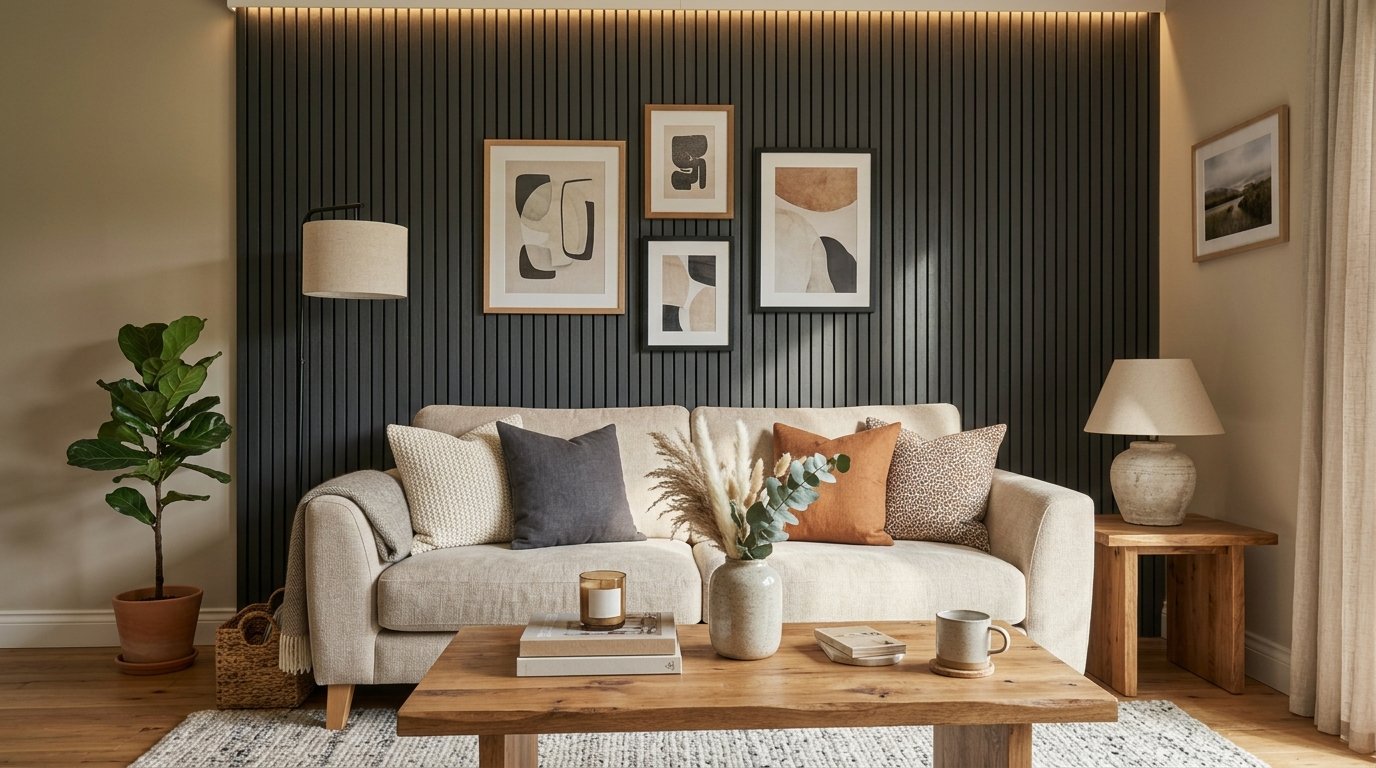
Accent Wall Living Room Ideas: How Can You Transform Your Space?
An accent wall living room can change the entire feel of a space without requiring a full room makeover. The idea is simple: choose one wall and give it a different color, pattern, material, or texture than the surrounding walls.
The best accent wall ideas do more than add color. They can highlight a fireplace, frame a television, create a focal point behind a sofa, add warmth with wood, or make a plain living room feel more finished.
You also do not need a huge budget. A gallon of paint, a few basic tools, or carefully selected wallpaper can sometimes create a dramatic result.
Table of Contents
- What Is an Accent Wall?
- Why Should You Add an Accent Wall to a Living Room?
- Which Wall Should Be the Accent Wall?
- What Color Works Best?
- Accent Wall Living Room Ideas With Paint
- Wood Accent Wall Ideas
- Wallpaper Accent Walls
- Stone and Brick Accent Walls
- Fireplace Accent Walls
- TV Wall Accent Ideas
- Accent Walls for Small Living Rooms
- Accent Walls for Large Living Rooms
- How to Choose the Right Accent Wall
- How to Create an Accent Wall Step by Step
- Common Accent Wall Mistakes
- How to Decorate Around an Accent Wall
- Frequently Asked Questions
- Final Thoughts
What Is an Accent Wall?
An accent wall is a single wall that intentionally looks different from the other walls in the room.
The difference can come from:
- Paint color
- Wallpaper
- Wood paneling
- Stone
- Brick
- Wall molding
- Decorative plaster
- Textured panels
- Large-scale artwork
- Built-in shelving
The surrounding walls usually remain more neutral so the accent wall becomes the visual focus.
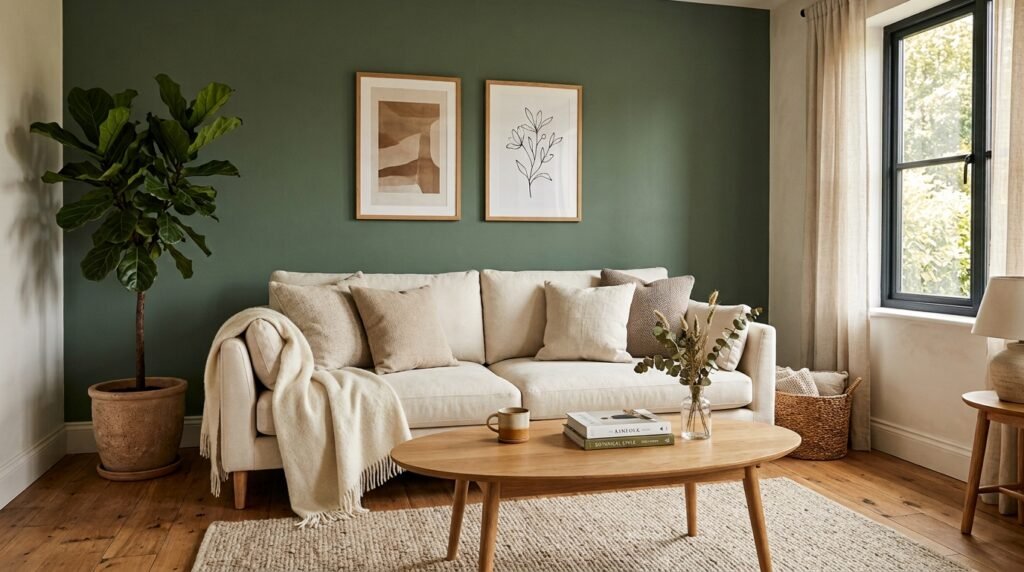
For example, imagine a living room with warm white walls, a cream sofa, and oak furniture. Painting the wall behind the sofa deep green instantly creates contrast without changing the rest of the room.
That is the power of an accent wall.
Why Should You Add an Accent Wall to a Living Room?
An accent wall can solve several common decorating problems.
It creates a focal point
Every living room benefits from having something that naturally catches the eye.
An accent wall can provide that visual anchor.
It adds personality
Neutral furniture can sometimes make a room feel flat. A bold wall color or interesting texture gives the room more character.
It defines a zone
In an open-concept home, an accent wall can help visually separate the living area from the dining or kitchen area.
It can make decorating easier
Instead of trying to introduce a dozen different colors, you can use one strong accent color and repeat smaller touches throughout the room.
It can highlight architecture
A fireplace, alcove, built-in shelf, or large window can become more noticeable when you treat the surrounding wall differently.
Which Wall Should Be the Accent Wall?
This is one of the most important decisions.
There is no universal rule that says the wall behind the sofa must always be the accent wall.
Look around your room and ask:
Where does your eye naturally go?
That is often the best place to start.
Good choices include:
- Wall behind the sofa
- Fireplace wall
- TV wall
- Wall opposite the entrance
- Wall with built-in shelving
- Large uninterrupted wall
- Architectural feature wall
Avoid choosing a wall simply because it is empty.
An accent wall works best when it supports something already happening in the room.
What Color Works Best for an Accent Wall Living Room?
The best color depends on the room’s lighting, furniture, floor color, and overall style.
Warm neutrals
Try:
- Taupe
- Beige
- Mushroom
- Warm gray
- Greige
- Mocha
These colors create subtle contrast without making the room feel dramatic.
Green
Deep olive, sage, forest green, and muted green can work beautifully with natural wood and cream furniture.
Blue
Navy, dusty blue, and deep blue-gray create a calm, sophisticated atmosphere.
Brown
Chocolate, espresso, and warm brown tones can make a large living room feel cozy.
Black
A black accent wall creates strong contrast and works especially well with modern furniture, light upholstery, and warm wood.
Terracotta
Terracotta and clay tones add warmth and work well with earthy, Mediterranean, Southwestern, and bohemian interiors.
The important thing is not to choose a color in isolation.
Look at your existing furniture first.
What Are the Best Accent Wall Living Room Ideas With Paint?
Paint remains the easiest and most affordable way to create an accent wall.
Here are several ideas worth considering.
1. Deep Green Accent Wall
A deep olive or forest green wall can bring an earthy feel into the living room.
Pair it with:
- Cream
- Beige
- Natural wood
- Brass
- Warm white
- Tan leather
This combination feels relaxed without becoming overly rustic.
2. Navy Blue Accent Wall
Navy creates a rich background for artwork and furniture.
It works particularly well with:
- White trim
- Light gray sofas
- Brass lighting
- Walnut furniture
- Cream textiles
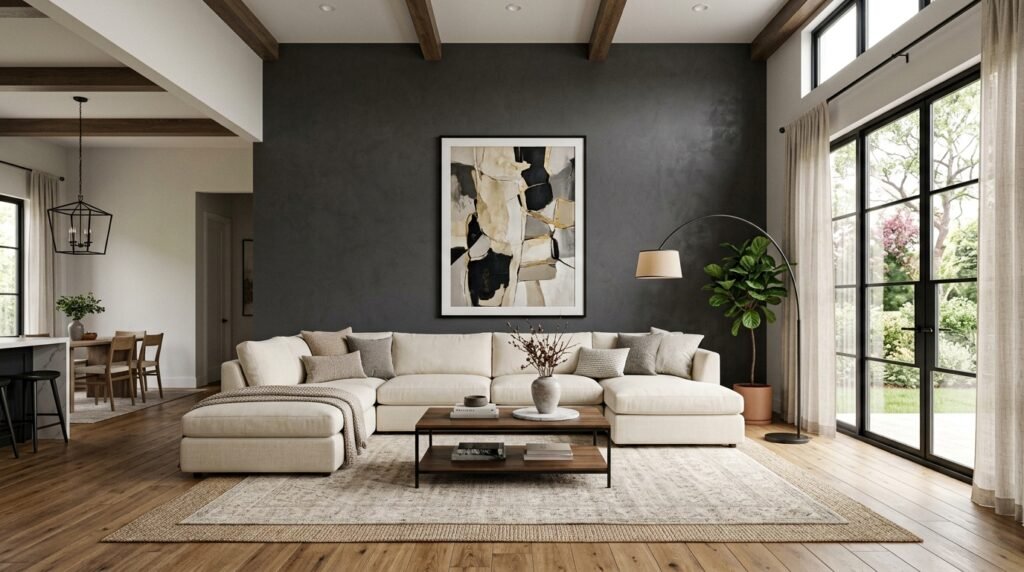
3. Charcoal Gray Accent Wall
Charcoal is a good option when you want drama without using black.
It can create a sophisticated backdrop for a large sectional or fireplace.
4. Terracotta Accent Wall
Terracotta adds warmth and personality.
Use it with natural materials such as rattan, linen, oak, and woven baskets.
5. Black Accent Wall
A black accent wall can look surprisingly elegant.
Keep the rest of the room lighter so the space does not become visually heavy.
Can a Wood Accent Wall Work in a Living Room?
Absolutely.
A wood accent wall adds texture and warmth that paint cannot provide.
You can use:
- Vertical wood slats
- Reclaimed wood
- Oak panels
- Walnut panels
- MDF board-and-batten
- Decorative fluted panels
- Wood-look wall panels
Vertical Wood Slats
Vertical lines can draw the eye upward and emphasize ceiling height.
They look especially good behind a TV, sofa, or fireplace.
Warm Oak Panels
Oak works beautifully in modern, Scandinavian, Japandi, and organic interiors.
Dark Wood
Walnut or dark-stained wood creates a richer, more dramatic appearance.
If your furniture is already dark, balance the wall with lighter upholstery and flooring.
Is Wallpaper a Good Accent Wall Idea?
Wallpaper can completely change a living room with relatively little construction.
Instead of wallpapering every wall, use it on one wall.
Popular patterns include:
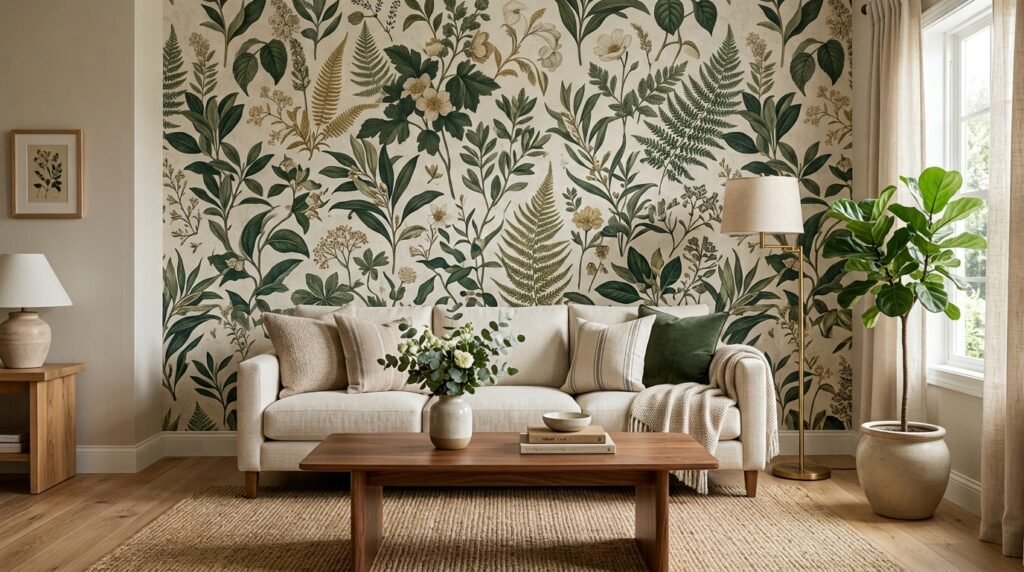
- Botanical prints
- Geometric designs
- Textured neutrals
- Grasscloth-inspired patterns
- Abstract designs
- Traditional floral patterns
- Large-scale landscapes
For a small room, a subtle pattern can add interest without making the space feel crowded.
For a larger room, a bold wallpaper can become the main design feature.
Can Brick or Stone Create a Good Accent Wall?
Brick and stone can give a living room architectural character.
A brick accent wall works well in:
- Industrial homes
- Loft-style rooms
- Modern farmhouse interiors
- Rustic spaces
- Transitional homes
Stone can create a more natural and substantial appearance.
Consider:
- Stacked stone
- Limestone
- Slate
- Travertine
- Faux stone panels
If real stone is outside your budget, high-quality manufactured materials can create a similar visual effect.
Just be careful with scale. A heavily textured material can dominate a small room.
How Can You Design a Fireplace Accent Wall?
A fireplace already creates a natural focal point, so an accent treatment can make it even stronger.
You could use:
- Vertical wood paneling
- Stone
- Brick
- Dark paint
- Large-format tile
- Decorative molding
For a traditional home, painted molding around the fireplace can look elegant.
For a modern room, large-format stone or vertical slats may create a cleaner appearance.
Keep the mantel styling fairly simple. If the wall itself has strong texture or color, you do not need dozens of decorations.
How Can You Create a Stylish TV Accent Wall?
The television wall often becomes the largest visual feature in a living room, but a TV can look awkward when it sits alone on a blank wall.
An accent treatment can make the television feel intentional.
Try:
Wood slat TV wall
Install vertical slats around or behind the television.
Dark painted TV wall
A dark background can visually reduce the contrast of the black television screen.
Built-in media wall
Combine:
- TV
- Floating shelves
- Closed cabinets
- Decorative lighting
- Storage
Stone TV wall
Stone creates a substantial focal point and works especially well with modern fireplaces.
Keep cable management in mind before starting the project.
What Accent Wall Ideas Work in a Small Living Room?
Small rooms need a little more planning.
You do not have to avoid dark colors completely. Instead, think about how the accent wall interacts with natural light.
For a small living room, consider:
- Soft green
- Dusty blue
- Warm beige
- Light terracotta
- Medium gray
- Subtle wallpaper
- Light wood paneling
A very busy pattern on a small wall can make the space feel visually crowded.
One useful approach is to keep the furniture simple and let the wall provide the personality.
Mirrors can also help reflect light and make the room feel more open.
What Accent Wall Works Best in a Large Living Room?
Large rooms give you more freedom.
A large living room can handle:
- Deep navy
- Forest green
- Charcoal
- Chocolate brown
- Dramatic wallpaper
- Full-height wood paneling
- Stone
- Oversized artwork
A very large blank wall can sometimes feel cold.
Instead of placing one small piece of art in the center, consider a larger treatment that fills the wall proportionally.
How Do You Choose the Right Accent Wall?
Before buying paint or materials, walk around the room at different times of day.
Look at the wall in:
- Morning light
- Afternoon light
- Evening light
- Artificial lighting
Color can change dramatically depending on the light source.
Also examine the permanent elements in your room.
Consider:
- Flooring
- Sofa
- Curtains
- Rug
- Cabinetry
- Fireplace
- Doors
- Window frames
- Existing artwork
Then choose an accent color that connects at least two or three of these elements.
For example, if your rug contains olive green and your cushions have warm beige tones, an olive accent wall can connect those colors naturally.
How Do You Create an Accent Wall Step by Step?
Step 1: Choose the Wall
Select a wall that has a clear visual purpose.
Step 2: Test Your Color
Do not rely only on a tiny paint chip.
Paint a larger sample area and observe it throughout the day.
Step 3: Prepare the Surface
Clean the wall.
Fill small holes.
Sand rough patches.
Remove dust before painting.
Step 4: Protect the Room
Move furniture away from the wall.
Cover flooring and nearby furniture.
Use painter’s tape around trim, outlets, and edges.
Step 5: Apply Primer if Needed
Primer can help create a more even finish, especially when covering a strong existing color.
Step 6: Paint
Use a quality brush for corners and edges.
Use a roller for the main wall surface.
Apply multiple thin coats rather than one extremely thick coat.
Step 7: Remove Tape Carefully
Remove painter’s tape while the final coat is still suitable for clean removal according to the paint manufacturer’s instructions.
Step 8: Reinstall Your Decor
Once the wall has properly dried and cured, bring the furniture back.
Stand across the room and check the balance.
Sometimes the wall looks different once the furniture and artwork return.
How Can You Decorate Around an Accent Wall?
The wall should work with the room rather than compete with everything else.
If the wall is bold, simplify nearby accessories.
For example:
Dark green wall + cream sofa + oak table + neutral rug
works because the palette remains controlled.
Another combination:
Navy wall + gray sofa + walnut furniture + brass lighting
creates a richer, more formal look.
If you choose patterned wallpaper, let the furniture provide quieter shapes and colors.
What Are the Biggest Accent Wall Mistakes?
Choosing a Random Wall
A wall should have a reason to stand out.
Ignoring Lighting
A color that looks beautiful in a store may look completely different in your home.
Using Too Many Accent Colors
One accent wall does not mean you need five additional bold colors.
Forgetting Furniture Scale
A tiny accent treatment can look lost on a huge wall.
Making the Room Too Dark
Dark walls can work beautifully, but balance them with lighter furniture, reflective surfaces, and good lighting.
Skipping Surface Preparation
Paint cannot hide every wall defect.
Take time to repair and clean the surface first.
Making the Accent Wall Too Busy
If you use wallpaper, wood slats, artwork, shelves, and decorative objects all together, the wall may become visually overwhelming.
Choose one main feature.
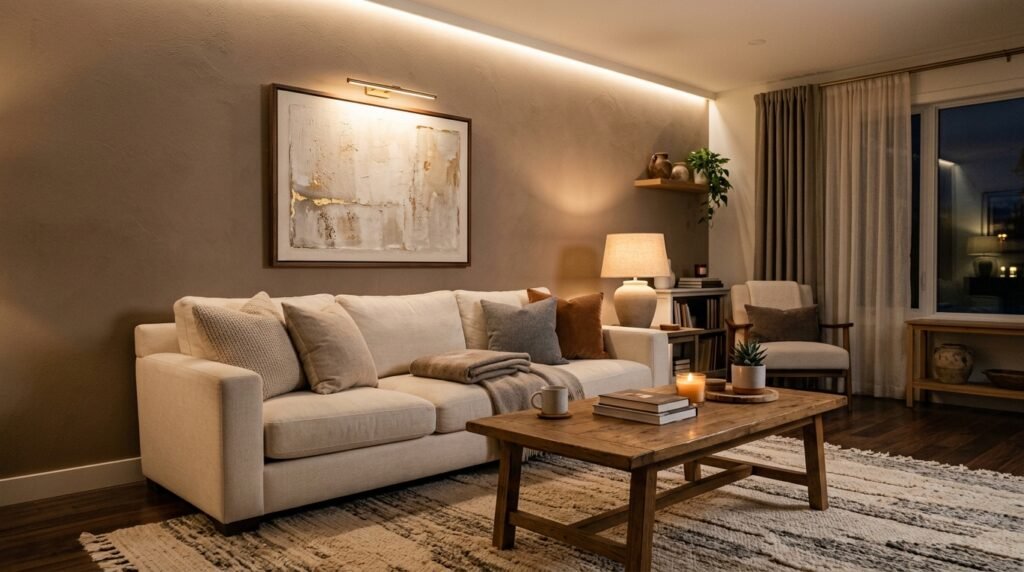
Can You Use Smart Lighting With an Accent Wall?
Yes. Lighting can make an accent wall much more effective.
For example, warm LED lighting can highlight:
- Wood texture
- Stone
- Wall molding
- Artwork
- Shelving
Smart bulbs or dimmable fixtures can also let you adjust the room for different activities.
You might use brighter lighting during the day and softer lighting in the evening.
If you install new electrical fixtures, follow local electrical requirements and use a qualified professional when necessary.
Frequently Asked Questions About Accent Wall Living Rooms
Is an accent wall still popular?
Yes. Accent walls continue to be a flexible way to introduce color, texture, pattern, or architectural detail without treating every wall in the room.
Should an accent wall be darker than the other walls?
Not necessarily. It can be darker, lighter, brighter, warmer, or simply more textured.
The goal is contrast, not automatically a darker color.
Should the accent wall be behind the sofa?
It can be, but it does not have to be. Fireplace walls, TV walls, architectural features, and large uninterrupted walls can all work.
What is the easiest accent wall?
Paint is usually the simplest and most affordable option.
It requires fewer tools and less installation work than wood, stone, or built-in cabinetry.
What is the best accent wall color for a gray sofa?
Gray sofas are versatile. Depending on the shade of gray, you can pair them with:
- Navy
- Sage
- Olive
- Cream
- Charcoal
- Terracotta
- Warm beige
- Deep green
Can an accent wall make a room look bigger?
It depends on the color, lighting, and placement. Lighter colors can help a room feel airy, while darker walls can add depth and make a large room feel cozier.
Can I have an accent wall in an open floor plan?
Yes. In fact, an accent wall can help visually define the living room within a larger open space.
How much does an accent wall cost?
The cost varies widely. A painted wall may require little more than paint and basic supplies, while custom wood paneling, stone, or built-ins can cost considerably more.
Should the ceiling match the accent wall?
Not always. Keeping the ceiling neutral is usually the easier choice, especially when the wall already has a strong color or pattern.
What if I get tired of the accent color?
Paint is one of the easiest treatments to change. This is one reason paint works well if you are experimenting with a new style.
Final Thoughts: How Can You Make an Accent Wall Work?
The best accent wall living room designs feel intentional rather than simply different.
Start by studying your room. Find the natural focal point, consider the amount of light, and look at the colors already present in your furniture and flooring.
Then choose one strong idea.
Maybe that means a deep green painted wall behind a cream sofa. Maybe it is a warm wood TV wall, a dramatic fireplace treatment, or a subtle textured wallpaper.
You do not need to completely redesign your living room to make a noticeable change. A thoughtfully planned accent wall can add color, depth, texture, and personality while keeping the rest of your space comfortable and cohesive.