Kids Bedroom Ideas: How Can You Create a Fun, Cozy, and Practical Room?
What Makes a Great Kids Bedroom?
The best kids bedroom ideas balance three things: comfort, function, and personality.
A child’s bedroom needs to work as more than a place to sleep. Depending on the child’s age, it may become a reading corner, homework station, playroom, craft area, storage zone, and quiet retreat all in the same space.
The trick is not filling every corner with furniture.
Instead, create clear zones.
For example:
- A sleep zone with a comfortable bed and soft bedding
- A study zone with a desk and good task lighting
- A play zone with floor space for toys and games
- A storage zone for clothing, books, and school supplies
- A quiet zone for reading or relaxing
This approach also makes the room easier to keep organized.
A beautiful children’s room does not have to look like a showroom. In fact, a little mess is normal. Design the room around how your child actually lives rather than how you wish the room looked in a magazine.
What Should You Consider Before Decorating?
Before buying anything, ask:
Who uses the room?
A preschooler’s needs differ from those of a teenager.
What does the child enjoy?
Sports, dinosaurs, books, music, animals, art, space, cars, or something completely different?
How much space is available?
A compact room needs a different layout from a large bedroom.
What needs to be stored?
Think beyond clothes. Include toys, books, school bags, sports equipment, and hobbies.
How long should the design last?
A temporary cartoon theme may work for a five-year-old but become outdated quickly.
The best kids bedroom design answers these questions before the shopping begins.
What Kids Bedroom Ideas Work for Different Ages?
A child’s room should evolve as the child grows.
You do not need to redesign everything every few years. Instead, build a flexible foundation and change smaller details.
Kids Bedroom Ideas for Toddlers
Toddlers need simplicity.
Keep frequently used toys within easy reach and avoid overcrowding the room.
Useful additions include:
- Low toy storage
- Soft floor rugs
- Picture books
- A small reading nook
- Washable bedding
- Soft night lighting
- Open shelving
- A simple activity table
At this age, avoid creating a room that depends on delicate decorations. Toddlers touch everything.
Kids Bedroom Ideas for Ages 5–8
This is a great age for introducing personality.
A child may want a dinosaur room one year and a space-themed bedroom the next.
Instead of permanently painting giant dinosaurs across the walls, use:
- Removable wall decals
- Bedding
- Posters
- Throw pillows
- Curtains
- Small decorative objects
That way, changing the theme does not require a full renovation.
Kids Bedroom Ideas for Ages 9–12
Older children usually need more storage and a dedicated place for homework.
A desk, comfortable chair, bookshelf, charging area, and organized closet can make a major difference.
This is also a good time to let the child participate in design decisions.
Give them choices instead of handing them a finished room.
For example:
“Would you rather have sage green or light blue walls?”
That small choice can make the room feel much more personal.
Teen Bedroom Ideas
Teenagers often want privacy and independence.
Consider:
- A larger desk
- Comfortable study chair
- Full-length mirror
- Better wardrobe organization
- Charging station
- Wall art
- Task lighting
- Comfortable lounge seating
The bedroom becomes more like a personal studio than a traditional child’s room.
How Can You Design a Small Kids Bedroom?
Small bedrooms can actually feel more comfortable when you avoid overcrowding.
The goal is to make every piece of furniture perform a useful job.
Choose Multi-Use Furniture
A storage bed can provide additional space for bedding, toys, or seasonal clothes.
A desk with drawers can combine homework space and storage.
A bench at the foot of the bed can provide seating while hiding toys underneath.
Use Vertical Space
When floor space is limited, look upward.
Install:
- Tall bookshelves
- Wall-mounted shelves
- Pegboards
- Hanging organizers
- Vertical wardrobes
- Wall hooks
Just make sure furniture and wall-mounted items are properly secured.
Keep the Floor Open
An open floor makes a small room feel larger and gives children space to play.
Instead of several small pieces of furniture, choose fewer items with stronger functionality.
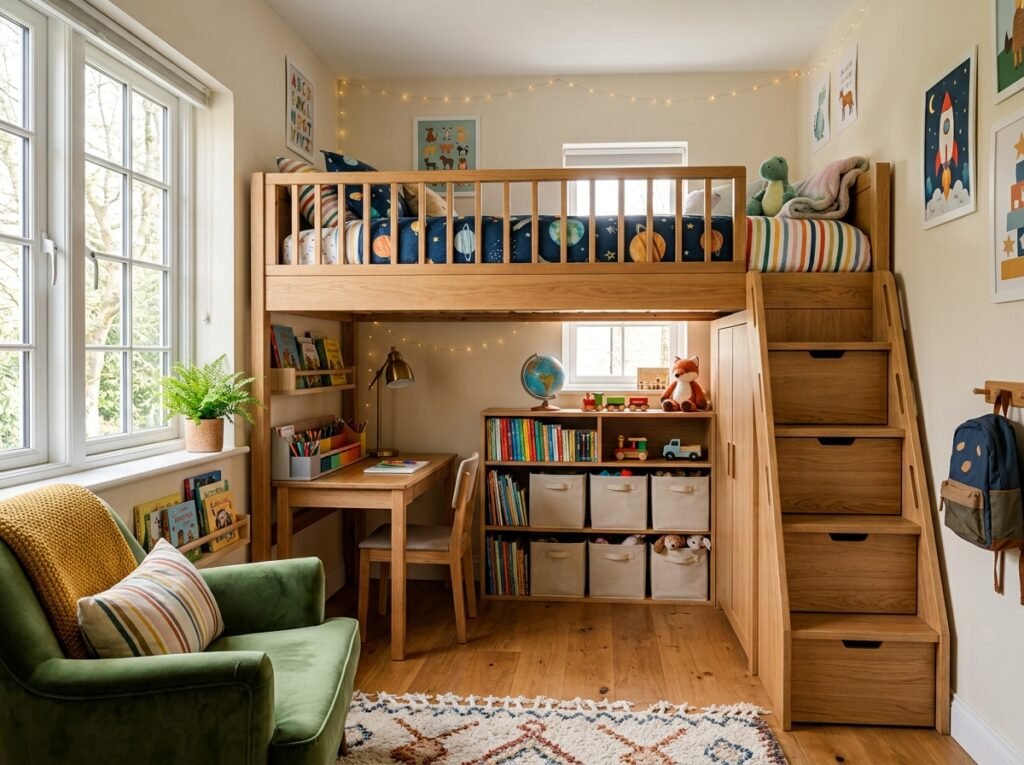
Try a Loft Bed
For an older child, a loft bed can create a useful area underneath.
You could put a desk, reading nook, or storage system below it.
However, loft and bunk beds require age-appropriate use and careful attention to manufacturer safety instructions.
What Are the Best Kids Bedroom Ideas for Storage?
Storage is one of the biggest challenges in a child’s bedroom.
Toys multiply. Books pile up. Clothes seem to appear from nowhere.
A good storage system makes cleanup easier because everything has a home.
Use Open Bins for Everyday Toys
Children are more likely to clean up when they can see where things belong.
Label bins with simple words or pictures.
For younger children, picture labels can work better than written labels.
Add Under-Bed Storage
Use rolling boxes or built-in drawers beneath the bed.
This is particularly useful for:
- Seasonal clothing
- Extra blankets
- Toys
- Shoes
- Sports equipment
Create a Reading Wall
Install a few low shelves with the front covers of books facing outward.
This turns storage into decoration while making books easy to find.
Use Closet Doors
The back of a closet door can hold:
- Hair accessories
- Small toys
- School supplies
- Shoes
- Craft materials
Do not underestimate these forgotten surfaces.
Build a Drop Zone
Near the bedroom door, create a small area for:
- Backpack
- Jacket
- Shoes
- Sports bag
- School papers
This simple setup can prevent the classic “Where’s my backpack?” morning problem.
How Can You Create a Kids Bedroom Study Area?
A good homework area does not need to be large.
Even a small desk against the wall can work.
Choose the Right Desk Location
Place the desk where the child has enough light but is not constantly distracted by the television, gaming area, or busy hallway.
Natural light is useful during the day.
For evening homework, add a dedicated task light.
Keep School Supplies Organized
Use small containers for:
- Pencils
- Pens
- Markers
- Scissors
- Sticky notes
- Rulers
Keep frequently used supplies within reach.
Add a Charging Station
Older children may use tablets, laptops, headphones, or other electronics.
A dedicated charging area keeps cables under control.
For safety, follow the instructions supplied with each device and charging accessory, and avoid creating a pile of overloaded power strips.
Make the Study Area Comfortable
A beautiful desk means very little if the chair is uncomfortable.
Choose furniture that fits the child’s size and allows them to sit comfortably while working.
What Colors Work Best in a Kids Room?
There is no single perfect color for a children’s bedroom.
The best color depends on the child’s personality, room size, natural light, and the overall mood you want.
Soft Neutrals
Cream, beige, warm white, and soft gray create a calm foundation.
They also make it easy to update the room later.
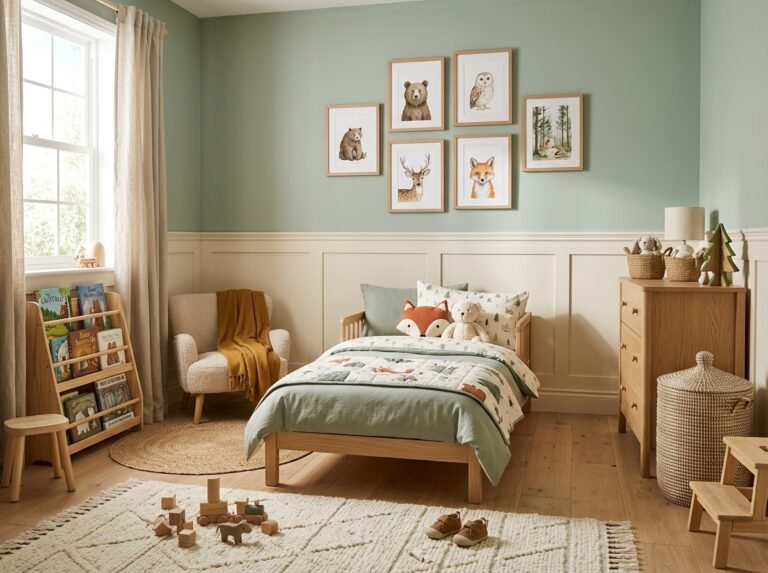
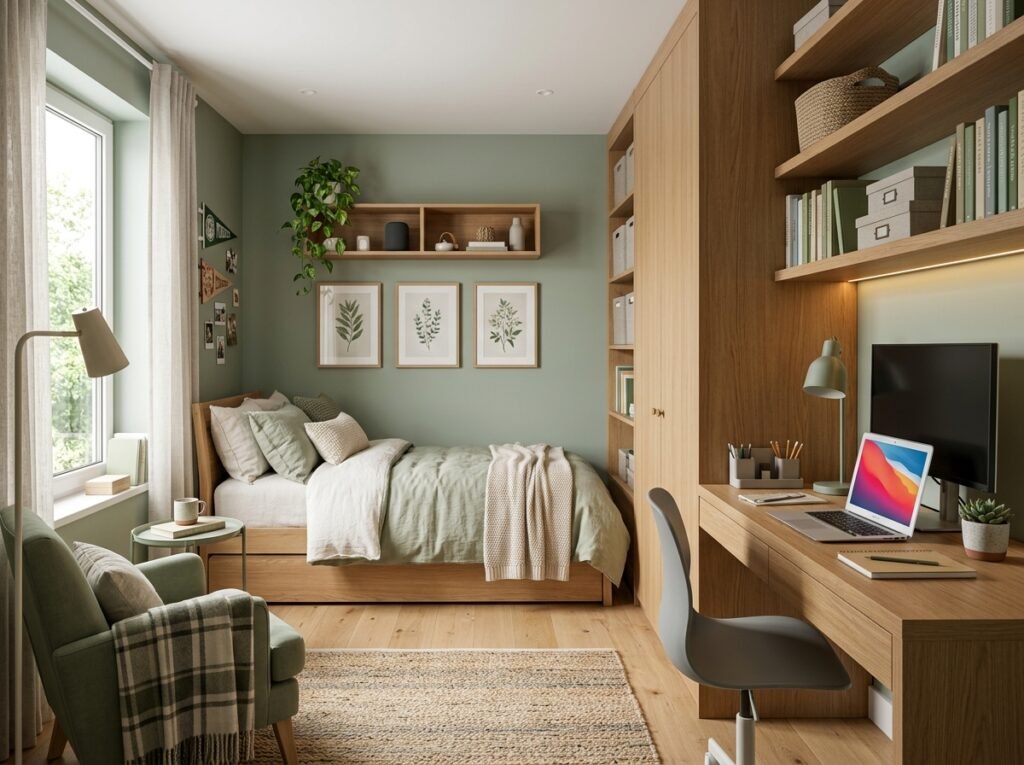
Sage Green
Sage green works beautifully in nature-inspired kids bedrooms.
Pair it with:
- Natural wood
- Cream
- White
- Tan
- Terracotta accents
Soft Blue
Blue can create a peaceful feeling without making the room look overly themed.
Use different shades to add depth.
Warm Yellow
A muted yellow can bring energy into a darker room.
Avoid making every surface bright yellow. A small accent wall or accessories may be enough.
Pink and Peach
Soft blush, dusty rose, and peach can create a warm bedroom without making the design feel too young.
The key is balance.
Color does not need to define who the room belongs to.
Which Kids Bedroom Themes Are Worth Trying?
Themes can make decorating fun, but the best themes have room to grow.
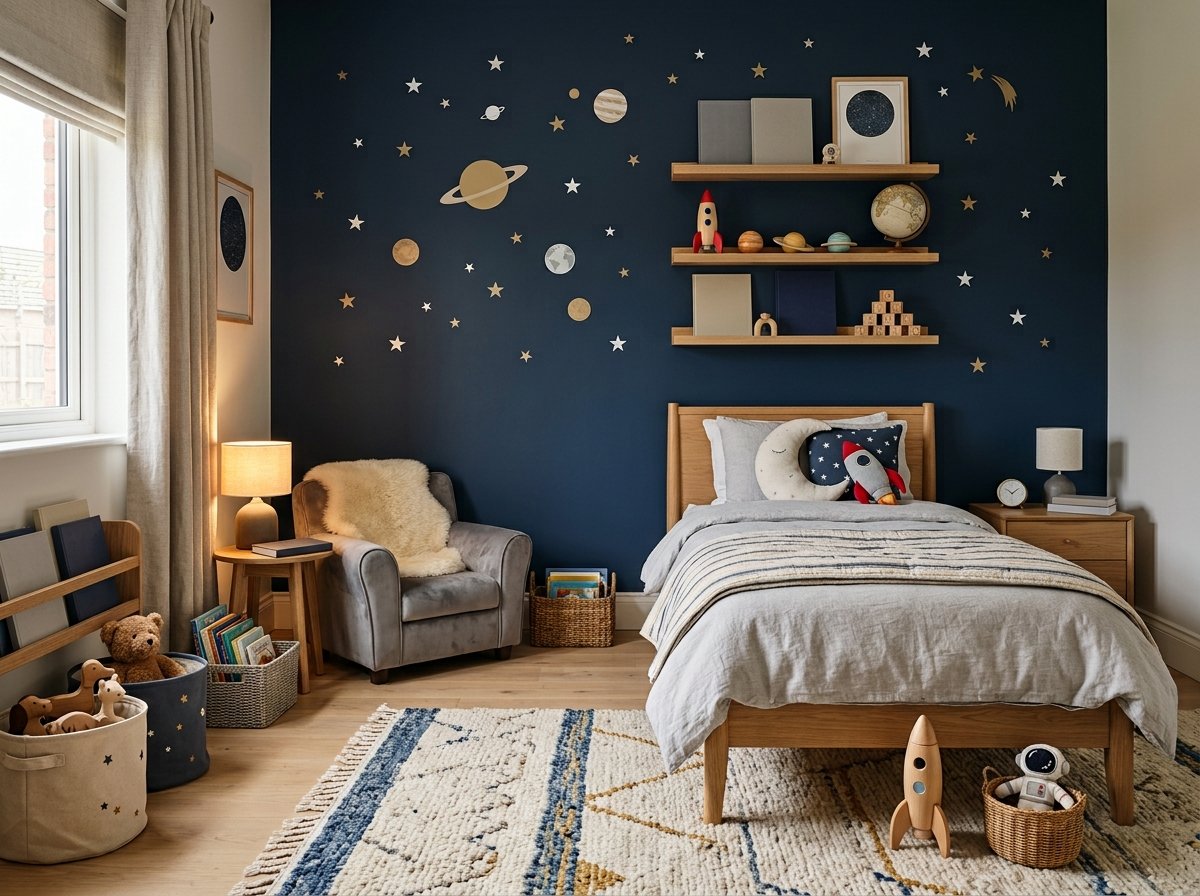
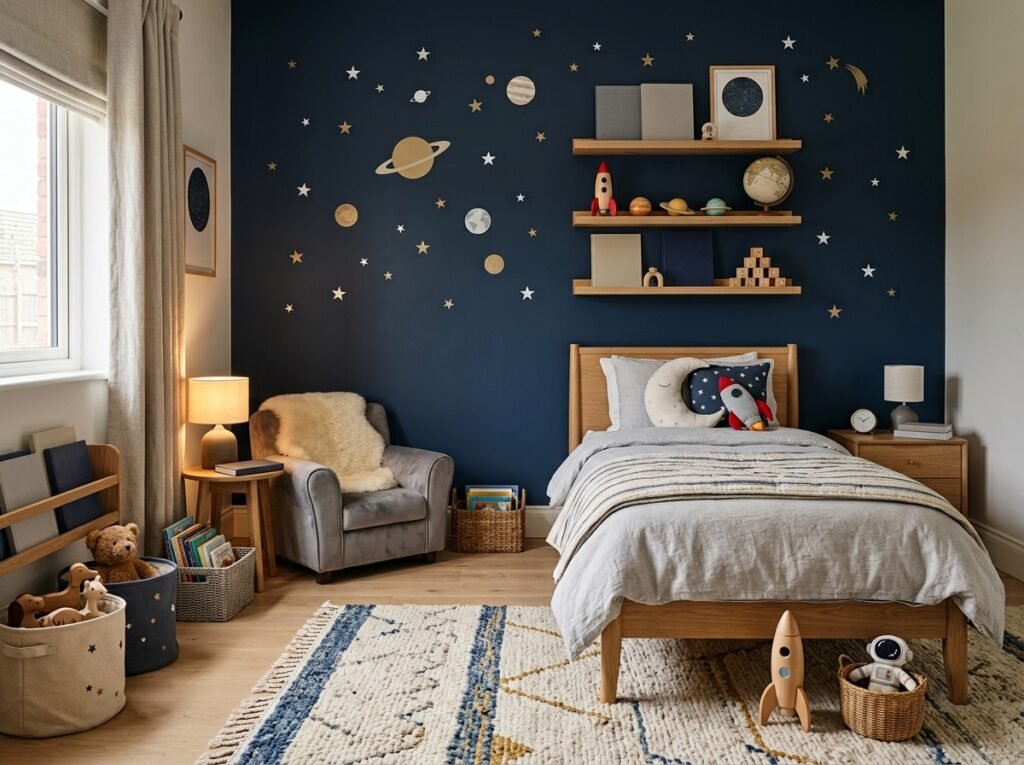
Space-Themed Bedroom
Use:
- Navy walls
- Star decals
- Moon-shaped lighting
- Planet artwork
- Astronaut bedding
Keep the larger furniture neutral so the room can evolve.
Dinosaur Bedroom
Rather than covering every wall with dinosaurs, create a natural history-inspired room with fossil artwork, earth tones, wooden furniture, and a few dinosaur decorations.
Animal-Themed Bedroom
A woodland or safari theme can work for many ages.
Use animal prints, natural textures, baskets, plants, and warm colors.
Sports Bedroom
Instead of turning the entire room into a stadium, create a subtle sports-inspired space.
A framed jersey, ball display, team colors, and sports photography can do most of the work.
Book Lover’s Bedroom
A comfortable reading nook, wall-mounted book shelves, soft lighting, and a large pile of favorite books can transform an ordinary bedroom into a little library.
How Can Smart Technology Improve a Kids Bedroom?
Technology can make a children’s bedroom more convenient, but it should support the room rather than dominate it.
Smart home products can help parents manage lighting, temperature, and routines.
Smart Lighting
A smart bulb can provide different lighting levels for different activities.
For example:
- Bright light for homework
- Softer light for reading
- Dim light before bedtime
- Gentle night lighting during nighttime wake-ups
Smart lighting can also run on schedules.
Smart Thermostats
A connected thermostat can help manage household temperature schedules.
However, the bedroom should remain comfortable rather than becoming a technology experiment.
Use the manufacturer’s recommendations and avoid placing sensors where furniture, curtains, or direct sunlight could distort readings.
Smart Speakers
A smart speaker can play music, audiobooks, timers, or white noise.
For children’s rooms, privacy settings deserve special attention. Parents should review the device’s microphone controls, account permissions, voice recordings, and available parental controls.
Smart Blinds
Automated shades can open in the morning and close at night.
This can make a bedroom feel more comfortable while also helping manage natural light and privacy.
Smart Home Compatibility
Before buying several smart products, check whether they work with the same ecosystem.
You may encounter systems built around platforms such as:
- Apple Home
- Google Home
- Amazon Alexa
- Matter-compatible devices
Matter is particularly relevant because it is designed to improve interoperability between compatible smart-home products.
The important point is simple: don’t buy a smart gadget just because it looks impressive.
Buy it because it solves a real problem.
How Do You Add Smart Technology Without Making the Room Feel Like a Gadget Store?
This is where many smart bedroom designs go wrong.
A child still needs a warm, comfortable bedroom.
Hide cables where possible. Keep devices off the bed. Avoid unnecessary glowing screens.
Use technology quietly.
For example, a parent might create a bedtime routine that:
- Dims the bedroom lights.
- Adjusts the household temperature according to the existing schedule.
- Turns off selected devices.
- Starts a short audiobook.
- Leaves a soft night-light on.
That feels useful rather than futuristic.
What About Security?
If a smart camera or monitoring device is used, privacy should be a major consideration.
Parents should understand:
- Where recordings are stored
- Who can access the account
- Whether two-factor authentication is available
- How long recordings are retained
- Whether microphones can be disabled
A child’s bedroom is a particularly sensitive place for connected devices, so use the minimum technology necessary.
How Do You Make a Shared Kids Bedroom Work?
Shared bedrooms need structure.
Each child should have some personal territory.
Give Each Child Their Own Storage
Even if the wardrobe is shared, assign separate drawers or shelves.
This reduces arguments and makes cleanup easier.
Use Color Carefully
You do not need to divide the room into two completely different styles.
Instead, create a shared foundation and let each child choose a few personal accents.
For example:
- Same furniture
- Same bedding style
- Different throw pillows
- Different wall art
- Separate bookshelves
Consider a Bunk Bed
Bunk beds save floor space, but they are not appropriate for every child or every room.
Follow the manufacturer’s age and safety requirements, use the correct mattress size, and make sure the bed is assembled and secured according to the instructions.
Create a Shared Play Zone
Leave one central area open.
A soft rug can define the play zone without adding more furniture.
How Can You Create a Cozy Kids Bedroom on a Budget?
You do not need a huge decorating budget.
Some of the best improvements cost very little.
Start With the Bedding
New bedding can completely change the look of a room.
Choose a design your child likes but avoid overly specific themes if you want the room to last.
Paint One Wall
Instead of repainting the entire room, create an accent wall.
A single wall can change the atmosphere dramatically.
Rearrange the Furniture
Before buying anything, try a new layout.
Move the bed.
Change the desk position.
Create a reading corner.
Sometimes the best bedroom makeover is already inside the room.
DIY Wall Art
Let your child create artwork for the room.
Frame drawings or paintings and create a simple gallery wall.
This adds personality that store-bought decorations cannot replicate.
Shop Your Own Home
Look around the house for baskets, lamps, stools, frames, or shelves that could work in the bedroom.
A small wooden stool can become a bedside table.
An unused basket can become toy storage.
A spare frame can display artwork.
What Safety Details Should You Consider?
A children’s bedroom should be attractive, but safety comes first.
Secure Furniture
Tall furniture such as dressers, bookshelves, and wardrobes can create tip-over hazards.
Anchor furniture according to the manufacturer’s instructions and use appropriate hardware for the wall type.
Keep Cords Controlled
Window blind cords, electrical cables, and charging wires should be managed carefully.
Keep cords away from areas where younger children can reach or become entangled.
Think About Night Lighting
A small night-light can help children move around safely after dark.
Choose a low-heat, appropriately certified product and position it away from bedding and other materials.
Choose Washable Materials
Children spill things.
It is not a matter of “if.”
It is a matter of “when.”
Washable rugs, removable covers, and easy-clean surfaces can save you a lot of frustration.
Avoid Fragile Decorations
Heavy glass decorations and sharp objects have little place in a young child’s bedroom.
Use durable materials wherever possible.
How Do You Design a Kids Bedroom That Grows With Them?
This may be the most important design strategy of all.
Don’t make every decision based on your child’s current age.
Instead, separate permanent elements from changeable elements.
Keep These Elements Simple
- Bed
- Wardrobe
- Desk
- Shelving
- Flooring
- Main lighting
- Large furniture
Change These Elements Easily
- Bedding
- Curtains
- Posters
- Rugs
- Pillows
- Wall decals
- Small accessories
This means a five-year-old’s bedroom can become a ten-year-old’s room without starting from scratch.
A neutral foundation also saves money.
You can spend more on furniture that lasts and less on decorations that will probably change.
What Are Some Easy Kids Bedroom Ideas You Can Try This Weekend?
If you want a quick room makeover, start with these simple projects.
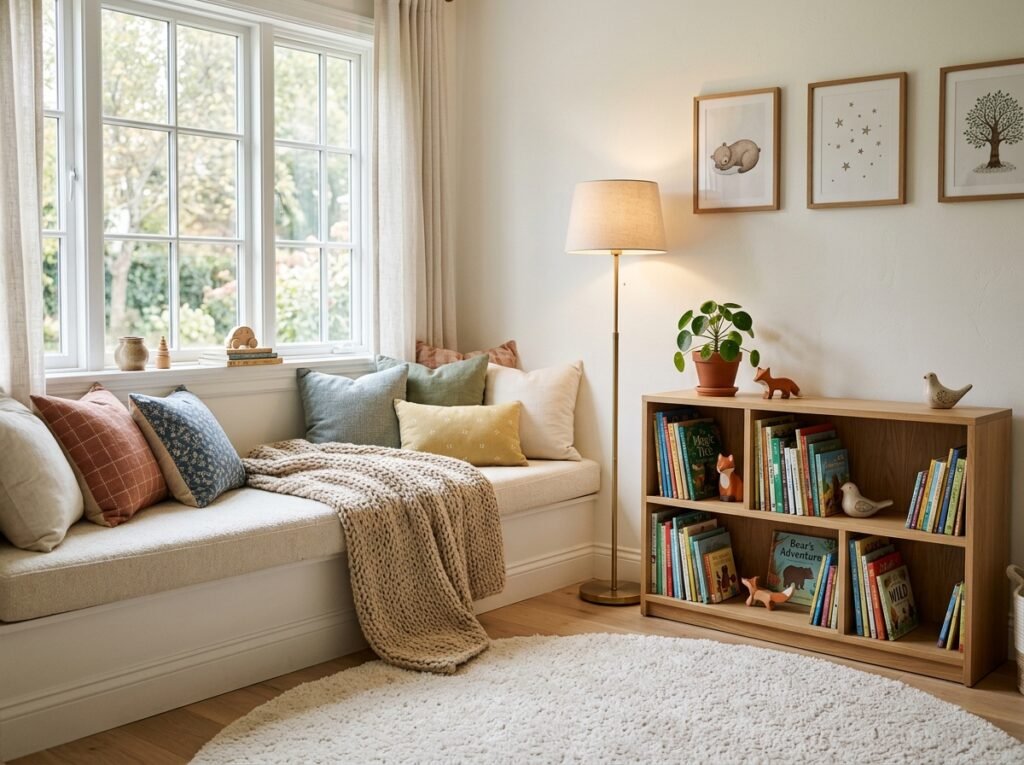
1. Create a Reading Corner
Add a floor cushion, small bookshelf, blanket, and warm lamp.
2. Build a Gallery Wall
Frame your child’s artwork instead of buying expensive art.
3. Add Under-Bed Storage
Clear the clutter without adding another cabinet.
4. Create a Homework Station
Even a narrow wall-mounted desk can work.
5. Replace Old Lighting
A better lamp can improve both appearance and function.
6. Add a Washable Rug
A rug makes a bedroom feel warmer and creates a defined play area.
7. Organize the Closet
Remove clothes that no longer fit and group everything by type.
8. Add Personalized Hooks
Place hooks at a child-friendly height for jackets, bags, and hats.
9. Rotate Toys
Keep some toys stored away and rotate them every few weeks.
This makes old toys feel new again.
10. Let the Child Decorate One Area
Give your child ownership over a small section of the room.
It could be a bookshelf, art wall, desk, or bedside area.
Frequently Asked Questions
What are the best kids bedroom ideas for a small room?
Choose multifunctional furniture, vertical storage, under-bed drawers, wall shelves, and a compact desk. Keep the center of the room open whenever possible.
How can I make a kids bedroom look expensive?
Use a simple color palette, matching storage, quality-looking bedding, natural textures, layered lighting, and a few carefully selected decorative pieces.
What is the best color for a child’s bedroom?
There is no universal best color. Soft neutrals, muted green, blue, peach, and warm yellow can all work well depending on the room’s natural light and the child’s preferences.
How do I organize a messy child’s bedroom?
Give every category a dedicated home. Use open bins for toys, shelves for books, drawers for clothes, and hooks for bags and jackets.
How often should I redesign a child’s room?
You do not need a complete redesign every year. Change small elements as the child grows and update major furniture only when it no longer fits their needs.
Are smart lights useful in a kids bedroom?
They can be useful for bedtime routines, reading, night lighting, and scheduled lighting. Choose simple products that fit your existing smart-home ecosystem.
How can I decorate a kids bedroom without spending much?
Rearrange furniture, paint one wall, frame your child’s artwork, repurpose baskets, change bedding, and organize existing belongings before purchasing new items.
What should I put in a kids reading nook?
A comfortable seat or floor cushion, a small bookshelf, soft lighting, and a cozy blanket are enough.
How can siblings share a bedroom peacefully?
Give each child separate storage, personal decoration space, and clear boundaries. Keep the central area shared.
How do I make a kids bedroom feel cozy?
Layer soft textures with rugs, blankets, curtains, cushions, warm lighting, books, and natural materials.
What Are the Most Important Kids Bedroom Ideas to Remember?
The best children’s bedroom is not necessarily the most expensive or the most perfectly decorated.
It is the room that works for the child who actually lives there.
Create clear zones for sleep, play, study, storage, and relaxation. Use furniture that can grow with your child. Keep themes flexible. Make storage easy enough that children can use it themselves.
And if you add smart-home technology, keep it practical. Smart lighting, automated shades, and carefully managed connected devices can make everyday routines easier, but they should never replace comfort, simplicity, or privacy.
Most importantly, let the child have a voice.
A bedroom becomes much more meaningful when the person sleeping there gets to help shape it.
Conclusion
Great kids bedroom ideas do more than make a room look cute.
They make everyday life easier.
A smart layout gives children room to play. Good storage makes cleanup less stressful. A comfortable study area supports schoolwork. Flexible decorations let the room change as children grow. And thoughtful lighting and technology can make daily routines smoother.
Start with the basics: a comfortable bed, useful storage, good lighting, open floor space, and a little personality.
Then add the details that make the room feel like your child’s own special place.
You don’t need to finish everything in one weekend. Start with one area, make it work well, and build from there.