24 River Rock Landscaping Ideas for a Low-Maintenance Yard
River rock is one of the most versatile materials in landscaping — it drains well, needs no mowing or watering, and works in nearly every style of yard, from modern minimalist to cottage garden. The tricky part is knowing where and how to use it so it looks purposeful instead of like gravel dumped in a corner.
These 24 ideas cover borders, drainage solutions, pathways, and full garden beds, so whether you’re dealing with a problem drainage spot, a strip of yard that won’t grow grass, or you just want a lower-maintenance landscape overall, there’s an approach here that fits.
The Ideas
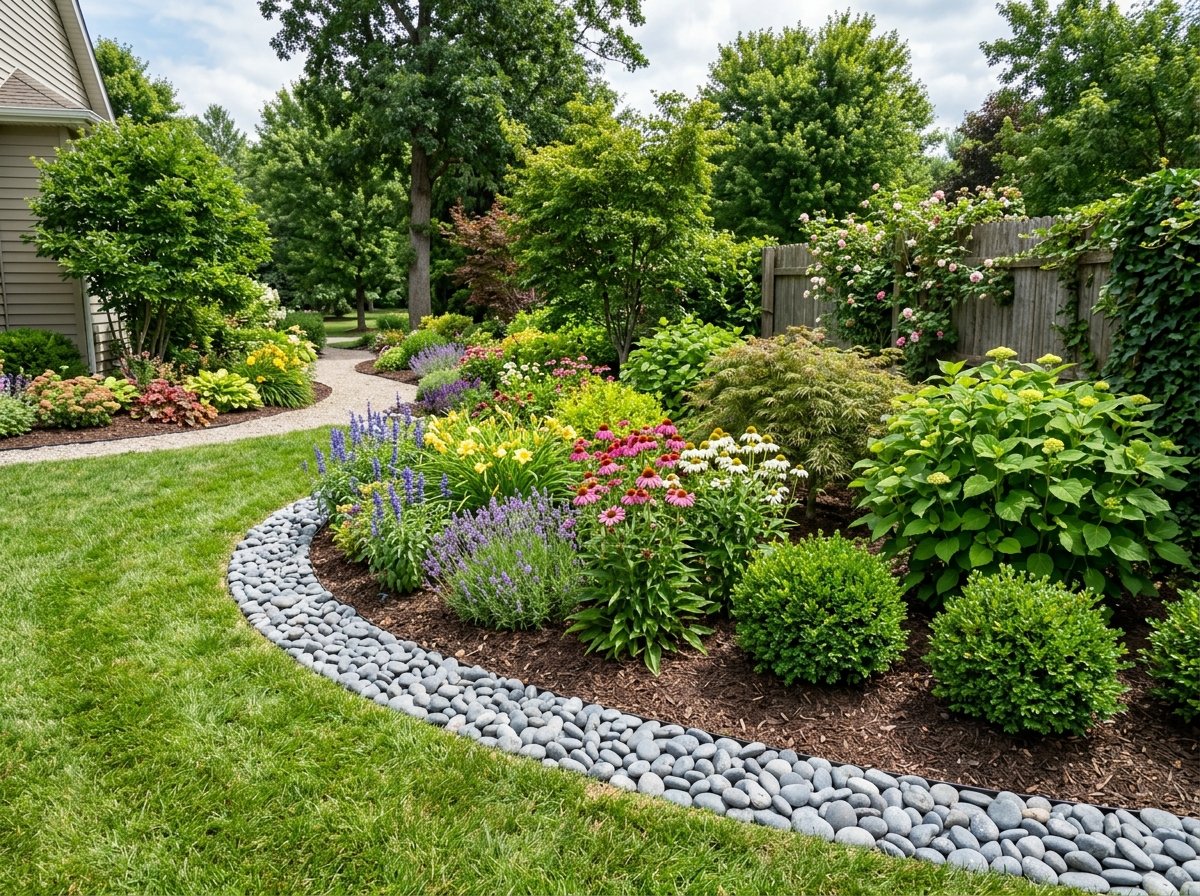
1. Edge Garden Beds With a River Rock Border A band of river rock between your lawn and a planting bed creates a clean, defined line that keeps mulch contained and mowing simple, since you can run a mower wheel right along the rock edge. It also cuts down on the grass creeping into your beds, which means less time spent hand-pulling stray blades out of your mulch every few weeks.
2. Fill a Dry Creek Bed for Drainage and Style In a yard with a low spot that collects water, a dry creek bed lined with river rock in varying sizes solves the drainage problem while adding a natural, meandering design feature.
3. Use Rock Instead of Grass Under Trees The soil under mature trees often struggles to grow healthy grass anyway. A ring of river rock around the base, kept a few inches from the trunk, solves the bare-patch problem and protects roots from mower damage.
4. Create a Zen Gravel Garden Combining smooth river rock with a few large stones, ornamental grasses, and clean lines creates a low-water, meditative garden style that needs almost no ongoing maintenance.
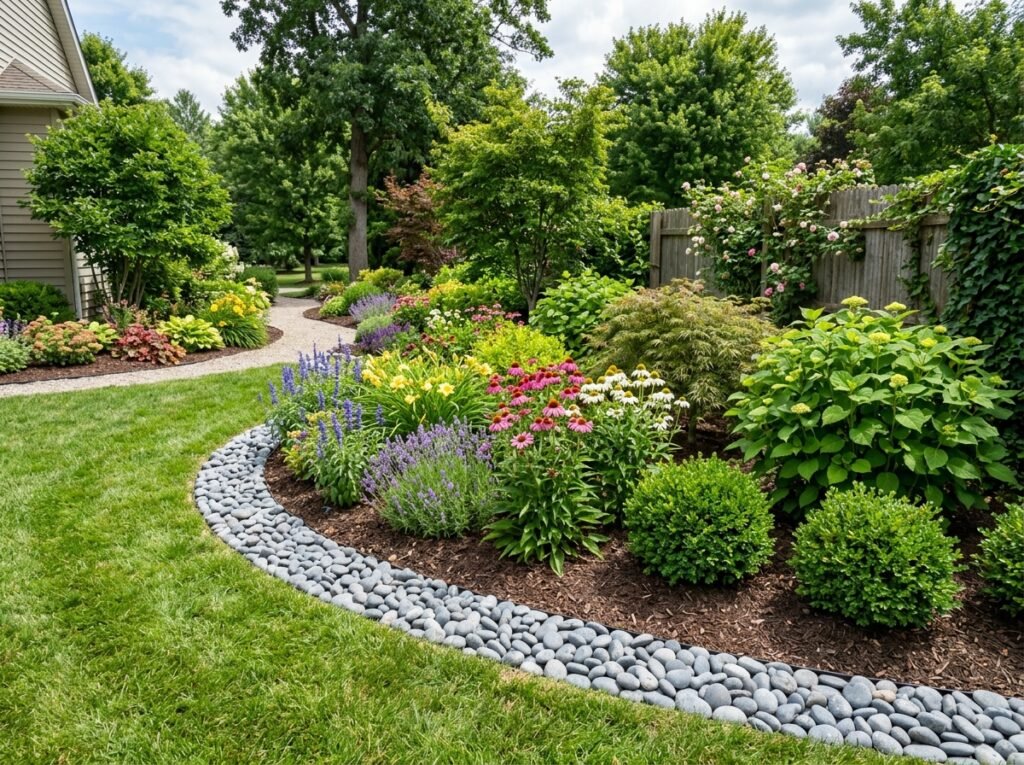
5. Line a Pathway With Rock Instead of Pavers A footpath filled with river rock and edged with steel or wood borders is a lower-cost, easier-to-install alternative to solid pavers, while still creating a clear, walkable route.
6. Mix Rock Sizes for a More Natural Look Using a single uniform rock size can look artificial. Blending two or three sizes — smaller rock as a base with a few larger accent stones scattered through — mimics how rock naturally settles outdoors.
7. Use Rock as Mulch Around Drought-Tolerant Plants Succulents, lavender, and other drought-tolerant plants often do better with rock mulch than wood mulch, since rock doesn’t hold moisture against the base of the plant and helps prevent rot.
8. Build a Rock Border Along a Fence Line A strip of river rock running along the base of a fence eliminates the awkward, hard-to-mow grass strip that often grows thin and patchy right against fencing. It also keeps string trimmers away from the fence posts themselves, which helps prevent the slow wood damage that comes from repeated nicks and moisture buildup at the base.
9. Add a Rock Bed Around a Mailbox or Post Grass around a mailbox post is notoriously hard to mow cleanly. A small circular or oval bed of river rock around the base solves the trimming hassle and adds a tidy detail.
10. Use Rock to Fill Awkward Side-Yard Strips Narrow side-yard strips between houses often get too little sun for grass to thrive. Filling them with river rock, possibly with a few shade-tolerant potted plants, turns a weedy problem area into a clean, functional space.
11. Create a Rock “Rug” Beneath a Fire Pit A wide, flat bed of river rock beneath and around an outdoor fire pit is naturally fire-safe, doesn’t scorch or die like grass would, and defines the seating area clearly.
12. Combine Rock With Large Stepping Stones Setting large, flat stepping stones into a bed of smaller river rock creates a pathway with more visual interest and texture than stepping stones on plain mulch or grass.
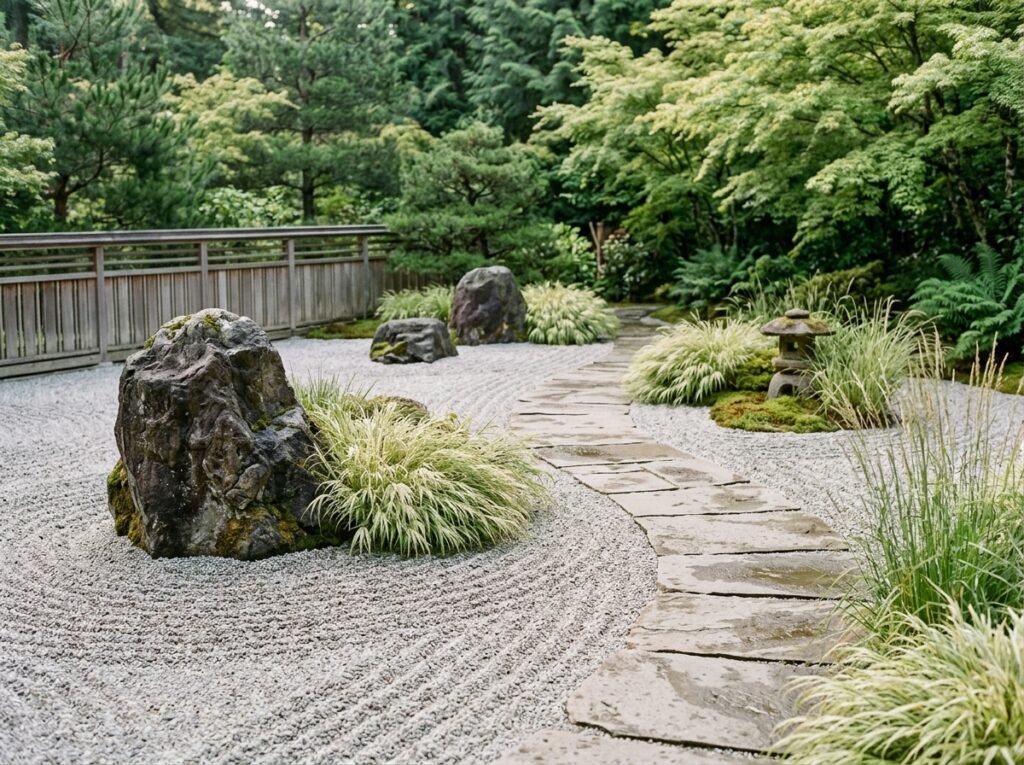
13. Use Rock to Frame a Water Feature River rock is a natural pairing for a small pond, fountain, or birdbath — it echoes the material found in real streambeds and helps the feature look like it belongs in the landscape rather than sitting on top of it. It also helps hide any exposed tubing, liners, or pump equipment that would otherwise break the illusion.
14. Choose Rock Color to Complement Your House River rock comes in shades from nearly white to deep charcoal and warm tan. Choosing a tone that complements your home’s siding or brick ties the whole exterior together intentionally.
15. Build a Raised Rock Border Around a Patio A slightly raised border of river rock between a patio and the surrounding lawn creates a subtle transition zone and helps direct water runoff away from the patio surface.
16. Use Rock in Place of Grass on a Steep Slope Grass on a steep slope is hard to mow safely and often erodes. River rock, especially combined with erosion-control fabric underneath, holds a slope in place with far less maintenance.
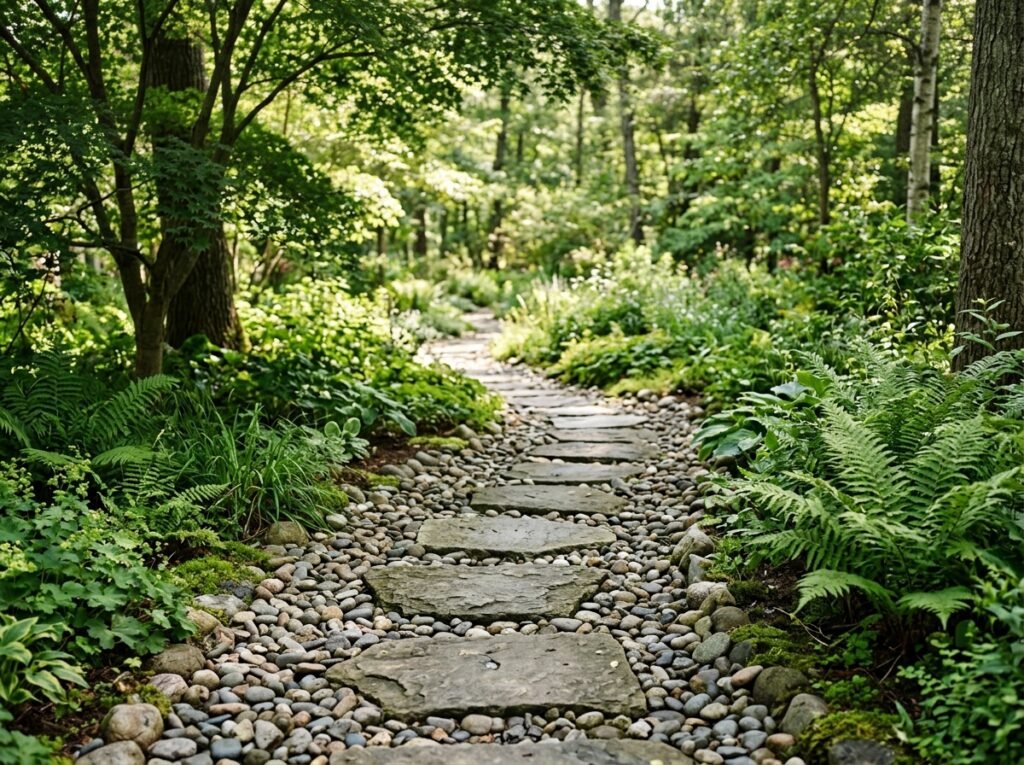
17. Add Rock to a Xeriscape Front Yard For a fully water-wise front yard, river rock combined with native drought-tolerant plants and a few larger boulders creates a design that stays attractive without any regular watering.
18. Use Rock Beds to Break Up a Large Lawn In an especially large lawn, one or two rock garden beds with plantings can break up the monotony of solid grass and reduce the total area that needs regular mowing.
19. Layer Different Rock Types for Texture Combining smooth river rock with a rougher crushed stone or a few larger boulders in the same bed adds textural contrast that a single rock type alone can’t achieve. Placing the smoother rock toward the front of a bed and rougher stone toward the back also adds a subtle sense of depth when viewed from the yard or street.
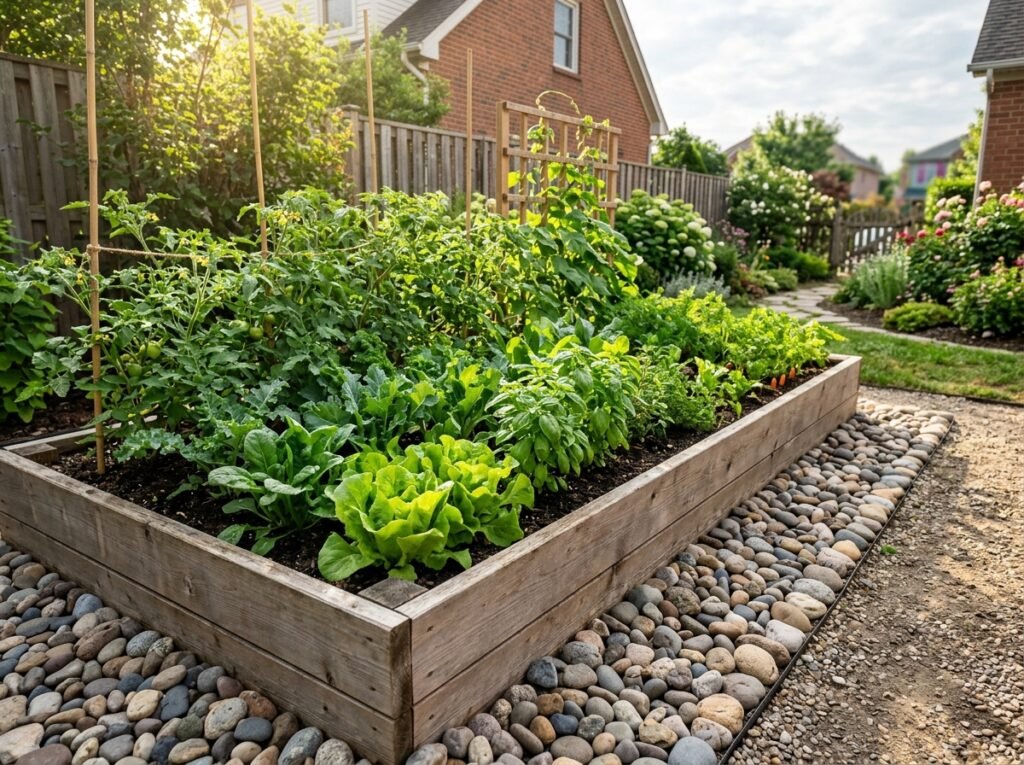
20. Create a Rock Border for a Vegetable Garden A simple river rock edge around a raised vegetable bed keeps mulch and soil contained, discourages weeds from creeping in from the lawn, and gives the whole garden a finished look.
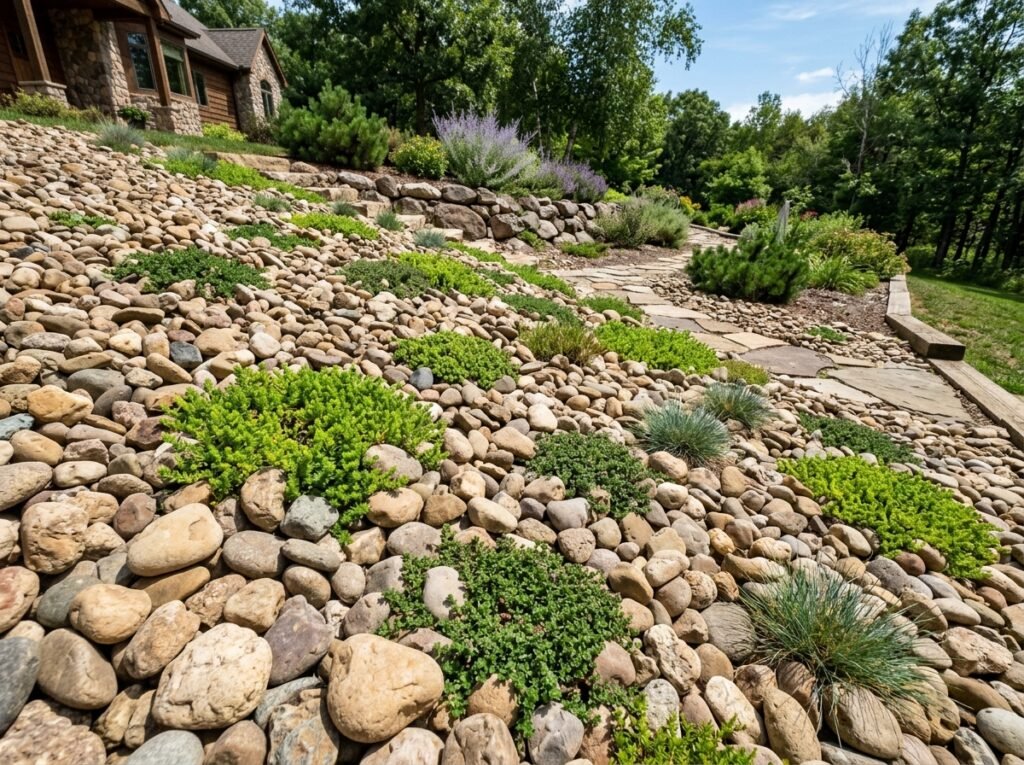
21. Use Rock Around Downspouts to Prevent Erosion The ground beneath a downspout often erodes or turns muddy. A small bed of river rock catches and disperses the water flow, preventing the bare, washed-out patches that form there.
22. Add Rock to a Dog Run for Easy Cleanup A designated dog run area filled with small, smooth river rock is easier to hose off and keep clean than grass, which tends to die out quickly in high-traffic pet areas.
23. Use Rock as a Foundation Bed Around Your House A bed of river rock along your home’s foundation, planted with a few low shrubs, improves drainage away from the house and reduces the need for trimming right against the siding.
24. Add Landscape Lighting Within a Rock Bed Tucking small solar or low-voltage landscape lights into a river rock bed highlights the texture at night and extends the visual interest of the space well past sunset.
Quick Tips Recap
- Mix rock sizes rather than using one uniform size for a more natural look
- Use rock instead of grass in problem spots — slopes, tree bases, side yards
- Choose a rock color that complements your home’s exterior
- Pair rock beds with drought-tolerant plants for a fully low-maintenance look
- Use rock for drainage solutions, not just decoration
FAQ
What’s the best river rock size for landscaping? A mix of sizes generally looks most natural — smaller rock (1-3 inches) as a base layer, with a few larger accent stones scattered through for visual interest.
Does river rock landscaping require any regular maintenance? It’s low-maintenance compared to grass, but occasional weeding, rinsing off dust or debris, and replenishing rock that settles over time will keep it looking its best.
Ready to Start?
You don’t need to redo your entire yard at once — start with one problem area, whether that’s a bare patch under a tree or a soggy corner that never drains well, and expand from there.
Follow homedecorheaven.com for more home inspiration ideas, one small change at a time.