25 Sofa Design Living Rooms Ideas for a Stylish and Comfortable Home
Table of Contents
- What Makes a Sofa Design Work in a Living Room?
- How Do You Choose the Right Sofa Design?
- 25 Sofa Design Living Rooms Ideas
- What Sofa Designs Work Best for Small Living Rooms?
- Which Sofa Colors Work Best in Living Rooms?
- How Do You Arrange a Sofa in a Living Room?
- How Do You Match a Sofa With Living Room Decor?
- What Are the Best Sofa Materials?
- How Do You Choose a Sofa for Everyday Family Use?
- Common Sofa Design Mistakes to Avoid
- Frequently Asked Questions
- Final Thoughts
What Makes a Sofa Design Work in a Living Room?
A good sofa design should balance comfort, size, style, color, and function. The sofa often becomes the largest piece of furniture in a living room, so it strongly influences how the entire space looks and feels.
For a modern room, a clean-lined sectional or low-profile sofa can create a simple, polished appearance. A traditional room may look better with rolled arms, deeper cushions, or classic upholstery. Small rooms often benefit from compact sofas with raised legs, while large open spaces can handle an L-shaped sectional or spacious modular design.
The best sofa isn’t simply the most attractive one. It should fit the room, support the way you live, and work naturally with your coffee table, rug, lighting, curtains, accent chairs, and other furniture.
How Do You Choose the Right Sofa Design for a Living Room?
Start with the room rather than the sofa.
Measure the available floor space, identify doors and walkways, and decide how many people need to sit comfortably.
Then consider these questions:
- How large is the living room?
- How often will the sofa be used?
- Do you need seating for two, three, or more people?
- Do you prefer a modern or traditional look?
- Do you have children or pets?
- Do you want removable and washable covers?
- Will the sofa sit against a wall or float in the room?
- Do you need hidden storage or a sleeper function?
A beautiful sofa that blocks a doorway or leaves no walking space will quickly become frustrating.
What Size Sofa Should You Choose?
A sofa should look proportional to the room.
For a small living room, consider:
- Loveseats
- Apartment sofas
- Compact three-seaters
- Slim-arm sofas
- Small sectionals
For a larger room, you have more flexibility with:
- L-shaped sectionals
- U-shaped sectionals
- Modular sofas
- Deep three-seater sofas
- Sofa and accent-chair combinations
Use painter’s tape on the floor to mark the sofa’s footprint before buying. This simple trick gives you a much better idea of how much space the furniture will actually occupy.
25 Sofa Design Living Rooms Ideas
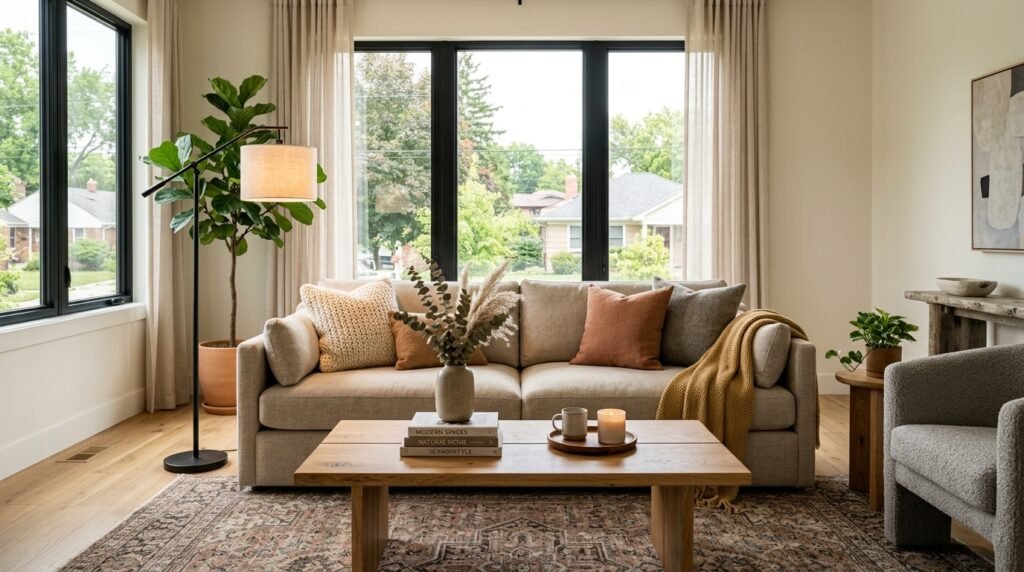
1. Modern Beige Sofa With Warm Wood Accents
A beige sofa creates a calm foundation for a modern living room.
Pair it with warm wood furniture, cream curtains, a textured rug, and a few green plants. The result feels comfortable without looking overly decorated.
This design works particularly well when you want a neutral living room that can easily change with seasonal accessories.
2. Deep Sectional for a Large Family Room
If your family spends a lot of time watching movies, talking, or relaxing together, a deep sectional can provide plenty of seating.
Choose durable upholstery and supportive cushions for everyday use.
Place a large coffee table in front of the sectional and use an oversized rug underneath the main furniture group.
3. Curved Sofa for a Contemporary Room
Curved sofas soften the straight lines commonly found in modern interiors.
A rounded sofa works especially well in rooms with:
- Circular coffee tables
- Curved floor lamps
- Rounded accent chairs
- Organic-shaped rugs
- Soft architectural details
Keep the surrounding furniture relatively simple so the sofa remains the visual focal point.
4. White Sofa With Natural Textures
A white or ivory sofa can make a room feel bright and airy.
Combine it with natural materials such as:
- Rattan
- Linen
- Light oak
- Jute
- Woven baskets
- Cotton textiles
This combination creates a relaxed look that works beautifully in bright living rooms.
If you have young children or pets, however, consider performance fabric or removable covers.
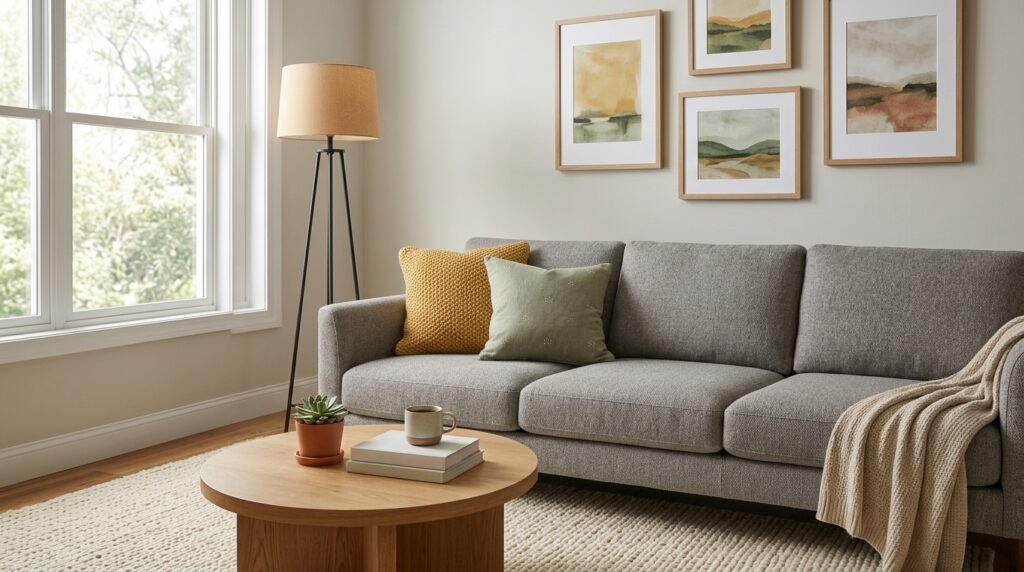
5. Gray Sofa With Colorful Accent Pillows
Gray remains a flexible sofa color because it works with many decorating styles.
Instead of replacing the sofa when you want a new look, change the pillows and throw blankets.
Try combinations such as:
- Gray + mustard
- Gray + navy
- Gray + terracotta
- Gray + sage green
- Gray + cream
This approach gives you flexibility without buying new furniture.
6. L-Shaped Sofa for an Open Floor Plan
An L-shaped sofa can help define a living room within an open-concept home.
Instead of placing every piece against a wall, position the sectional so one side creates a visual boundary between the living area and dining or kitchen space.
This gives the room structure without adding walls.
7. Classic Chesterfield-Style Sofa
A tufted sofa can bring traditional character to a living room.
Deep button detailing, rolled arms, and rich upholstery create a more formal appearance.
Pair it with:
- Leather ottomans
- Traditional rugs
- Brass lighting
- Wooden furniture
- Classic artwork
For a softer result, choose a neutral fabric rather than dark leather.
8. Low-Profile Sofa for a Minimalist Living Room
A low sofa with clean lines works well in minimalist interiors.
Keep the palette simple and use only a few carefully selected accessories.
Instead of filling the room with decoration, focus on:
- Texture
- Shape
- Natural light
- Quality furniture
- Negative space
The sofa becomes part of a larger, peaceful composition.
9. Brown Leather Sofa With Vintage Character
Brown leather adds warmth and personality.
It works particularly well with wood flooring, exposed brick, vintage rugs, metal lighting, and neutral walls.
Leather also develops character over time, which can make the living room feel more lived-in rather than overly styled.
10. Green Sofa as a Statement Piece
A green sofa can instantly become the focal point of a neutral living room.
Deep olive, forest green, muted sage, and moss tones all create different moods.
Keep the walls and larger accessories neutral so the sofa doesn’t compete with everything else.
11. Navy Blue Sofa for a Sophisticated Look
Navy provides more color than gray without becoming overwhelming.
Pair it with:
- Cream walls
- Brass details
- Light wood
- White curtains
- Patterned pillows
This combination works in both modern and transitional interiors.
12. Modular Sofa for Flexible Living Rooms
A modular sofa lets you rearrange seating as your needs change.
This is useful for people who:
- Host guests often
- Move furniture regularly
- Have large open rooms
- Want customizable seating
You can separate modules or rearrange them into different configurations depending on the occasion.
13. Small Loveseat for an Apartment
Small spaces don’t necessarily need to sacrifice comfort.
A compact loveseat can provide comfortable seating while leaving room for a small coffee table and accent chair.
Choose a sofa with exposed or raised legs if you want the room to feel more open.
14. Sofa With Chaise Lounge
A chaise adds a dedicated place for stretching out.
Place it near a window, television, or reading lamp.
This layout works particularly well for people who use their living room for relaxing rather than formal entertaining.
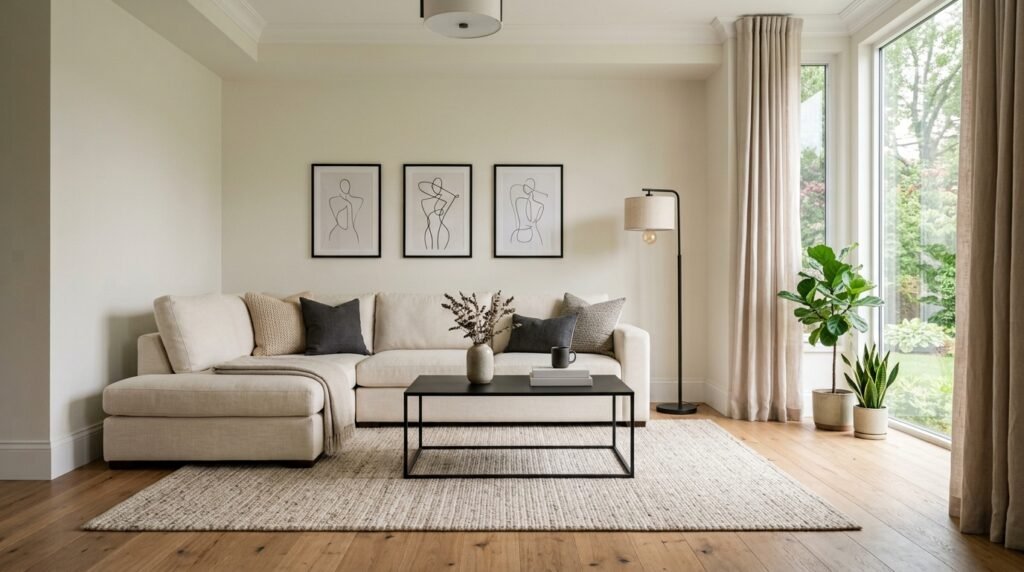
15. Cream Sofa With Black Accents
Cream upholstery paired with black accents creates a strong modern contrast.
Use black in small doses:
- Coffee table legs
- Picture frames
- Floor lamps
- Curtain rods
- Decorative objects
This keeps the room sophisticated without making it feel too dark.
16. Bouclé Sofa for a Soft Contemporary Look
Bouclé upholstery brings texture and softness into a room.
Its nubby surface works especially well with simple furniture and warm neutral colors.
Pair a bouclé sofa with smooth wood, stone, glass, or metal to create contrast.
17. Sleeper Sofa for a Multi-Use Room
A sleeper sofa can turn a living room into a guest room when needed.
This is particularly useful in:
- Small apartments
- Studio homes
- Guest rooms
- Home offices
- Multi-purpose spaces
Look for a comfortable mattress and a mechanism that opens smoothly.
18. Sofa With Built-In Storage
Storage sofas help make better use of smaller rooms.
Some designs include hidden compartments under the seat or chaise.
You can store:
- Blankets
- Pillows
- Board games
- Books
- Seasonal accessories
This is a practical solution when floor space is limited.
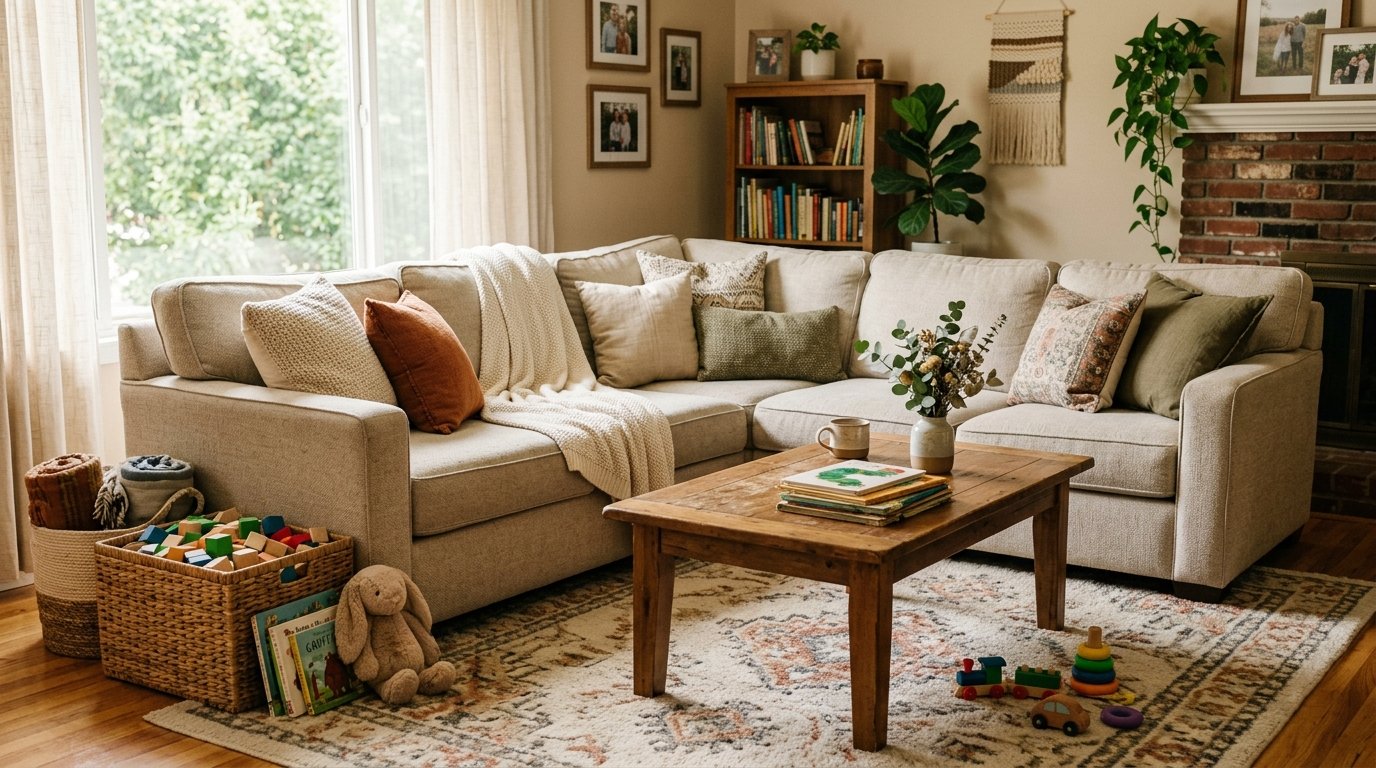
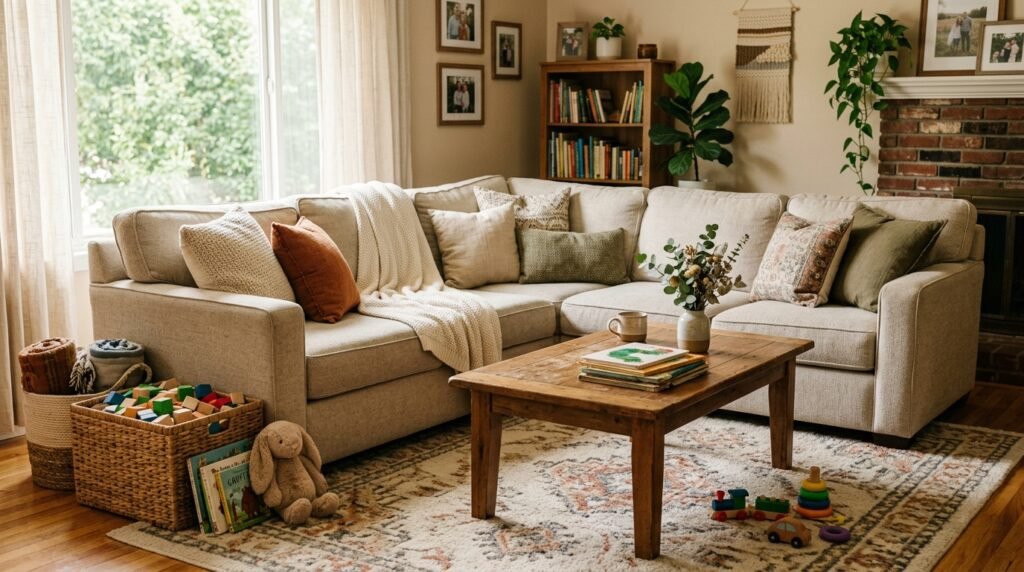
19. Farmhouse Sofa With Cozy Textiles
A farmhouse living room benefits from soft upholstery, relaxed cushions, and natural materials.
Try a cream or light beige sofa with:
- Plaid blankets
- Linen pillows
- Rustic wood tables
- Woven baskets
- Vintage-inspired rugs
Avoid making every item look perfectly matched. A little variation creates the comfortable farmhouse feeling.
20. Mid-Century Modern Sofa
Mid-century sofas usually feature clean lines, tapered legs, and relatively simple shapes.
They pair well with:
- Walnut furniture
- Geometric rugs
- Simple artwork
- Brass lighting
- Neutral walls
This style works especially well when you want a living room that feels timeless rather than trendy.
21. Pink Sofa for a Playful Living Room
A muted blush, dusty rose, or soft pink sofa can add personality without overwhelming the room.
Balance it with cream, beige, white, or natural wood.
This approach works well in eclectic, contemporary, and feminine-inspired interiors.
22. Black Sofa for a Dramatic Look
A black sofa creates a strong focal point.
Use lighter walls, rugs, and curtains around it to maintain visual balance.
Natural wood is especially helpful because it prevents the room from feeling too cold.
23. Two Sofas Facing Each Other
Instead of one large sectional, place two sofas opposite each other.
This arrangement encourages conversation and works well in rooms where the television isn’t the main focus.
Add a coffee table between them and leave enough space for people to walk around the furniture.
24. Sofa and Accent Chair Combination
A standard sofa paired with one or two accent chairs gives you flexibility.
You can mix materials and shapes as long as at least one element connects them, such as color, wood tone, or fabric texture.
Don’t feel obligated to buy a matching furniture set.
25. Cozy Sofa With Layered Textures
For the ultimate comfortable living room, layer different textures around the sofa.
Combine:
- Soft cushions
- Chunky throws
- Wool or woven rugs
- Linen curtains
- Wood furniture
- Ceramic accessories
- Plants
Texture makes a neutral room feel interesting even when the color palette stays simple.
What Sofa Designs Work Best for Small Living Rooms?
Small rooms require careful planning.
A large sectional might look impressive in a showroom but overwhelm a compact apartment.
Instead, look for a sofa with:
- Slim arms
- Compact depth
- Raised legs
- Light-colored upholstery
- Simple lines
- Built-in storage
A loveseat can work particularly well for couples or smaller households.
You can also place a small accent chair opposite the sofa rather than adding another bulky couch.
Mirrors, lighter wall colors, and curtains hung slightly higher can also help the room feel more spacious.
Which Sofa Colors Work Best in Living Rooms?
There is no single perfect sofa color.
The right choice depends on your walls, flooring, lighting, lifestyle, and desired mood.
Beige
Warm and versatile. Great for relaxed interiors.
Gray
Easy to coordinate and suitable for contemporary spaces.
Cream
Bright and elegant, but requires more care.
Brown
Warm, earthy, and especially attractive with wood.
Navy
Classic and sophisticated.
Green
Adds natural color and personality.
Black
Bold and dramatic.
Terracotta
Warm and distinctive, especially for autumn-inspired rooms.
Before choosing upholstery, look at fabric samples in your actual room. Colors can appear different under morning sunlight, evening lamps, and cool LED bulbs.
How Do You Arrange a Sofa in a Living Room?
Furniture arrangement affects how comfortable the room feels.
Follow these steps:
Step 1: Identify the focal point
Your focal point might be a fireplace, television, large window, artwork, or architectural feature.
Step 2: Position the sofa
Point the main seating toward the focal point without blocking important pathways.
Step 3: Add the rug
Ideally, the rug should visually connect the main seating pieces.
Step 4: Add the coffee table
Leave comfortable walking space around it.
Step 5: Add accent seating
Use chairs, ottomans, or stools to complete the conversation area.
Step 6: Add lighting
Use a combination of ceiling lights, floor lamps, table lamps, and natural light.
The final arrangement should allow people to move through the room easily.
How Do You Match a Sofa With Living Room Decor?
Think about the sofa as one part of the room rather than an isolated purchase.
If your sofa has a strong color or unusual shape, keep surrounding furniture relatively quiet.
If the sofa is neutral, you can add personality through:
- Artwork
- Pillows
- Curtains
- Rugs
- Plants
- Accent chairs
- Decorative objects
For example, a beige sofa can support almost any decorating direction. You could create a modern room with black accents, a farmhouse room with rustic wood, or a coastal room with blue and white accessories.
What Are the Best Sofa Materials?
Different upholstery materials suit different lifestyles.
Performance Fabric
A practical choice for busy homes because many modern performance fabrics resist stains and everyday wear.
Linen
Light and breathable with a relaxed appearance. It can wrinkle, which is part of its natural character.
Velvet
Soft and visually rich. It works especially well for statement sofas.
Leather
Durable and easy to wipe clean, although quality and maintenance requirements vary.
Bouclé
Highly textured and cozy. Best when you want a soft contemporary look.
Before buying, check the manufacturer’s cleaning instructions and durability information rather than choosing based on appearance alone.
How Do You Choose a Sofa for Everyday Family Use?
A family sofa needs to survive real life.
If people eat, relax, watch television, nap, or play on the sofa, prioritize durability over delicate styling.
Look for:
- Strong frame construction
- Supportive cushions
- Durable upholstery
- Removable covers where possible
- Easy-clean materials
- Comfortable seat depth
- Sturdy legs
- Good manufacturer warranty
If you have pets, inspect the fabric closely. Loose weaves can sometimes catch claws more easily than tightly woven materials.
If you have children, removable washable covers can be especially useful.
What Makes a Sofa Look Expensive?
A high-end appearance doesn’t always require an expensive sofa.
Focus on proportion and styling.
A simple sofa can look polished when you pair it with:
- A properly sized rug
- Quality-looking cushions
- A substantial coffee table
- Layered lighting
- Full-length curtains
- Large-scale artwork
- Natural materials
Avoid filling every surface with small decorations. A few larger pieces often create a cleaner, more intentional appearance.
Should Your Sofa Match Your Walls?
Your sofa doesn’t have to match your walls exactly.
In fact, some contrast usually creates more visual interest.
For example:
- Cream sofa + warm white walls
- Gray sofa + soft beige walls
- Navy sofa + cream walls
- Green sofa + warm neutral walls
- Brown leather sofa + off-white walls
If you want a monochromatic room, vary the textures and shades instead of using exactly the same color everywhere.
Common Sofa Design Mistakes to Avoid
Buying Before Measuring
Always measure the room, doorways, hallways, elevators, and stairways.
A sofa that cannot enter the home is an expensive problem.
Choosing Looks Over Comfort
Sit on the sofa before buying if possible.
Pay attention to seat height, depth, back support, and cushion firmness.
Using a Tiny Rug
A small rug can make the furniture arrangement look disconnected.
Choose a rug large enough to visually anchor the seating area.
Pushing Everything Against the Walls
Sometimes leaving a little breathing room around furniture creates a better layout.
Ignoring Traffic Flow
Keep pathways clear.
The living room should feel easy to navigate rather than packed with furniture.
Choosing Delicate Fabric for Heavy Use
A beautiful fabric may not be practical for a busy household.
Think about your actual lifestyle first.
Frequently Asked Questions About Sofa Design Living Rooms
What sofa design is best for a living room?
The best sofa design depends on room size, household needs, style preferences, and how the room is used. Sectionals work well in larger rooms, while compact sofas and loveseats suit smaller spaces.
What sofa color is most versatile?
Neutral shades such as beige, cream, gray, and soft brown are generally easy to coordinate with different wall colors and decor styles.
Should a sofa face the TV?
It can, especially in a family room where television viewing is the primary activity. However, if conversation is more important, arrange seating around a central coffee table instead.
How do I make a small living room look bigger?
Choose appropriately scaled furniture, keep walkways clear, use lighter colors, avoid excessive visual clutter, and consider sofas with raised legs that reveal more floor.
Is a sectional better than a sofa?
Neither is universally better. A sectional can provide more seating and define an open room, while a traditional sofa offers greater flexibility when rearranging furniture.
What sofa style is timeless?
Simple silhouettes, neutral colors, quality construction, and classic proportions tend to remain useful as decorating trends change.
How many cushions should I put on my sofa?
There is no fixed number. Use enough to add comfort and texture without making the sofa difficult to sit on. A three-seat sofa often looks balanced with several cushions in different sizes.
How often should you replace a sofa?
The useful life of a sofa depends on its construction, materials, and frequency of use. Instead of replacing it simply because it has become unfashionable, inspect the frame, cushions, upholstery, and overall comfort.
Final Thoughts
The right sofa design for a living room can completely change the way the space feels.
Whether you love a modern sectional, classic leather sofa, cozy farmhouse design, compact loveseat, curved statement piece, or simple neutral couch, start with your actual needs. Measure carefully, think about comfort, consider your household, and choose upholstery that fits your lifestyle.
Then build the rest of the room around the sofa with a well-sized rug, comfortable lighting, a practical coffee table, and a few personal touches.
A living room doesn’t need to look like a showroom. The best spaces feel comfortable, functional, and genuinely lived in.