24 Outdoor Kitchen Ideas for Cooking and Entertaining Outside
An outdoor kitchen doesn’t have to mean a full built-in setup with a budget to match. Some of the most functional outdoor cooking spaces start with a single grill cart and grow over time, while others are planned as a complete built-in feature from day one.
These 24 ideas cover layout, storage, seating, and style, so whether you’re working with a small patio or a large backyard, you’ll find an approach that fits your space, your budget, and how you actually like to entertain. None of these require finishing everything at once — most outdoor kitchens grow into their final form over a few seasons.
The Ideas
1. Start With a Simple Grill Island A single-unit grill island — a built-in grill set into a stone or stucco frame with a bit of counter space on either side — is one of the most approachable ways to start an outdoor kitchen without committing to a full build. Many are sold as modular kits that can be installed in a weekend and expanded later as your needs grow.
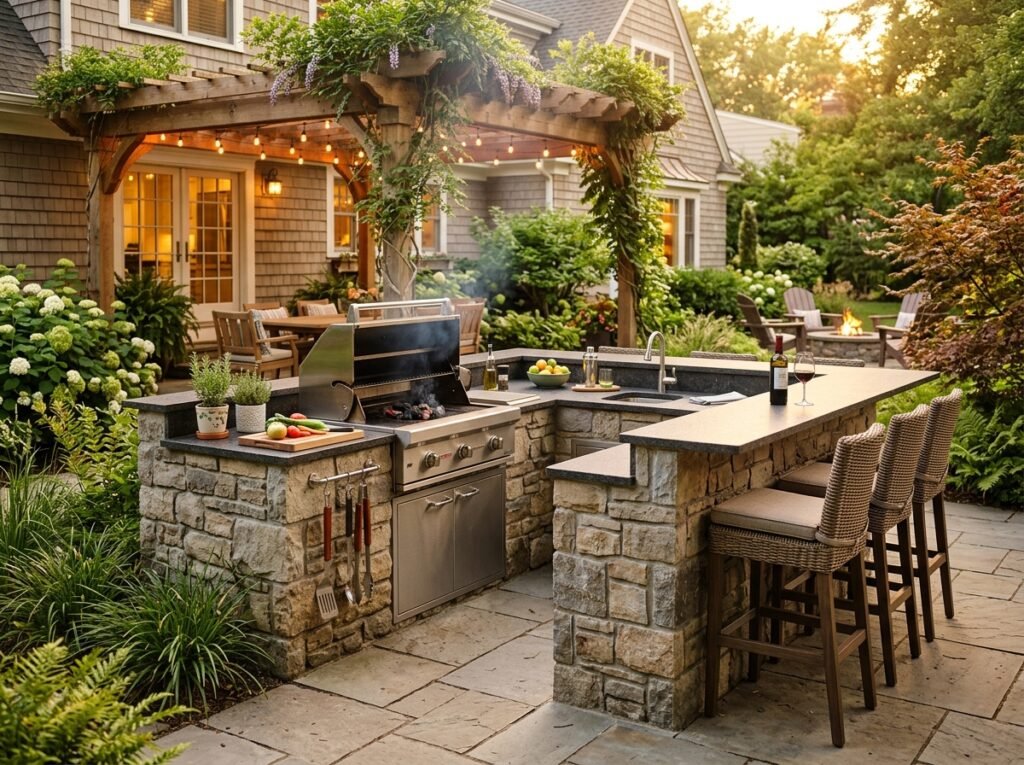
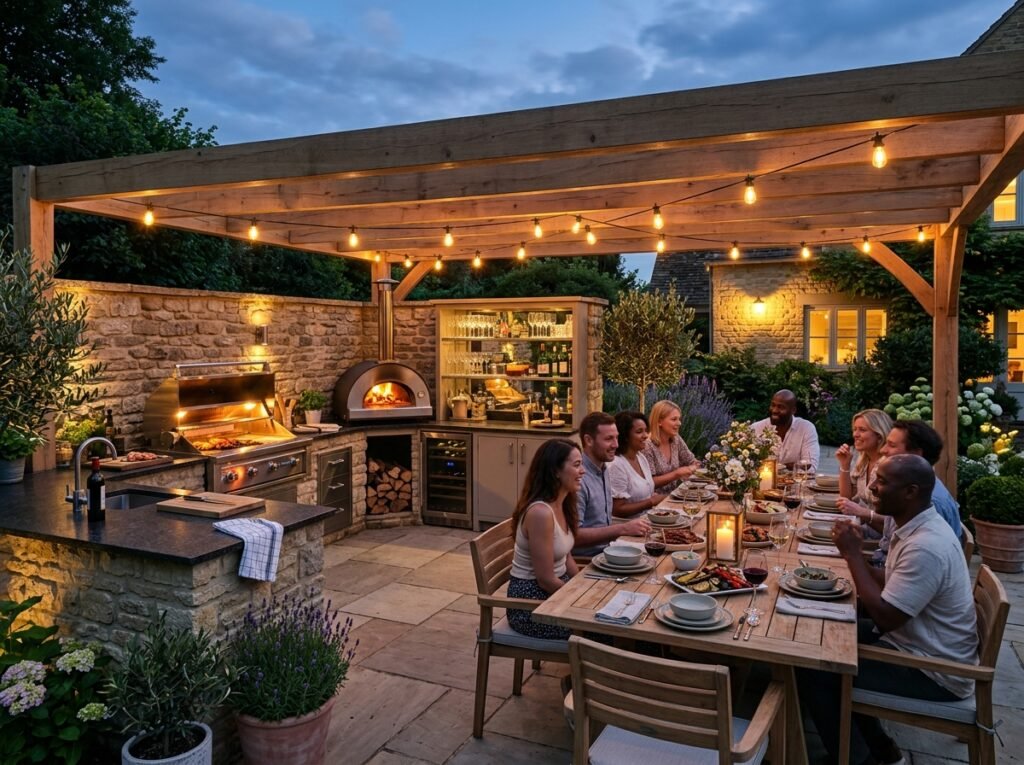
2. Add a Covered Structure for Weather Protection A simple pergola or partial roof over your cooking area protects both the equipment and the cook from sun and light rain, extending the number of days you’ll actually use the space each year.
3. Include a Prep Sink for Convenience Adding even a small sink to your outdoor kitchen setup cuts down significantly on trips back inside for rinsing vegetables, washing hands, or cleaning tools mid-cook. Running the plumbing during the initial build is also far cheaper than retrofitting it later.
4. Build in a Mini Fridge or Beverage Cooler A built-in outdoor-rated mini fridge keeps drinks and perishables close at hand, reducing interruptions to the meal and keeping guests from constantly heading back into the house.
5. Use Weather-Resistant Countertop Material Materials like granite, concrete, or stainless steel hold up far better to sun, rain, and temperature swings than indoor countertop materials, and they’re worth the investment even in a smaller outdoor kitchen since replacing a weathered surface later is far more disruptive.
6. Add a Pizza Oven as a Focal Point A wood-fired or gas pizza oven becomes both a functional cooking tool and a striking visual centerpiece, often serving as the anchor around which the rest of the outdoor kitchen layout is built.
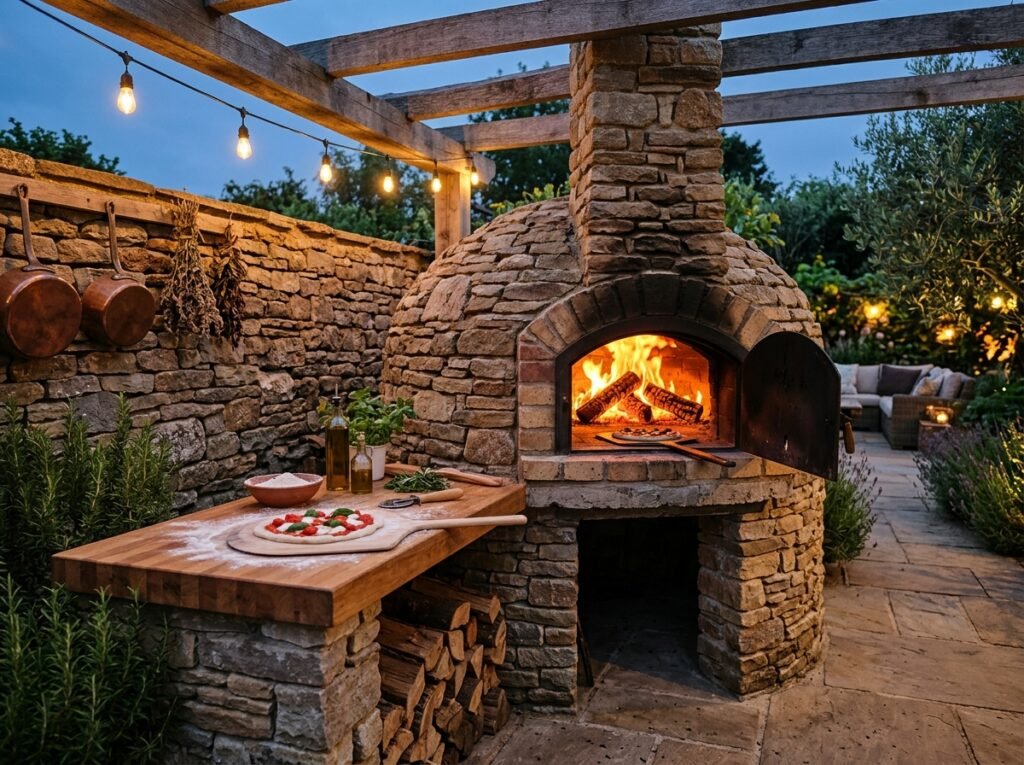
7. Create a U-Shaped Layout for Larger Spaces A U-shaped counter layout, similar to an indoor kitchen, keeps the cook centered with grill, prep space, and storage all within easy reach, and works especially well for households that entertain often.
8. Keep It Simple With a Single-Wall Layout For smaller patios, a single run of counter along one wall with the grill built in keeps the footprint compact while still providing meaningful prep and storage space.
9. Add Bar Seating Along One Side A raised counter section with stools on the opposite side from the cook lets guests sit and chat while food is being prepared, turning the cooking process itself into part of the entertaining rather than something that happens off to the side.
10. Include Under-Counter Storage for Tools and Supplies Weatherproof cabinets or drawers built into the counter base keep grilling tools, cleaning supplies, and extra propane tanks out of sight but still close at hand.
11. Add Task Lighting Over the Cooking Area Bright, focused lighting directly over the grill and prep space makes evening cooking far safer and easier than relying on ambient patio lighting alone.
12. Choose a Material Palette That Matches Your House Using the same stone, brick, or siding material on your outdoor kitchen that appears on your home’s exterior creates a cohesive look rather than a separate, disconnected structure.
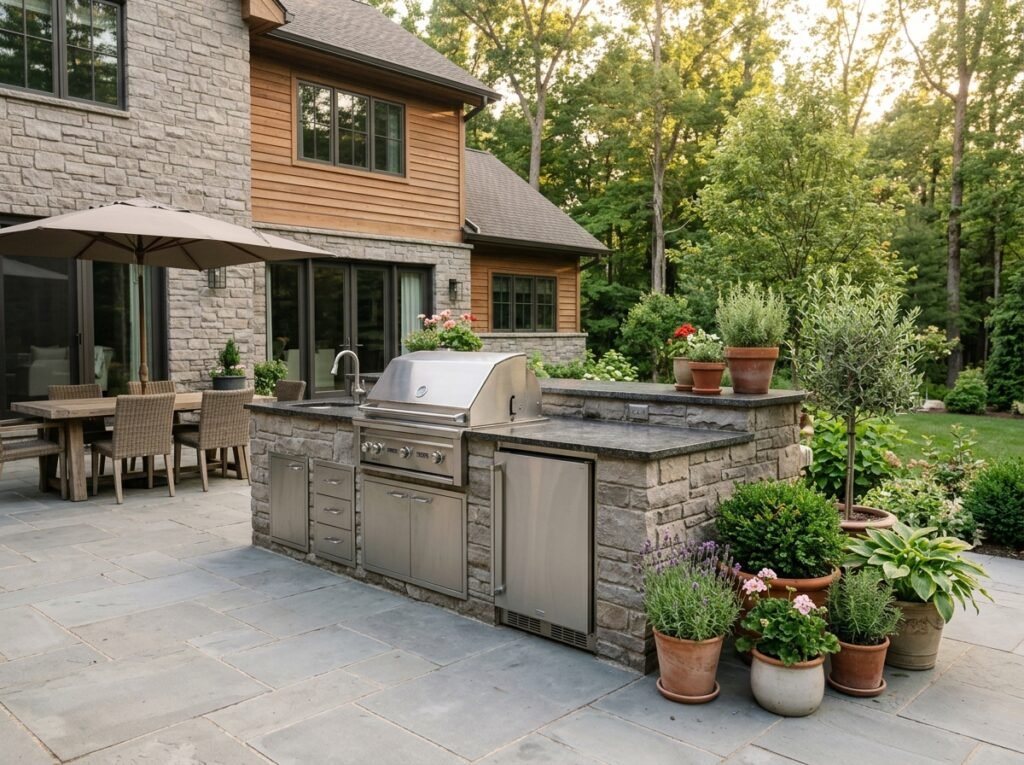
13. Add a Smoker Alongside the Grill Including a dedicated smoker unit next to your main grill lets you handle both quick weeknight cooking and longer, low-and-slow weekend projects without switching equipment.
14. Build in a Small Wine or Beverage Fridge For households that entertain with wine or craft beverages, a dedicated small fridge built into the counter keeps bottles at the right temperature without competing for space with food and mixers.
15. Add Shade With a Retractable Awning A retractable awning over the cooking area offers flexible shade that can be adjusted through the day, rather than the fixed coverage of a permanent roof structure, which is especially useful in climates where sun angle shifts noticeably between morning and evening cooking sessions.
16. Include a Side Burner for Sauces and Sides A built-in side burner lets you handle sauces, side dishes, or boiling water without going back inside or juggling everything on the main grill surface.
17. Add an Outdoor Dining Table Nearby Positioning a dedicated dining table within a few steps of the cooking area keeps the whole outdoor kitchen feeling like one connected space rather than a cooking zone separated from where people actually eat and gather.
18. Use Durable, Low-Maintenance Flooring Pavers, stamped concrete, or natural stone underfoot in the kitchen area hold up to grease, spills, and heavy foot traffic far better than a standard patio surface not built for cooking use.
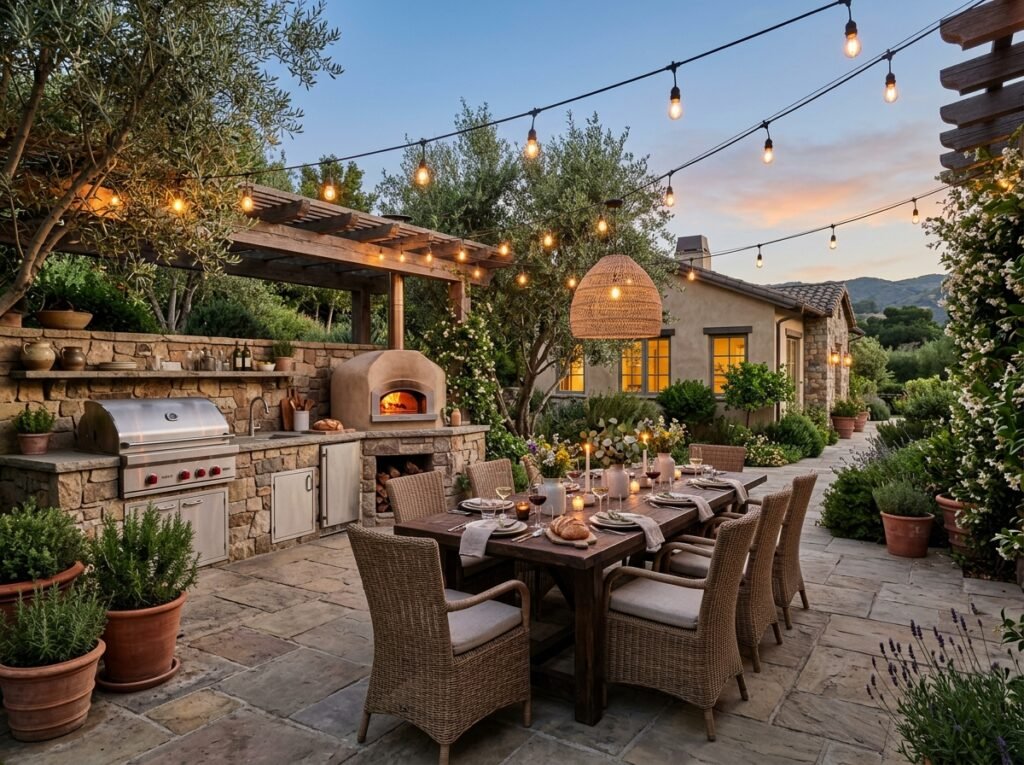
19. Add a Trash and Recycling Station A built-in or freestanding trash and recycling pull-out keeps cleanup contained to the cooking area instead of requiring trips inside for every scrap and empty can.
20. Include an Ice Maker for Entertaining A built-in ice maker removes one of the more annoying logistics of outdoor entertaining — running back and forth to refill coolers or the freezer’s ice tray during a long gathering.
21. Add a Vent Hood for Covered Kitchens If your outdoor kitchen sits under a solid roof rather than open air, a vent hood over the grill helps manage smoke and heat, keeping the covered space more comfortable to cook and sit in.
22. Use Outdoor-Rated Cabinetry Stainless steel or marine-grade polymer cabinets resist rust, warping, and fading in a way that indoor cabinetry never will, protecting your investment in the space over time and saving you from a costly rebuild a few seasons in.
23. Add String Lights or Lanterns for Evening Ambiance Layering in string lights or hanging lanterns around the kitchen and dining area extends the space’s use well into the evening and makes it feel finished rather than purely functional.
24. Start Small and Plan for Future Expansion Designing your initial layout with clear space for a future pizza oven, additional counter, or a bar area lets you build your outdoor kitchen in phases without needing to redo the whole structure later.
Quick Tips Recap
- Start with a simple grill island and expand the space over time
- Match your outdoor kitchen’s materials to your home’s exterior
- Add task lighting over the cooking area, not just ambient patio lighting
- Include a prep sink and under-counter storage to reduce trips inside
- Layer in string lights or lanterns to extend evening use
FAQ
How much does a basic outdoor kitchen cost to start? A simple grill island setup can be relatively affordable compared to a full built-in kitchen, and many households start there before expanding with a sink, fridge, or additional counter space over time.
Do outdoor kitchens need to be covered? Not necessarily, but a pergola, awning, or partial roof significantly extends how many days a year the space gets used by protecting both the cook and the equipment from sun and rain.
Ready to Start?
Start with the single feature that would change your outdoor cooking the most right now, whether that’s a proper grill island or simply somewhere to sit nearby, and build outward from there.
Follow homedecorheaven.com for more home inspiration ideas, one small change at a time.