How Can Kitchen Corner Shelves for Small Spaces Make a Small Kitchen Feel Bigger?
Kitchen corner shelves for small spaces are one of the easiest ways to turn an awkward, unused corner into useful storage without making the room feel crowded. Floating shelves, narrow wood shelves, tiered corner units, and wall-mounted racks can hold spices, dishes, mugs, cookbooks, plants, and everyday kitchen tools while keeping your counters clear.
The key is choosing shelves that match the shape of your corner and the items you actually use. In a tiny kitchen, a few well-placed shelves can often do more than a large cabinet because they use vertical wall space instead of valuable floor and counter space.
Whether you’re renting a small apartment, updating a compact kitchen, or simply trying to organize a busy cooking area, the ideas below can help you make that forgotten corner work harder.
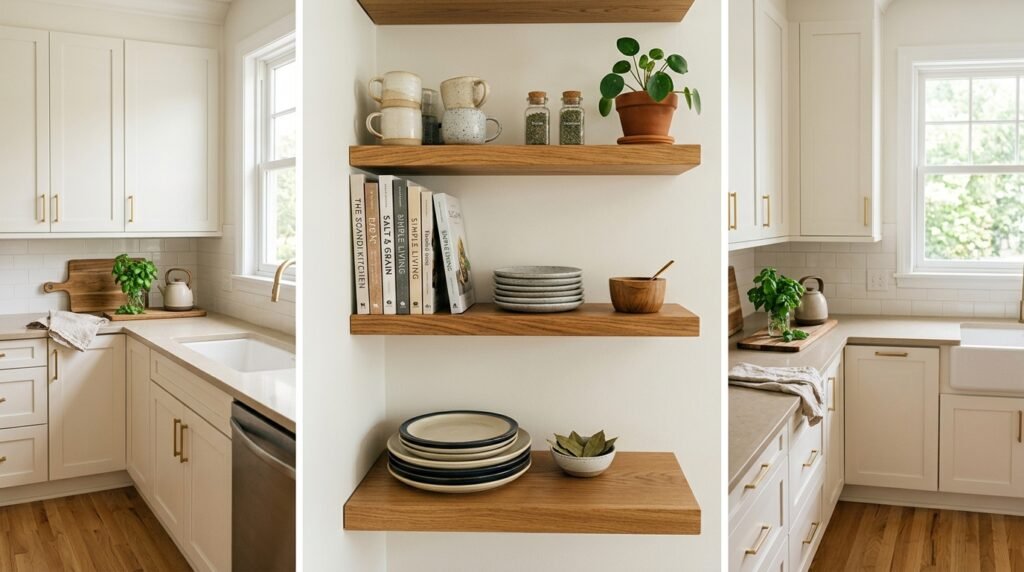
Table of Contents
- Why Are Corner Shelves Useful in a Small Kitchen?
- What Types of Kitchen Corner Shelves Work Best?
- How Do You Choose the Right Corner Shelf?
- What Can You Store on Kitchen Corner Shelves?
- What Are the Best Floating Shelf Ideas?
- How Can You Use Corner Shelves for Spices?
- Can Corner Shelves Replace Upper Cabinets?
- What Are the Best DIY Kitchen Corner Shelves?
- How Do You Make Corner Shelves Look Stylish?
- How Do You Organize Deep Corner Shelves?
- What Shelf Materials Work Best?
- How Can You Add Lighting?
- What Mistakes Should You Avoid?
- How Can You Use Shelves in a Rental Kitchen?
- How Much Do Kitchen Corner Shelves Cost?
- Kitchen Corner Shelf FAQs
- Final Thoughts
Why Are Corner Shelves Useful in a Small Kitchen?
Small kitchens have one major problem: there never seems to be enough storage.
Counters become crowded. Cabinets fill up quickly. Appliances compete for workspace.
And then there’s the corner.
It may be too awkward for a standard cabinet, too narrow for an appliance, or simply overlooked.
That’s where corner shelving becomes useful.
A vertical shelf system can turn that dead space into storage while keeping the floor open.
Why Use Vertical Space?
When floor space is limited, look upward.
Wall-mounted kitchen shelves let you store things without taking up another drawer or cabinet.
You can use the upper portion of a wall for items you don’t need every few minutes, such as:
- Cookbooks
- Serving bowls
- Decorative dishes
- Backup spices
- Vases
- Small plants
Keep frequently used items closer to eye level.
That simple arrangement makes a small kitchen easier to use.
What Types of Kitchen Corner Shelves Work Best?
There isn’t one perfect shelf for every kitchen.
The best choice depends on your wall layout, storage needs, budget, and decorating style.
1. Floating Corner Shelves
Floating shelves attach directly to the wall and usually have hidden or minimal brackets.
They create a clean, modern appearance.
They’re especially useful when you want storage without adding visual bulk.
2. L-Shaped Corner Shelves
These shelves fit directly into a 90-degree corner.
They’re great for using two walls at once.
You can stack several shelves vertically to create a compact corner storage tower.
3. Tiered Corner Shelves
Tiered shelves provide multiple levels within a relatively small footprint.
They’re particularly helpful for spices, jars, sauces, and small containers.
4. Freestanding Corner Shelves
A freestanding unit doesn’t require wall mounting.
This makes it useful for renters or people who don’t want to drill into the wall.
5. Industrial Pipe Shelves
Wood combined with black metal brackets or pipes creates an industrial look.
This style works particularly well in farmhouse, rustic, and modern kitchens.
6. Glass Corner Shelves
Glass shelves can make a small kitchen feel visually lighter.
They’re a good option for displaying attractive dishes, glasses, or decorative objects.
How Do You Choose the Right Corner Shelf?
Before buying or building anything, measure the corner.
This sounds obvious, but it’s where many shelf projects go wrong.
Measure:
- Wall width
- Wall height
- Available depth
- Distance from the countertop
- Distance from nearby cabinets
- Door and drawer clearance
Also think about what you plan to store.
A shelf designed for spice jars doesn’t need the same depth as one designed for dinner plates.
How Deep Should a Kitchen Corner Shelf Be?
For small kitchens, avoid making shelves unnecessarily deep.
A deep shelf can create two problems.
First, it may make the room feel cramped.
Second, items can disappear behind one another.
For decorative storage, shallow shelves can work beautifully.
For larger cookware or dishes, you’ll need more depth and stronger support.
What Can You Store on Kitchen Corner Shelves?
This is where corner shelving becomes surprisingly versatile.
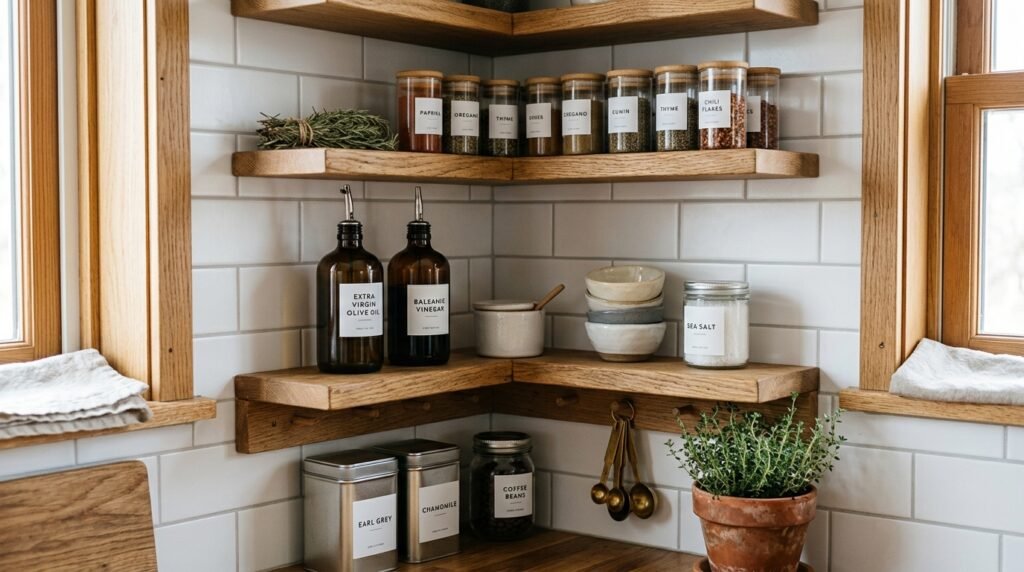
Spices
Keep your most-used seasonings within easy reach.
Coffee Supplies
A corner coffee station can hold:
- Coffee mugs
- Coffee beans
- Sugar
- Tea
- Filters
- Small jars
Cookbooks
Use a taller shelf for cookbooks.
Arrange a few vertically and place one or two decorative pieces beside them.
Everyday Dishes
If your shelves are strong enough, store bowls, plates, or serving dishes.
Small Appliances
A sturdy shelf can hold smaller appliances, although you should check its weight capacity first.
Plants
Herbs such as basil, mint, rosemary, and thyme can add life to a kitchen.
Just make sure the plants receive enough light and won’t be damaged by cooking heat.
What Are the Best Floating Shelf Ideas?
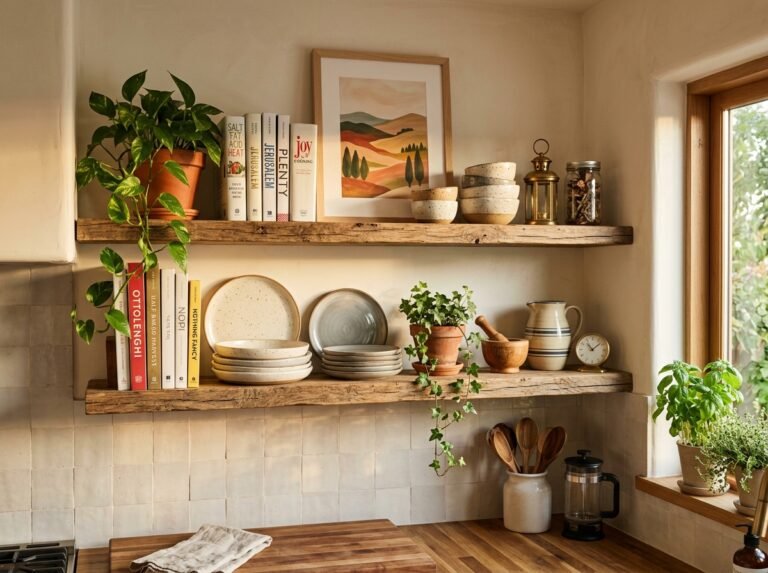
Floating shelves work particularly well in compact kitchens because they create storage without adding bulky furniture.
Try installing three shelves in an unused corner.
Use the bottom shelf for frequently used items.
Place decorative objects in the middle.
Keep the highest shelf for things you use less often.
Try Different Shelf Lengths
You don’t have to make every shelf identical.
A shorter upper shelf combined with longer lower shelves can create a more custom appearance.
Mix Practical and Decorative Items
Don’t fill every inch.
Leave some open space between objects.
A small plant beside a stack of bowls can make the shelves feel intentional instead of cluttered.
How Can You Use Corner Shelves for Spices?
A spice corner can save surprising amounts of cabinet space.
Instead of keeping dozens of spice jars in a drawer, install narrow shelves close to your cooking area.
Arrange spices alphabetically or by frequency of use.
For example:
Top shelf: Less-used spices
Middle shelf: Everyday seasonings
Bottom shelf: Salt, pepper, garlic powder, and cooking oils
A small shelf lip can help prevent jars from sliding forward.
This is especially important if the shelf sits above a counter.
Can Corner Shelves Replace Upper Cabinets?
Sometimes.
For homeowners who prefer an open kitchen look, several shelves can replace a section of upper cabinetry.
However, open shelving has a tradeoff.
Everything stays visible.
That means you need to keep the shelves relatively organized.
It also means cooking grease and dust can collect on exposed items.
If you don’t enjoy frequent wiping, closed cabinets may be a better choice.
Open Shelves vs. Cabinets
Open shelves
Pros:
- Make walls feel lighter
- Easy access
- Affordable
- Great for displaying dishes
- Can work in very small kitchens
Cons:
- Collect dust
- Items stay visible
- Require organization
- Not ideal for every kitchen
Cabinets
Pros:
- Hide clutter
- Protect dishes
- More enclosed storage
- Better for bulky items
Cons:
- More expensive
- Can make small rooms feel heavier
- Require more installation work
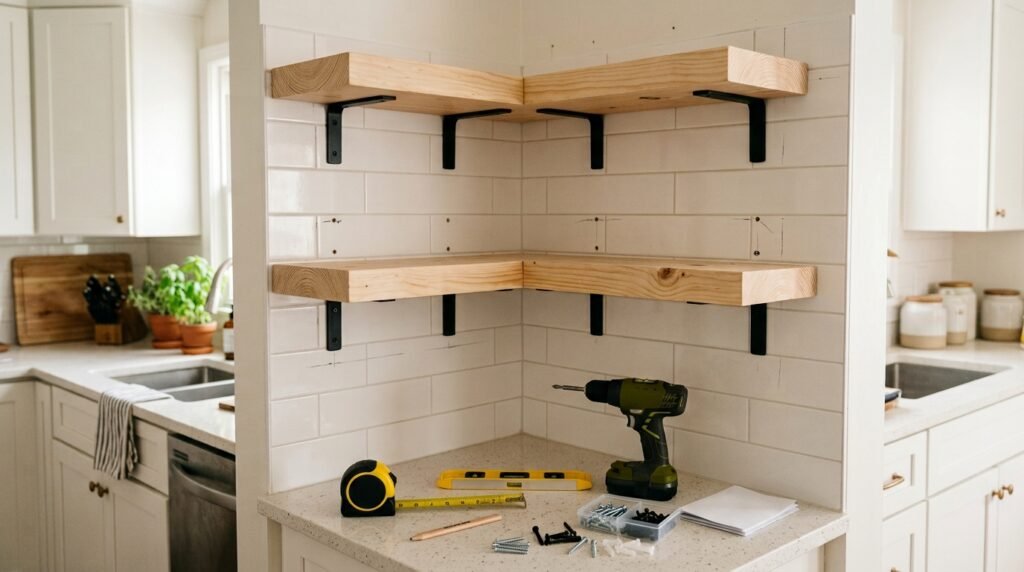
What Are the Best DIY Kitchen Corner Shelves?
A simple DIY corner shelf can be surprisingly affordable.
You don’t need advanced woodworking skills for a basic design.
Simple DIY Process
- Measure the corner.
- Decide how many shelves you need.
- Choose a suitable board.
- Cut each shelf to size.
- Sand the edges.
- Paint or stain the wood.
- Locate wall studs where possible.
- Install appropriate brackets.
- Check each shelf with a level.
- Add your kitchen items.
The important part isn’t fancy woodworking.
It’s making sure the shelves are properly supported.
Never assume a wall anchor can hold a heavy load just because the package says it works for drywall. Match the fastener to the wall type and expected load.
How Do You Make Corner Shelves Look Stylish?
Good organization and good design can work together.
The easiest way to make shelves look polished is to vary height and texture.
Instead of lining up ten identical jars, combine different objects.
For example:
- Ceramic bowl
- Small wooden cutting board
- Glass jar
- Cookbook
- Green plant
- Coffee mug
Use a limited color palette.
White, wood, green, black, cream, and natural ceramic tones are easy to combine.
Use the Rule of Three
Groups of three often look more balanced than large collections.
For example, place:
- A small plant
- Two stacked bowls
- One ceramic jar
Then leave some empty space before the next group.
Don’t be afraid of empty space.
It helps a small kitchen breathe.
How Do You Organize Deep Corner Shelves?
Deep shelves can become messy quickly.
If you need deeper storage, use containers or baskets.
Place similar items together.
For example:
Basket 1: Baking supplies
Basket 2: Tea and coffee
Basket 3: Extra sauces
Basket 4: Small kitchen tools
Labels can help, especially when multiple people use the kitchen.
Lazy Susan organizers can also make deep corners easier to access.
Instead of reaching behind six bottles, simply rotate the organizer.
What Shelf Materials Work Best?
The right material depends on the style and workload.
Solid Wood
Solid wood looks warm and natural.
It works well in farmhouse, rustic, Scandinavian, and traditional kitchens.
Plywood
Quality plywood offers strength and can cost less than solid hardwood.
Painted plywood can look surprisingly polished when the edges are finished properly.
Metal
Metal shelves suit industrial and contemporary kitchens.
They can also provide strong support.
Glass
Glass keeps the visual weight low.
It’s best for lighter storage and decorative displays.
Laminate
Laminate shelves offer many colors and finishes.
They’re practical for budget-friendly kitchen updates.
How Can You Add Lighting?
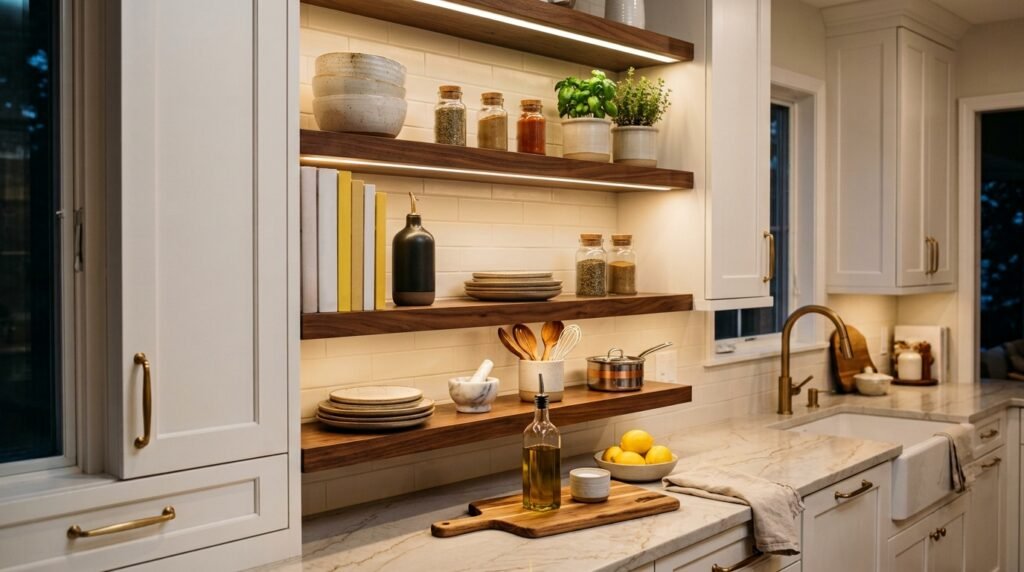
Lighting can make corner shelving much more useful.
A dark corner can feel forgotten even after you add beautiful shelves.
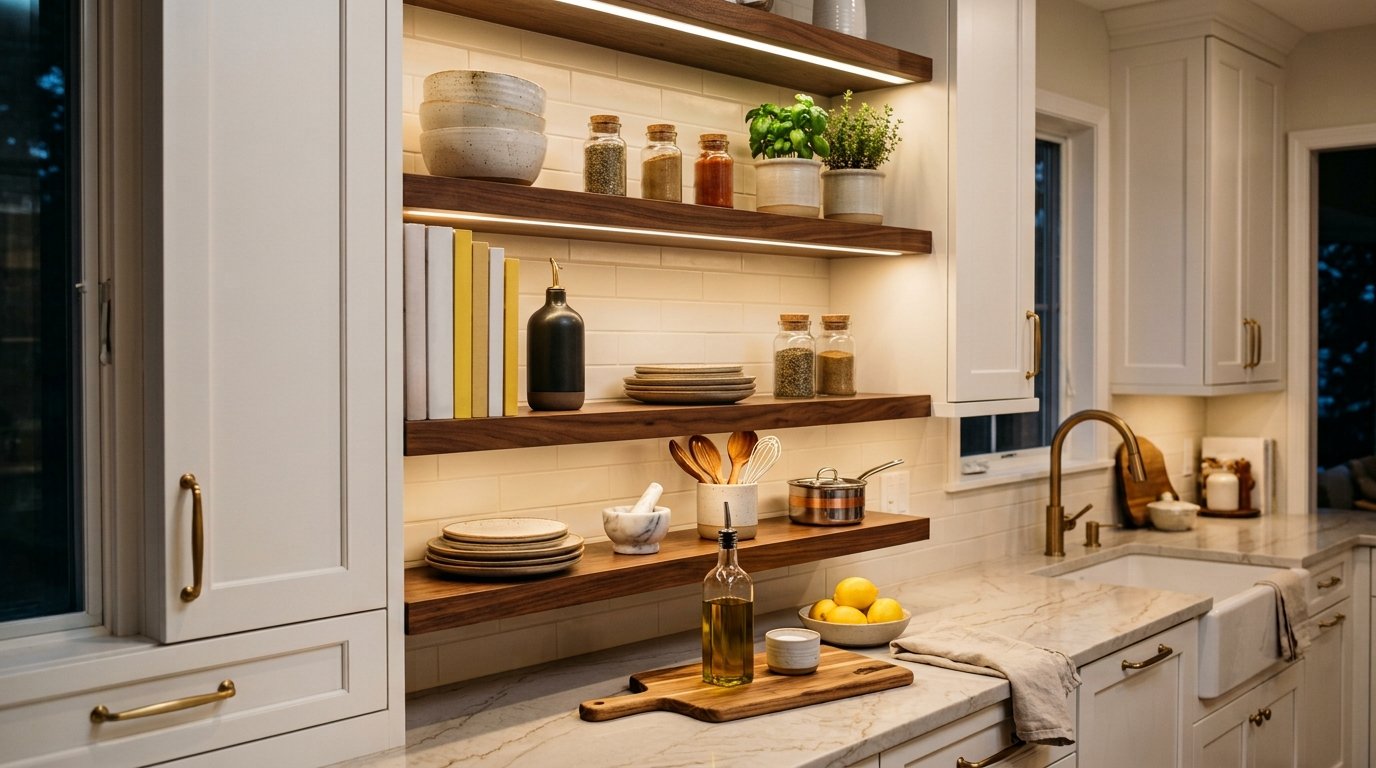
Consider small LED strip lights under each shelf.
Warm-white lighting can create a cozy atmosphere.
You can also use puck lights if you want focused illumination.
Smart Lighting
If your kitchen already uses smart-home lighting, you can connect shelf lighting to your existing system.
For example, lights could turn on automatically in the evening.
Motion sensors can also activate lighting when someone approaches the counter.
However, keep electrical safety in mind.
Avoid placing wiring near sinks, cooking surfaces, or areas where it could become wet. For permanent electrical work, use a qualified electrician and follow local electrical requirements.
How Can You Use Shelves in a Rental Kitchen?
Renters don’t always have permission to drill into walls.
Fortunately, you still have options.
Try:
- Freestanding corner shelving
- Narrow rolling carts
- Tension-style organizers
- Removable adhesive storage for lightweight items
- Countertop corner racks
Be careful with adhesive products.
A product designed for a small decorative object may not safely support a heavy stack of plates.
For rental kitchens, prioritize lightweight storage and removable solutions.
What Kitchen Corner Shelf Ideas Work for Different Styles?
Modern Kitchen
Choose:
- Simple floating shelves
- Black metal
- Light oak
- Minimal decoration
Farmhouse Kitchen
Try:
- Reclaimed-looking wood
- Black brackets
- Mason-style jars
- Ceramic pitchers
- Green herbs
Scandinavian Kitchen
Keep it simple.
Use pale wood, white ceramics, neutral containers, and a few plants.
Boho Kitchen
Mix natural wood with baskets, plants, handmade ceramics, and textured accessories.
Traditional Kitchen
Choose shelves that match the existing cabinetry.
A stained wood shelf can blend naturally with classic kitchen finishes.
How Do You Make a Small Corner Feel Bigger?
The goal isn’t to fill the corner.
It’s to make the space work without overwhelming it.
Use light colors when possible.
Keep shelf depth modest.
Avoid filling every shelf with objects.
And consider reflective surfaces.
A small mirror on an adjacent wall can add visual depth, although it should stay away from areas where it could be splashed or damaged.
Glass jars can also create a lighter appearance than opaque storage bins.
What Should You Avoid When Installing Kitchen Corner Shelves?
Don’t Ignore Wall Studs
Whenever practical, attach heavy-duty shelving to studs.
Don’t Overload Shelves
Every shelf has a weight limit.
Consider the combined weight of dishes, jars, cookware, and the shelf itself.
Don’t Install Shelves Too Close to the Stove
Heat, grease, and steam can affect materials and create extra cleaning work.
Keep combustible materials away from cooking equipment and follow the clearance requirements for your appliances.
Don’t Block Cabinets
A beautiful shelf isn’t useful if it prevents a cabinet door from opening.
Test the swing of nearby doors and drawers before drilling.
Don’t Forget Cleaning
Kitchen shelves collect dust and cooking residue.
Choose finishes that are easy to wipe clean.
How Much Do Kitchen Corner Shelves Cost?
The price can range widely.
A simple DIY shelf may cost relatively little if you already own basic tools.
Ready-made shelves cost more but save time.
Custom shelving can cost substantially more because you’re paying for measurements, materials, finishing, and installation.
If you’re working with a limited budget, start with one corner.
You don’t need to remodel the entire kitchen.
A single well-designed shelf system can make a noticeable difference.
Can Kitchen Corner Shelves Work With Smart Home Technology?
Yes, but keep the technology practical.
The shelf itself doesn’t need to be “smart.”
Instead, you can make the surrounding area smarter.
For example, install LED shelf lighting connected to a smart switch.
You could create a routine where the lights turn on around dinner time.
Motion-activated lighting can also help when you’re reaching for ingredients at night.
The same principle applies to energy efficiency.
LED lighting generally uses less energy than traditional incandescent lighting, and timers or occupancy-based controls can prevent lights from staying on unnecessarily.
Technology should solve a real problem.
Don’t add complicated gadgets just because you can.
Kitchen Corner Shelf FAQs
What is the best shelf for a tiny kitchen?
Floating corner shelves are often a strong choice because they use vertical wall space while taking up very little room.
How many shelves should I install?
Three shelves are a practical starting point.
You can add more depending on wall height and storage needs.
Are corner shelves good for small kitchens?
Yes. They can turn unused wall corners into useful storage without consuming floor space.
Can I put dishes on floating shelves?
Yes, provided the shelves and mounting system can safely support the weight.
Use appropriate brackets and fasteners.
Are open shelves hard to clean?
They can require more frequent cleaning than closed cabinets because the contents are exposed to dust and kitchen residue.
What should I put on kitchen corner shelves?
Spices, mugs, dishes, cookbooks, jars, plants, and decorative kitchen accessories all work well.
Are DIY corner shelves difficult?
Simple floating or L-shaped shelves can be beginner-friendly. The most important part is accurate measuring and secure installation.
How do I make corner shelves look expensive?
Use quality-looking materials, consistent colors, simple styling, and plenty of negative space.
Good lighting also makes a big difference.
Can I use shelves above the kitchen sink?
You can, but choose moisture-resistant materials and keep the installation secure. Avoid placing items where they could easily fall into the sink or interfere with faucets.
Final Thoughts: Which Kitchen Corner Shelves for Small Spaces Should You Try?
The best kitchen corner shelves for small spaces don’t simply add storage. They make an awkward part of the kitchen useful while keeping the rest of the room open.
Start by measuring your corner.
Then decide what you actually need to store.
If you want a clean modern look, try floating shelves. If you need practical organization, use tiered shelving for spices and jars. For renters, choose freestanding solutions that don’t require permanent installation.
And remember, you don’t have to fill every inch.
A few well-placed shelves, warm lighting, attractive containers, and a little greenery can completely change the feel of a compact kitchen.
The smartest small-kitchen design isn’t about adding more things. It’s about making better use of the space you already have.