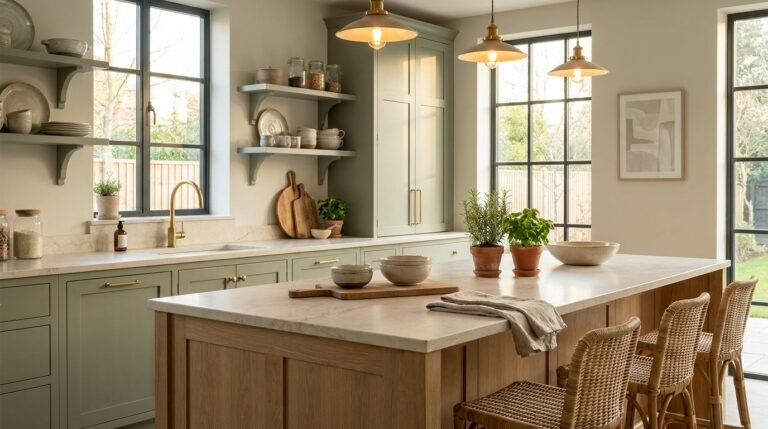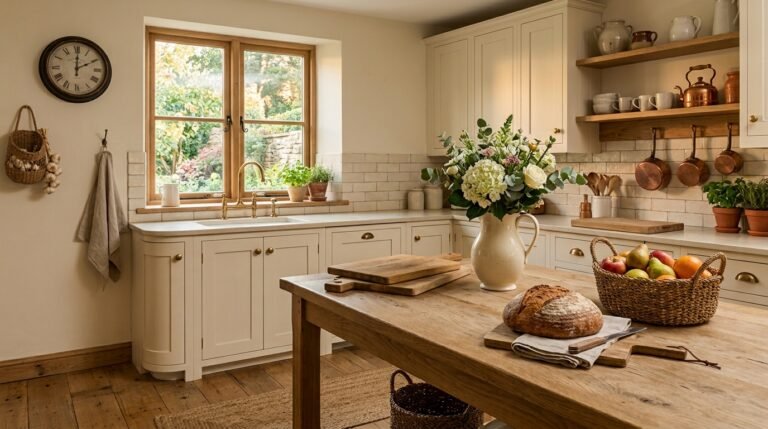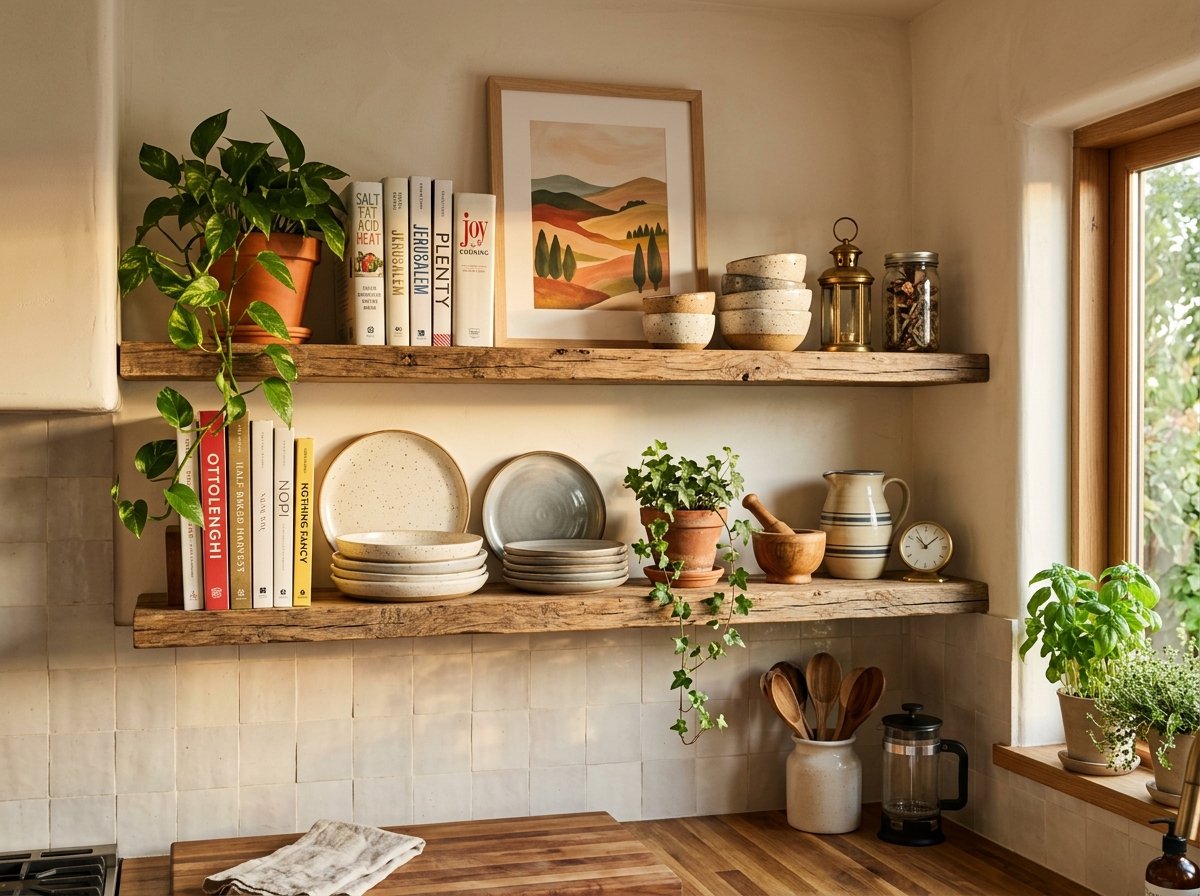
24 Kitchen Floating Shelves Decor Ideas That Look Curated
Kitchen floating shelves are one of the most requested upgrades in home renovations right now, and for good reason — they open up a wall, add storage, and give a kitchen a lighter, more custom feel than closed upper cabinets. The challenge is styling them so they look like a design choice rather than a shelf someone forgot to fill in.
These 24 ideas walk through what to put on your shelves, how to arrange it, and a few practical tricks for keeping everyday kitchen items from looking like clutter once they’re on display, whether you have one small shelf or a full wall of open storage.
The Ideas
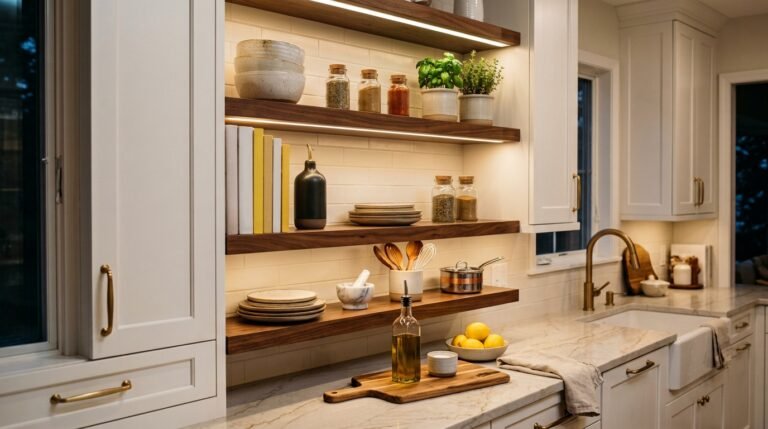
1. Mix Everyday Dishes With Decorative Objects Rather than styling shelves purely for looks, blend items you actually use — stacked plates, bowls, mugs — with one or two purely decorative pieces like a vase or small plant, so the shelf earns its keep functionally while still looking styled.
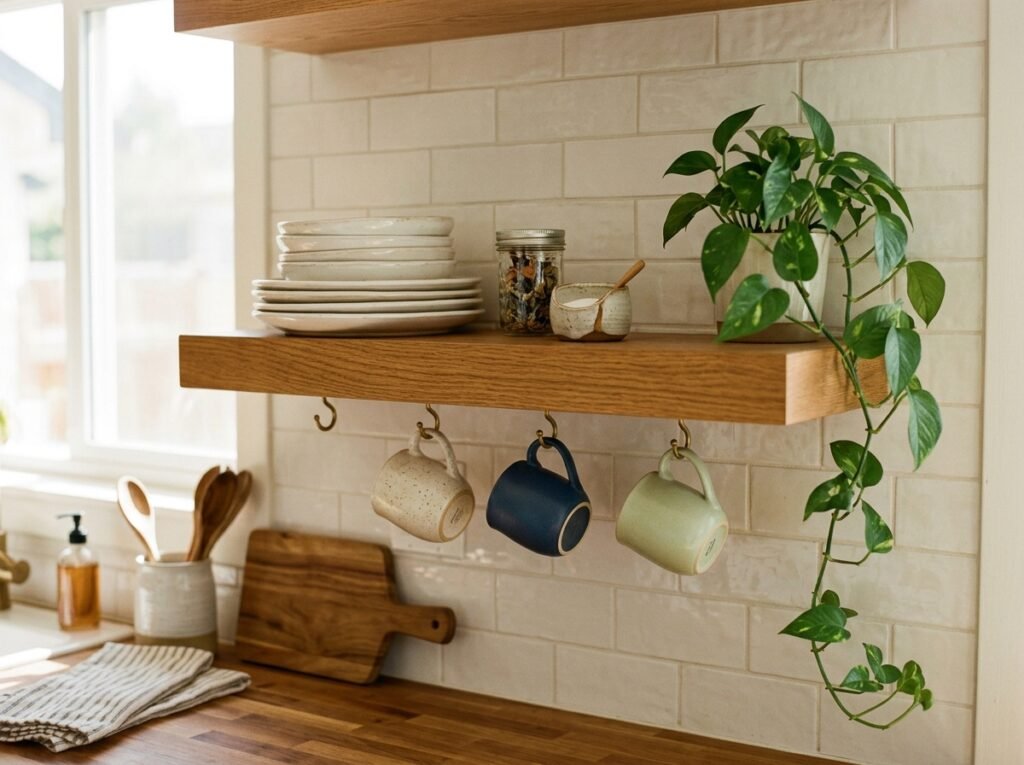
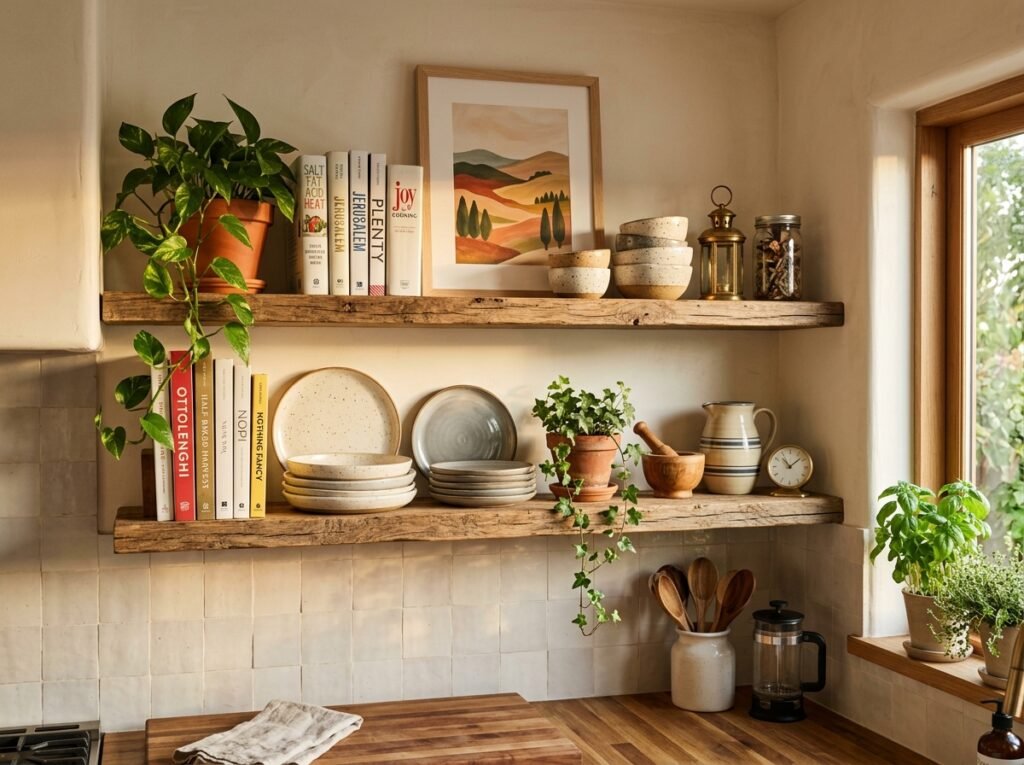
2. Group Plates and Bowls Vertically, Not Just Stacked Using a small plate rack or simply leaning a few plates upright against the wall, rather than stacking everything flat, adds visual variety and shows off patterned dishware that would otherwise be hidden in a stack. It also makes your most-used plates easier to grab without disturbing the whole arrangement.
3. Add a Row of Glass Jars for Pantry Staples Matching glass jars filled with pasta, rice, or flour bring both function and a cohesive, uniform look to open shelving, replacing bulky branded packaging with something that reads as intentional.
4. Hang Mugs From Small Hooks Beneath a Shelf Installing a row of small hooks under the lip of a floating shelf lets you hang mugs by their handles, adding visual interest below the shelf surface while keeping the shelf itself less crowded.
5. Use a Wood Cutting Board as a Leaning Backdrop A large wood cutting board, leaned upright against the wall behind other shelf items, adds warmth and texture as a backdrop the way a piece of art would on a living room shelf.
6. Style One Shelf With Cookbooks and a Small Object Dedicating one shelf primarily to a small stack of cookbooks, topped or flanked by a single object like a small plant or candle, breaks up an otherwise all-dishware arrangement.
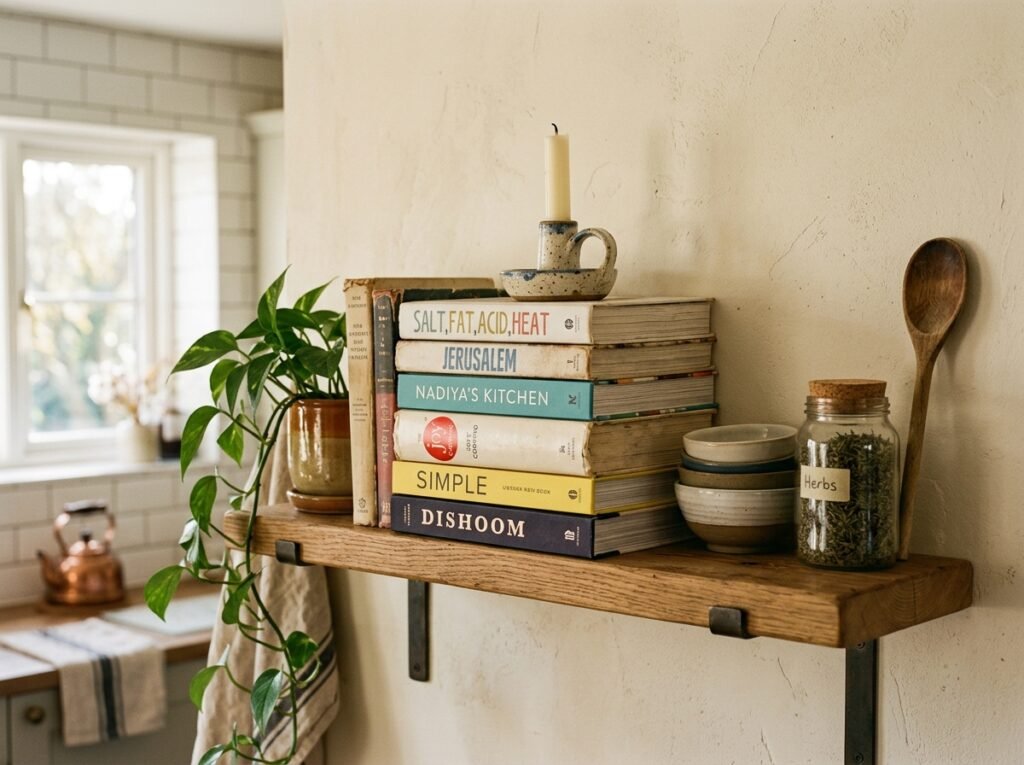
7. Choose a Cohesive Color Palette for Dishware Sticking to one or two colors across your visible plates, bowls, and mugs — all white, or white with one accent color — keeps open shelving from looking chaotic even with a mix of patterns and shapes.
8. Add a Small Herb Garden on the Bottom Shelf A row of small potted herbs on the lowest, most accessible shelf brings greenery and function together, especially useful for a shelf positioned near the stove.
9. Use Woven Baskets for Less Attractive Items Corralling less photogenic essentials — dish towels, sponges, extra utensils — into a small woven basket on one shelf keeps necessary clutter contained without hiding it entirely in a cabinet, so it still stays within easy reach.
10. Vary Object Height Across the Shelf Mixing tall items like a pitcher or vase with shorter, flatter items like a stack of bowls creates the same visual rhythm on a kitchen shelf that works on a living room floating shelf.
11. Display a Few Pieces of Vintage or Inherited China Working in one or two special pieces of inherited or thrifted china among your everyday dishware adds personality and history that a fully matched, store-bought set can’t provide.
12. Add a Small Piece of Art or a Framed Print A small framed print, leaned against the wall at the back of a shelf, breaks up an all-dishware look and adds a personal touch more commonly seen on living room shelving.
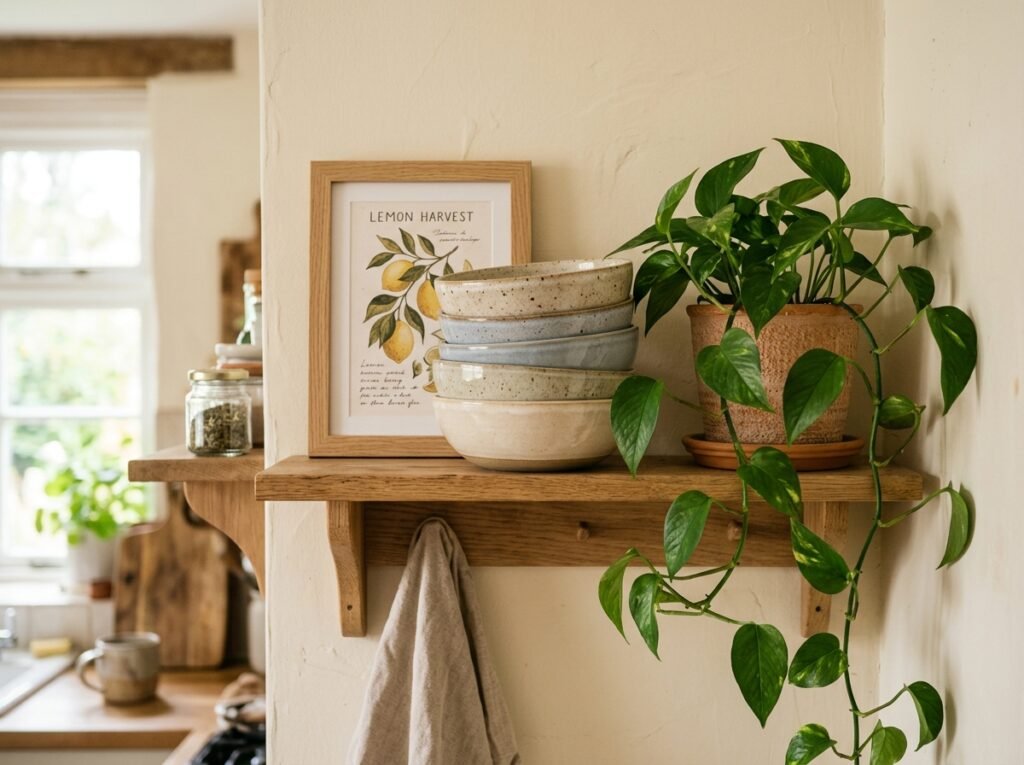
13. Use Matching Canisters for a Streamlined Look A set of matching ceramic or glass canisters for coffee, tea, and sugar creates a clean, coordinated look on a shelf near the coffee station, replacing mismatched bags and boxes.
14. Add a Cutting Board Stand for Vertical Storage Storing a few wood cutting boards upright in a small stand, rather than flat in a stack, adds textural variety and makes better use of vertical space on a shelf.
15. Style Symmetrically Across Two Matching Shelves If you have two shelves flanking a window or stove, styling them as near-mirror images of each other creates a calmer, more intentional look than two independently styled shelves.
16. Add a Small Trailing Plant for Softness A single trailing plant, like a pothos or ivy, draping down from a shelf edge softens the hard lines of dishware and cabinetry and adds a bit of life to an otherwise all-hard-surface kitchen.
17. Use a Small Tray to Group Oils and Vinegars Corralling frequently used oils, vinegars, and salt on a small tray keeps them accessible near the stove while still looking like an intentional grouping rather than loose bottles crowding the shelf edge.
18. Choose Open Shelving Only Where It Makes Sense Reserving floating shelves for the items you’re genuinely happy to display, and keeping less attractive everyday items in closed cabinets nearby, keeps the open shelving looking curated rather than like overflow storage.
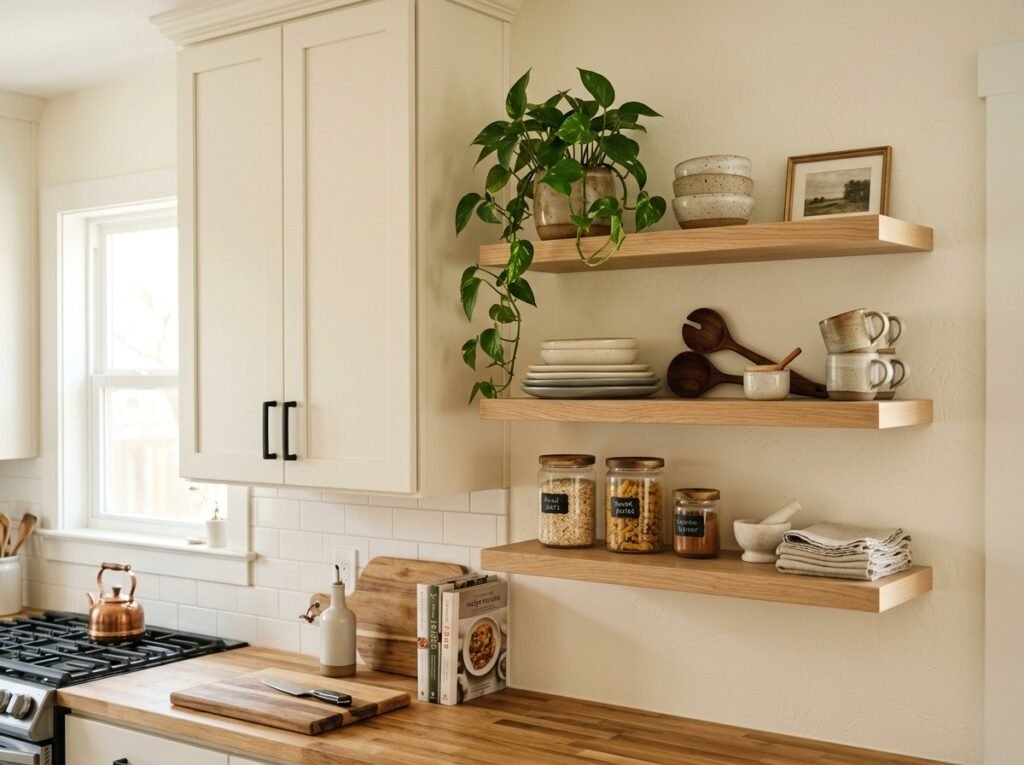
19. Add a Small Cake Stand for Height Variation A tiered cake stand, used for citrus or displaying a small plant, adds an unexpected height element to a shelf that’s otherwise filled with flat stacks and low bowls.
20. Use Brass or Wood Bookends for Cookbook Shelves Simple bookends keep a small stack of cookbooks upright and tidy, and their material can echo other metal or wood tones already present in your kitchen hardware.
21. Rotate Seasonal Items on One Dedicated Shelf Keeping most of your shelf styling consistent year-round, while rotating one small seasonal item — a pumpkin in fall, a bundle of dried flowers in summer — offers an easy refresh without restyling the whole wall.
22. Add a Small Reading Light Above a Breakfast Nook Shelf If your floating shelf sits near a breakfast nook or small seating area, a small clip or plug-in light mounted above it adds both function and a cozy glow in the evening.
23. Use Negative Space as Part of the Design Resist the urge to fill every shelf edge to edge — leaving visible gaps between groupings is what separates styled open shelving from a shelf that’s simply been used for extra storage.
24. Step Back and Edit Before You’re Done Once your shelves are styled, step back and remove the one item that feels least necessary — the best kitchen open shelving is almost always the result of editing down, not building up.
Quick Tips Recap
- Mix everyday dishware with one or two purely decorative objects
- Use matching canisters and jars to replace mismatched packaging
- Vary object height for visual rhythm the same way you would on a living room shelf
- Reserve open shelving for items you’re genuinely happy to display
- Leave visible negative space instead of filling every inch
FAQ
What should you avoid putting on kitchen floating shelves? Bulky small appliances, mismatched packaging, and anything you use daily but don’t want on display are usually better kept in closed cabinets rather than open shelving.
How do you keep kitchen floating shelves from looking cluttered? Stick to three to five groupings per shelf, vary the heights within each grouping, and leave breathing room between them rather than filling the entire surface edge to edge.
Ready to Start?
Pick one floating shelf, clear it completely, and restyle it using just three of these ideas before moving on to the rest of your kitchen wall.
Follow homedecorheaven.com for more home inspiration ideas, one small change at a time.