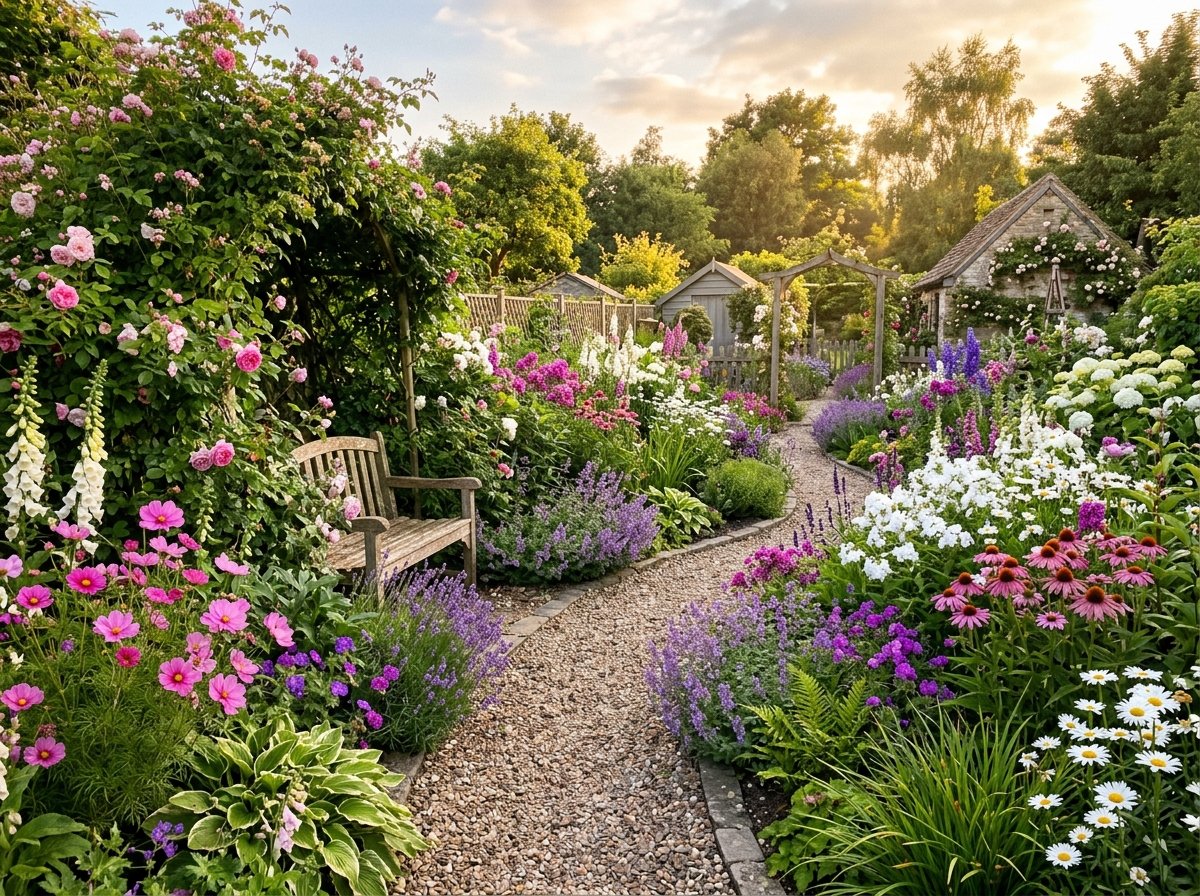
25 Backyard Flower Garden Ideas for Color All Season Long
A backyard flower garden can feel like a big commitment, but most of the most beautiful gardens are built from small, repeatable ideas rather than one giant overhaul. Whether you’re starting with a bare patch of lawn or refreshing beds that have gone a little tired, there’s a manageable place to begin.
These 25 ideas cover layout, plant choices, color strategy, and low-maintenance approaches, so you can build a garden that fits your actual time and energy, not just your Pinterest board.
The Ideas
1. Plant in Drifts, Not Single Rows Grouping the same flower in clusters of five or more, rather than a single row of mixed varieties, creates the soft, natural drift effect seen in professionally designed gardens. It also makes a bed feel intentional even before every plant has fully filled in, since the eye reads the repeated color as a pattern rather than a scattered collection.
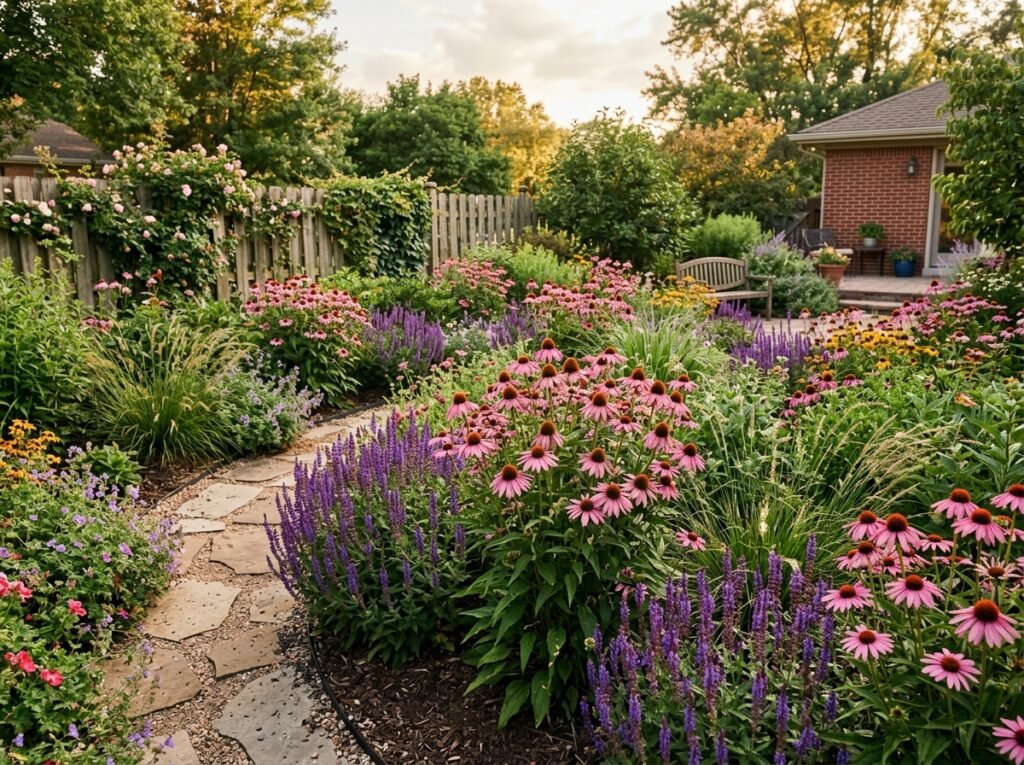
2. Choose a Three-Color Palette and Stick to It Picking two or three main colors for your flower beds — like blush pink, cream, and sage green foliage — keeps a garden feeling cohesive even as different flowers bloom and fade throughout the season. It also makes shopping for new plants far simpler, since you can quickly rule out anything that doesn’t fit the palette.
3. Layer Heights From Front to Back Placing low-growing flowers at the front of a bed, medium plants in the middle, and taller varieties toward the back creates depth and makes sure every plant is visible from the yard or a nearby path.
4. Mix in Ornamental Grasses for Texture Grasses like feather reed or fountain grass add movement and softness between flowering plants, and they keep a bed looking full even in the gaps between different blooming seasons.
5. Start With Perennials for Long-Term Structure Building your garden’s backbone from perennials — plants that return year after year, like coneflowers, black-eyed Susans, or peonies — means less replanting each spring and a garden that gets fuller over time.
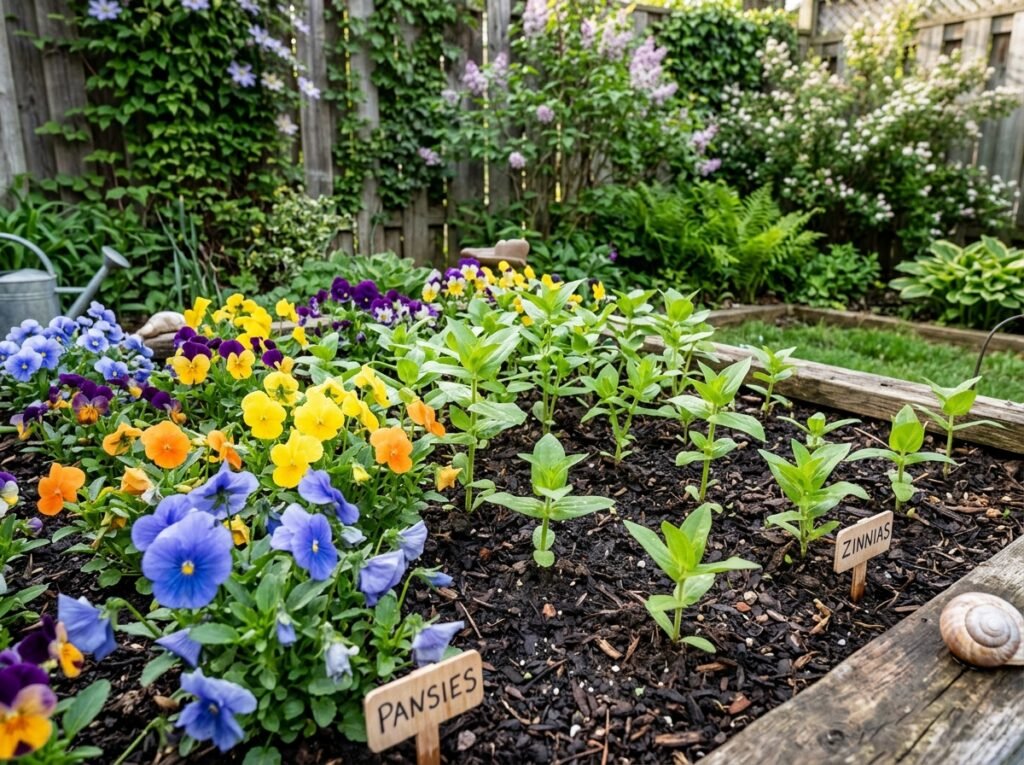
6. Add Annuals for Season-Long Color Gaps Filling in around your perennial structure with annuals like zinnias or marigolds covers the gaps when perennials aren’t in bloom, keeping color present from spring through fall.
7. Edge Beds With a Low Border Plant A neat edge of low-growing plants like alyssum or dianthus along the front of a bed gives even a slightly wild, cottage-style garden a clean, finished line.
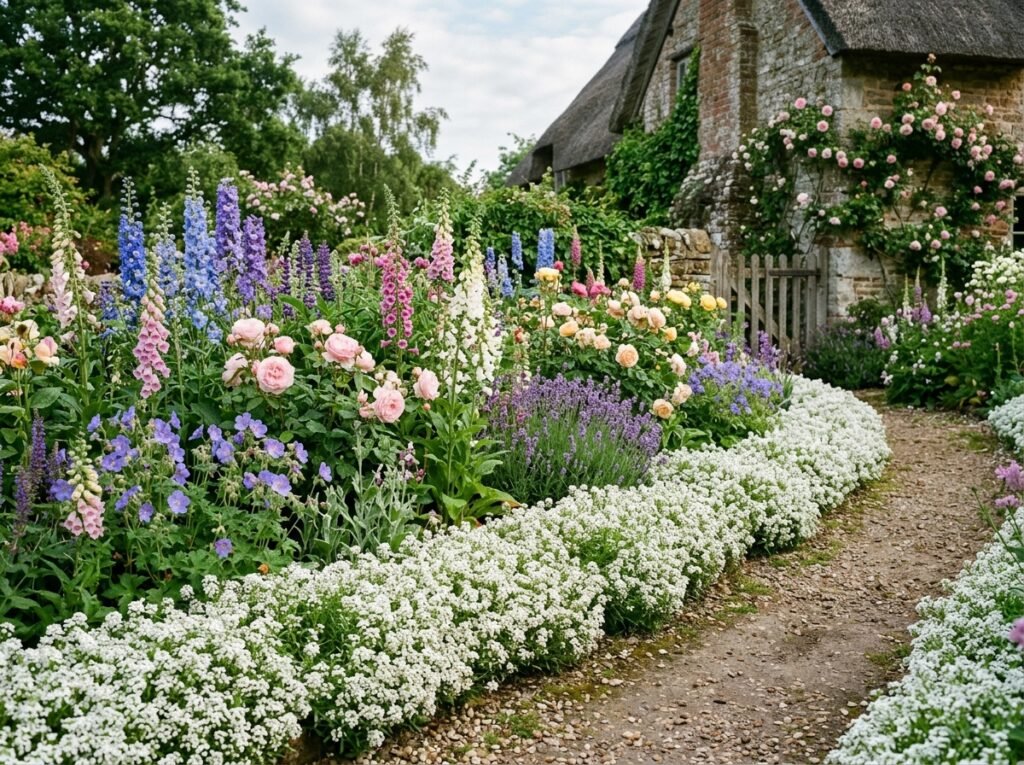
8. Build a Cutting Garden Section Dedicating a small section specifically to cutting flowers — zinnias, dahlias, cosmos — lets you enjoy fresh bouquets indoors without disturbing the display beds closer to the house.
9. Add a Trellis for Climbing Flowers A simple trellis planted with sweet peas, clematis, or climbing roses adds vertical interest to a flower garden and works especially well against a fence or the side of a shed.
10. Choose Native Plants for Lower Maintenance Native flowering plants are adapted to your local climate and soil, generally requiring less water, fertilizer, and pest management than non-native ornamentals once established. They also tend to support local pollinators and wildlife more effectively than imported varieties.
11. Create a Butterfly and Pollinator Bed Grouping pollinator-friendly flowers like milkweed, coneflower, and bee balm in one dedicated area turns part of your garden into a small habitat while also giving you something beautiful to watch throughout the summer.
12. Use Mulch to Reduce Weeding Time A layer of mulch around your flower beds suppresses weeds, retains soil moisture, and gives the whole garden a more finished, professionally maintained appearance even between active gardening sessions.
13. Plant a Moon Garden With White and Silver Blooms White flowers like moonflower, white cosmos, and silvery-leafed lamb’s ear glow in evening and moonlight, creating a garden section that’s especially beautiful to enjoy after sunset.
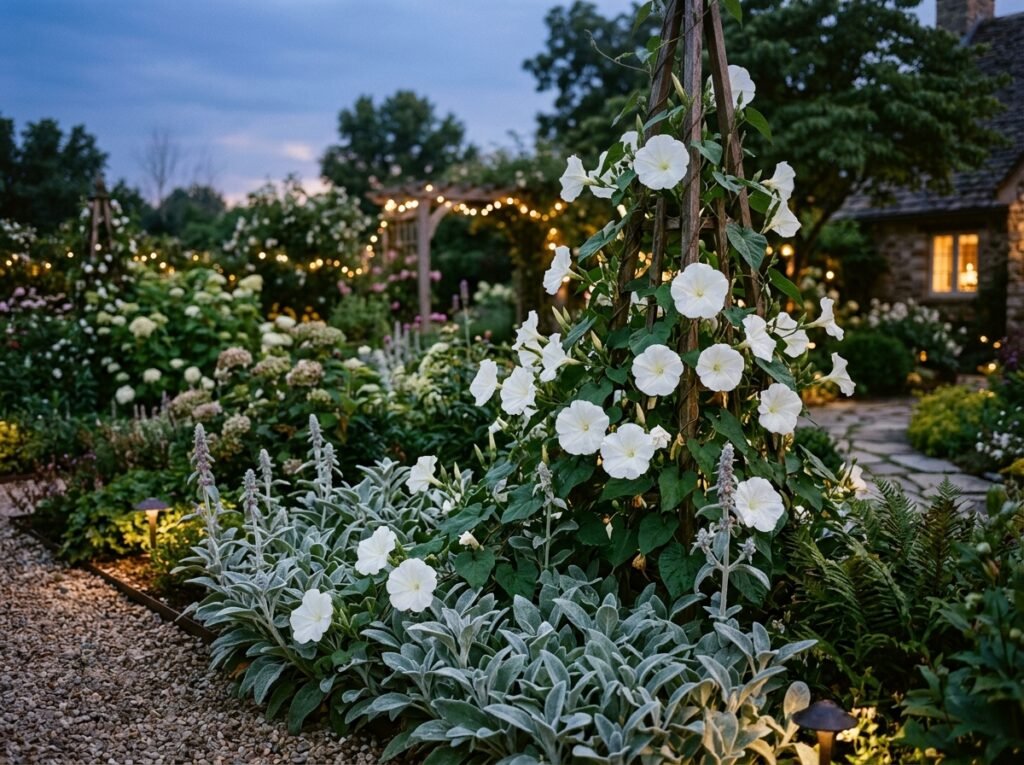
14. Add a Focal Point Plant or Container A single larger specimen — a standard rose, a tall ornamental grass, or a statement container planting — gives the eye a place to land in an otherwise busy bed full of smaller blooms.
15. Choose Repeat-Blooming Varieties Selecting roses, daylilies, or other varieties bred to rebloom throughout the season rather than flowering just once extends your garden’s peak color window significantly.
16. Build Raised Beds for Easier Access Raised flower beds reduce bending and kneeling, drain better than in-ground beds in heavy soil, and can be filled with ideal soil from the start rather than amending what’s already there.
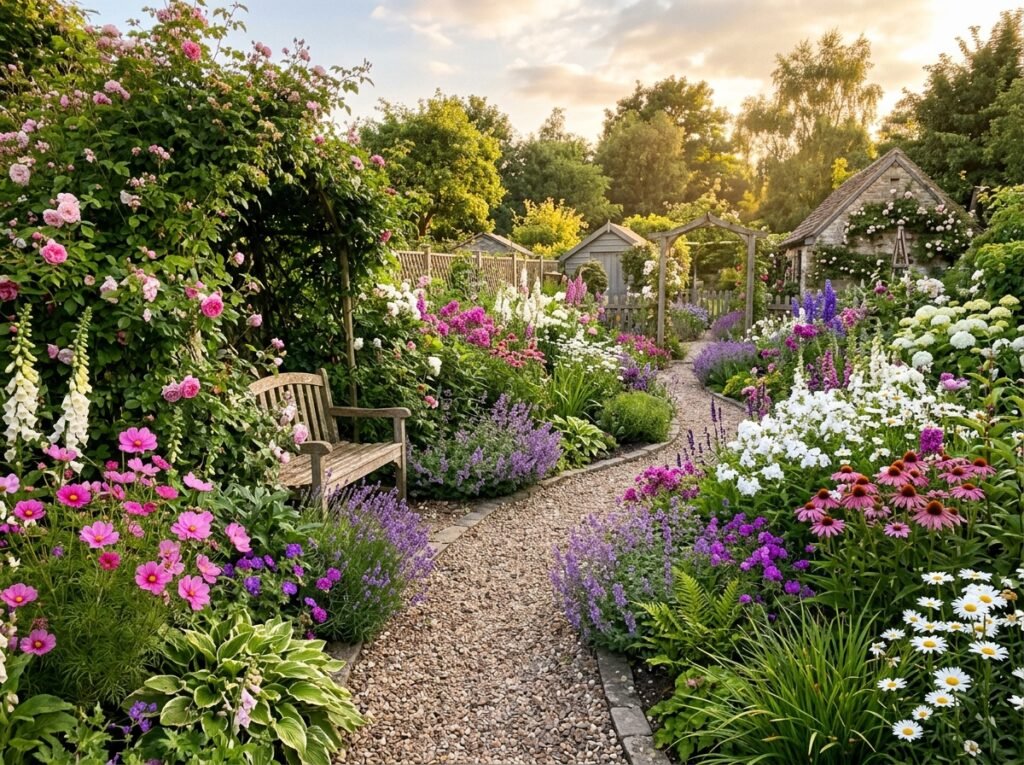
17. Add a Gravel Path Through the Garden A simple gravel path winding between flower beds invites you to walk through and enjoy the garden up close, rather than only viewing it from a distance, and it also gives you a dry, mud-free spot to stand while deadheading or weeding.
18. Use Container Gardens to Fill Gaps Large pots of flowers placed near a patio, front steps, or a bare corner of a flower bed let you add color exactly where it’s needed without disturbing existing plantings.
19. Choose a Cool-Season and Warm-Season Rotation Planning for cool-season bloomers like pansies in spring and fall, alongside warm-season varieties like zinnias for summer, keeps color present across more of the year instead of just a single peak season.
20. Add a Small Bench or Seating Area Within the Garden A simple bench tucked into or beside a flower bed invites you to actually sit and enjoy the garden rather than only viewing it while walking past.
21. Layer in Fragrant Varieties Near Seating Planting fragrant flowers like lavender, roses, or sweet alyssum near a bench or patio adds a sensory element to the garden that pure visual color alone can’t provide.
22. Use Repetition Along a Border for Rhythm Repeating the same plant at regular intervals along a long border — rather than a fully random mix — creates a sense of rhythm that reads as more designed and less accidental.
23. Add Spring Bulbs for Early Color Tucking tulip, daffodil, or crocus bulbs throughout your beds in fall rewards you with color weeks before most perennials and annuals wake up in spring.
24. Create a Shade Garden for Darker Corners For yard areas that don’t get much direct sun, shade-tolerant flowering plants like astilbe, bleeding heart, and hostas with flower spikes bring color to spots most gardens leave empty.
25. Keep a Simple Maintenance Rhythm Deadheading spent blooms weekly, watering deeply rather than frequently, and mulching each spring are the three habits that keep a flower garden looking its best without turning into a constant chore. Even fifteen minutes a week is usually enough to keep a modest bed looking cared for.
Quick Tips Recap
- Plant in drifts of the same flower rather than single scattered plants
- Build your garden’s backbone from perennials, then fill gaps with annuals
- Stick to a two-to-three color palette for a cohesive look
- Use mulch to cut down on weeding and give beds a finished look
- Add a bench or seating area so you actually spend time in the garden
FAQ
What’s the easiest way to start a backyard flower garden? Start small with one bed of a few perennials planted in drifts, add mulch to keep weeding manageable, and expand the following season once you know what worked in your space.
How do I keep color in my garden all season? Combine perennials for structure, annuals to fill seasonal gaps, and spring bulbs for early color so something is blooming from early spring through fall.
Ready to Start?
Pick one small bed or corner of your yard and choose just three to five ideas from this list to start with — a full garden almost always grows one season at a time.
Follow homedecorheaven.com for more home inspiration ideas, one small change at a time.